
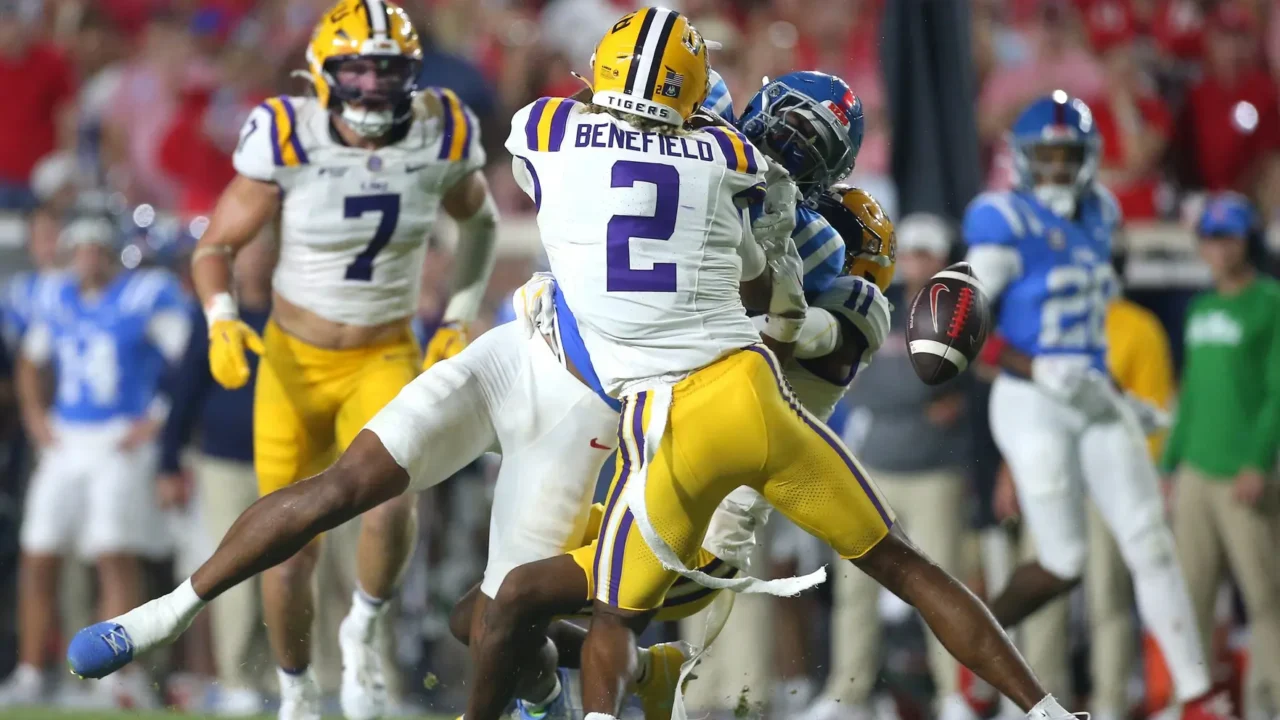
The Ty Benefield transfer to LSU added a veteran presence to the secondary, a move rooted in competition and immediate matchups. As reported by Saturday Down South, Benefield said he wanted tougher tests and chose LSU to face them.
Benefield’s message was blunt and immediate: he “wants the smoke.” That mindset frames how LSU plans to use him and what to watch when the Tigers meet Texas A&M in Week 4.
Key Takeaways
- Ty Benefield transfer to LSU signals he sought tougher competition and a platform to compete in the SEC.
- He earned first-team All–Mountain West recognition at Boise State and is known for reliable tackling and play-finishing near the line of scrimmage.
- Benefield has publicly highlighted the Week 4 matchup against Texas A&M as an early test and focal point.
How Ty Benefield transfer to LSU fits the secondary
Benefield arrives as a college veteran who can operate near the line of scrimmage and in center-field responsibilities. Boise State tape showed consistent tackling and a willingness to play through traffic, traits LSU’s staff values in both base and nickel packages.
Expect LSU to use him as a physical presence to finish runs and match up with movement tight ends and hybrid H-backs. That role aligns with the Tigers’ need for versatile safeties who can rotate into box support without sacrificing coverage integrity.
Benefield’s public comments make his intent clear: he sought a tougher schedule and direct SEC tests. That competitive mindset suggests he will be considered for early snaps in situations demanding reliability against power-running teams and pro-style route concepts.
Boise State production and transfer timeline
| Topic | Context |
|---|---|
| Boise State background | Three seasons at Boise State with year-end praise as a first-team All–Mountain West performer, established as a dependable tackler and play-finisher. |
| Transfer timeline | Entered the transfer portal on Dec. 27 and committed to LSU ten days later, electing to finish his career in the SEC for tougher competition. |
Those facts set the baseline for how LSU will evaluate and deploy Benefield. The timeline shows a deliberate decision to seek SEC opponents and indicates he was brought in for an immediate role rather than a long-term developmental project.
What Benefield’s move means for game planning
His arrival gives LSU a player who can be leaned on in early-down run fits and in subpackages that require aggressive safety play. Coaches preparing for teams with downhill rushing attacks or physical tight ends now have another true-playmaking safety to consider when scripting fronts and pressures.
Benefield’s willingness to challenge blockers and finish tackles allows LSU to be more flexible with nickel defenders and boundary matchups without sacrificing tackling reliability in space.
SEC and playoff implications for LSU roster construction
Adding a veteran from a Group of Five program who sought the SEC increases LSU’s depth and competition at safety without burning eligibility on a developmental player. That helps roster construction when the schedule tightens and the Tigers must balance experience against younger pieces.
Benefield’s stated focus on the Texas A&M game underscores how single-match preparedness can shape early-season SEC standings and roster decisions. The original reporting included an ad disclosure noting the piece may receive compensation when readers click certain links.