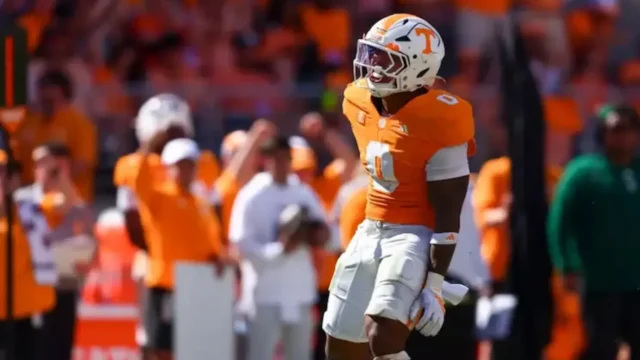
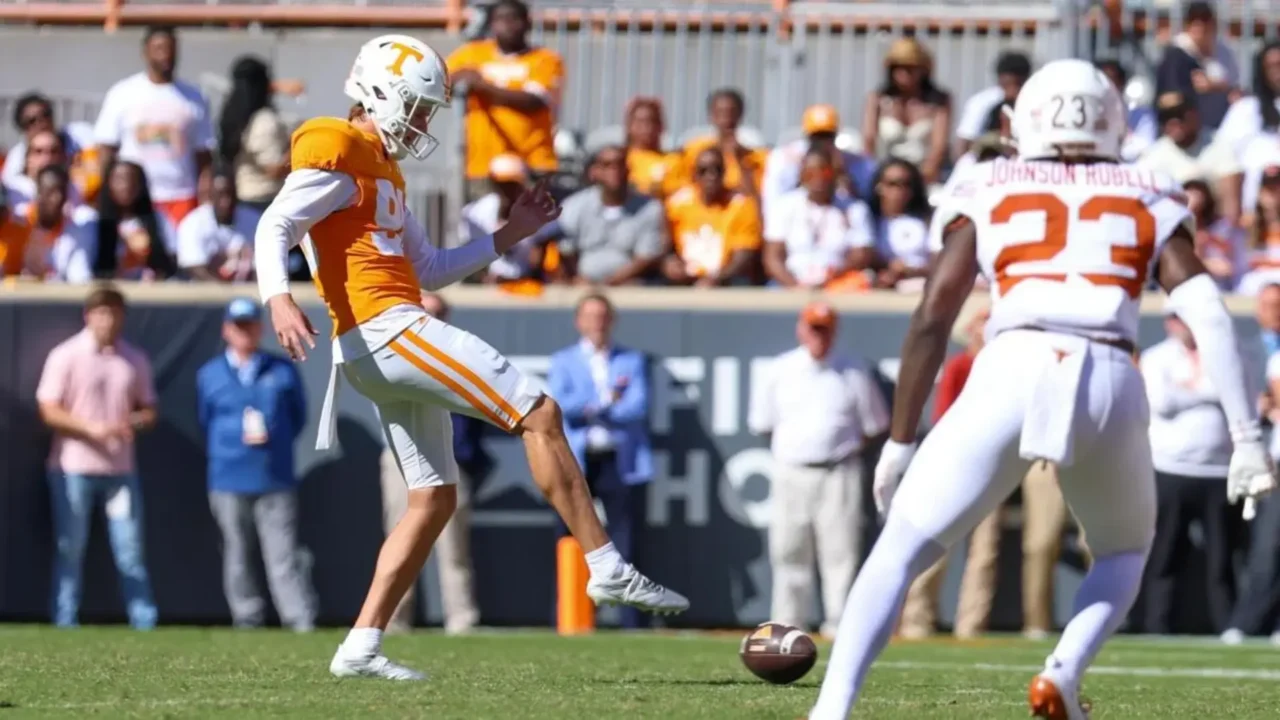
Tennessee recovered an onside kick with 1:22 left while trailing 20-17, a play now identified as the Tennessee illegal onside kick after conference review.
As detailed by CBS Sports, the SEC confirmed the play was incorrectly officiated and said the correct enforcement would have been a five-yard penalty and a replay of the down.
Key Takeaways
- The SEC said the play should have been penalized five yards and the down replayed under free-kick rules.
- Tennessee recovered the onside attempt but failed to reach field-goal range and the game’s outcome stood.
- The conference clarified that a legal drop-kick must bounce at the 35-yard line and the kicker may not change lateral position after the ready signal.
- The SEC will work with the Secretary/Editor for NCAA Football Rules to improve consistent enforcement of free-kick rules.
What the SEC said about the onside kick
The SEC’s review concluded the kick should have been flagged because two rule elements were violated on the play: the bounce location and the kicker’s lateral movement after the ready signal.
The conference noted that a free kick must be made from the restraining line at the 35-yard line unless relocated by penalty, and that a drop-kick must bounce at that line to be legal.
The SEC’s assessment states the ball was dropped behind the line and the kicker moved laterally before the kick, which together constituted an enforceable penalty.
Tennessee illegal onside kick rule mechanics
A drop kick is permitted under NCAA free-kick rules, but the kicking team is bound to specific placement and movement restrictions that officials must enforce.
Why drop-kick onside attempts are rare
Coaches seldom deploy a drop-kick onside because it requires precise placement and execution, and the play carries narrow margins for legal compliance.
Officials also encounter this form infrequently, which raises the chance that subtle requirements—like the exact bounce spot and no lateral repositioning—are missed in live play.
Free-kick rule comparison table
| Rule element | Requirement | What occurred |
|---|---|---|
| Bounce location | The ball must bounce at the 35-yard restraining line on a legal drop kick | The kicker dropped the ball on the 34-yard line, behind the restraining line |
| Lateral movement | The kicker may not change lateral position between the hash marks after the ready signal | The kicker moved to the left hash before the drop, violating the lateral-position rule |
| Enforcement | Illegal free-kick results in a five-yard penalty and replay of the down | No penalty was called on the play and the recovery stood |
Officials enforcement gap and next steps
Rare plays like a drop-kick onside attempt expose enforcement gaps because officials are trained most often to watch for more common infractions such as offside across the 35-yard line.
The SEC acknowledged the miss and said it regrets the error, adding it will continue working with the Secretary/Editor for NCAA Football Rules to improve how free-kick rules are applied in the future.
That work is likely to focus on clearer signals, pregame alignment checks on restraining-line placement, and targeted refresher training for unusual kickoff techniques.
SEC and CFP implications
The immediate competitive impact was limited because Tennessee failed to score after the recovery and the result stood, avoiding a postgame uproar that could have had wider playoff optics.
Still, the conference’s admission matters for institutional trust and officiating credibility. Conferences and the College Football Playoff selection process rely on consistent rule enforcement to protect integrity. That assessment is drawn from the original reporting.
Practical follow-ups for the SEC will include replay-procedure reviews and officiating clinics aimed at reducing the odds that a low-frequency, high-impact play goes uncorrected in future games.