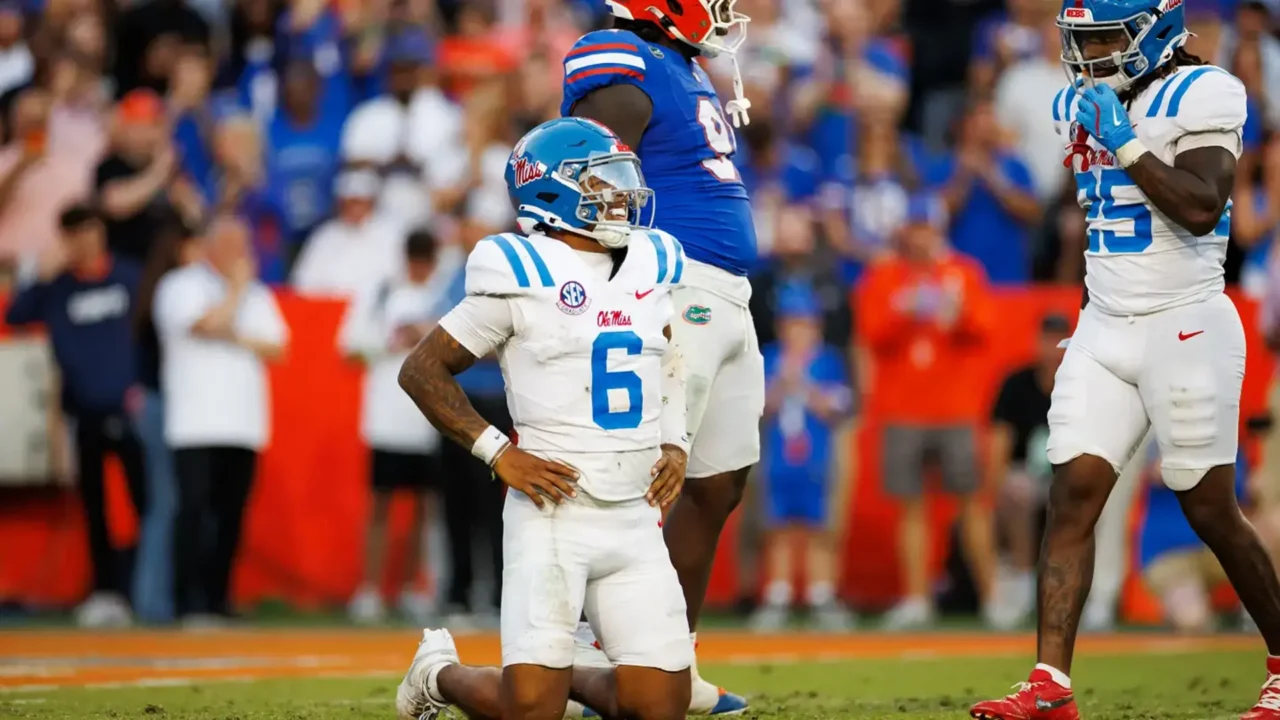
Ole Miss left Gainesville with a 52-28 loss to Florida and a long list of problems to address. Trinidad Chambliss, however, should not be near the top of that list.
Sports Illustrated detailed how Chambliss accounted for just under 350 yards, threw one touchdown pass and rushed for two more scores against the Gators. His third interception of the season was an issue, but it was hardly the defining failure in a game where the Rebels surrendered 52 points.
The urgent question before the Oct. 10 trip to Nashville is whether Ole Miss can give its quarterback enough support to keep defenses from loading up against him.
Key Takeaways
- Trinidad Chambliss produced nearly 350 yards and three total touchdowns despite Ole Miss’ 52-28 loss at Florida.
- Kewan Lacy’s injury issues have increased the offensive responsibility on Chambliss and made his availability an important part of the backfield picture.
- Deuce Alexander remains the most consistently reliable receiving weapon identified in the offense, while Caleb Odom becomes a primary target when Alexander is unavailable.
- Ole Miss faces Vanderbilt in Nashville on October 10, making improved support around Chambliss an immediate priority.
Trinidad Chambliss Is Producing Despite the Offensive Strain
Chambliss’ performance against Florida fits the broader pattern of his Ole Miss career. He has topped 300 total yards in more than half of his 19 starts for the Rebels, a level of production that places substantial responsibility on his shoulders each week.
That workload is notable given Chambliss’ path to the SEC. Just two years ago, he was starting for Division II Ferris State, and he has since become a quarterback capable of changing a game with both his arm and legs.
The Florida loss did not erase that value. Chambliss made mistakes, including the interception, but the larger concern was the lack of dependable production around him; the assessment here is that Ole Miss needs more complementary offense rather than expecting its quarterback to create every answer.
Kewan Lacy’s uncertain injury status has made that challenge more difficult. When Lacy is available, his presence gives Ole Miss another backfield option, while his injury issues have placed more responsibility on Chambliss.
Ole Miss Needs More Consistent Answers Around Chambliss
Deuce Alexander is the clearest reliable option identified in the receiving group. He accounts for one-third of Ole Miss’ receiving yards and half of the team’s receiving touchdowns, giving opponents a clear player to monitor.
That production also creates a tactical concern for the Rebels. If defenses can concentrate coverage on Alexander without fearing another established pass catcher, Chambliss has fewer clean answers when the initial read is taken away.
Caleb Odom becomes a primary passing target when Alexander is unavailable. That role gives Odom an important place in the offense, while the broader analysis is that Ole Miss needs his involvement to remain meaningful when Alexander is also on the field.
Luke Hasz has not yet become a major factor in the offense. His development could give Chambliss another option in situations where the Rebels need to move the chains without asking the quarterback to manufacture every critical play.
Johntay Cook joined Ole Miss from Syracuse after a 600-yard season. Horatio Fields transferred from Auburn, but the available reporting does not establish a broader judgment about his standing or production, so both players remain part of the personnel discussion without unsupported projections.
The issue is not simply the number of names on the roster. The analysis is whether those options can provide steadier help around Chambliss, particularly when Florida’s result showed how much pressure can fall on one quarterback.
Chambliss Production Shows the Gap Between Ole Miss and Florida
| Area | Ole Miss context against Florida |
|---|---|
| Quarterback production | Trinidad Chambliss produced just under 350 yards, with one touchdown pass and two rushing touchdowns. |
| Defensive result | Florida scored 52 points in the 52-28 victory over Ole Miss. |
| Primary receiving option | Deuce Alexander is the leading reliable receiving option identified in the offense and is reported to account for one-third of receiving yards and half of receiving touchdowns. |
| Secondary passing answer | Caleb Odom takes on a larger role as a primary target when Alexander is unavailable. |
| Backfield support | Kewan Lacy’s injury issues make his availability and return to full strength an unresolved part of the offensive picture. |
The comparison is stark. Chambliss produced nearly 350 yards and three total touchdowns, while Florida’s 52-point output showed how quickly the margin can disappear when the Rebels do not get enough support around him.
That does not make the quarterback immune from criticism. The interception was his third of the season, and Ole Miss must continue to improve decision-making across the offense, but the Florida result points toward a team-wide support problem rather than an established failure by Chambliss to create offense.
Ole Miss Must Stabilize Its Offense Before the SEC Race Tightens
Ole Miss returns to its schedule against Vanderbilt in Nashville on October 10. The matchup gives the Rebels a direct opportunity to respond, while the players surrounding Chambliss face immediate pressure to produce with greater consistency.
In a 16-team SEC, there is little margin for another offensive collapse. If Ole Miss has College Football Playoff or broader postseason ambitions, the conditional path likely requires more than Chambliss carrying the operation for four quarters.
That pressure reaches beyond one matchup. Roster depth and skill-position development will shape Ole Miss’ possible postseason path through the conference, especially if Lacy remains limited or unavailable and opponents continue to key on Alexander.