Alabama Spring Scrimmage 2026 Preview: Defense and Offense Questions Plus Josh Ford Transfer
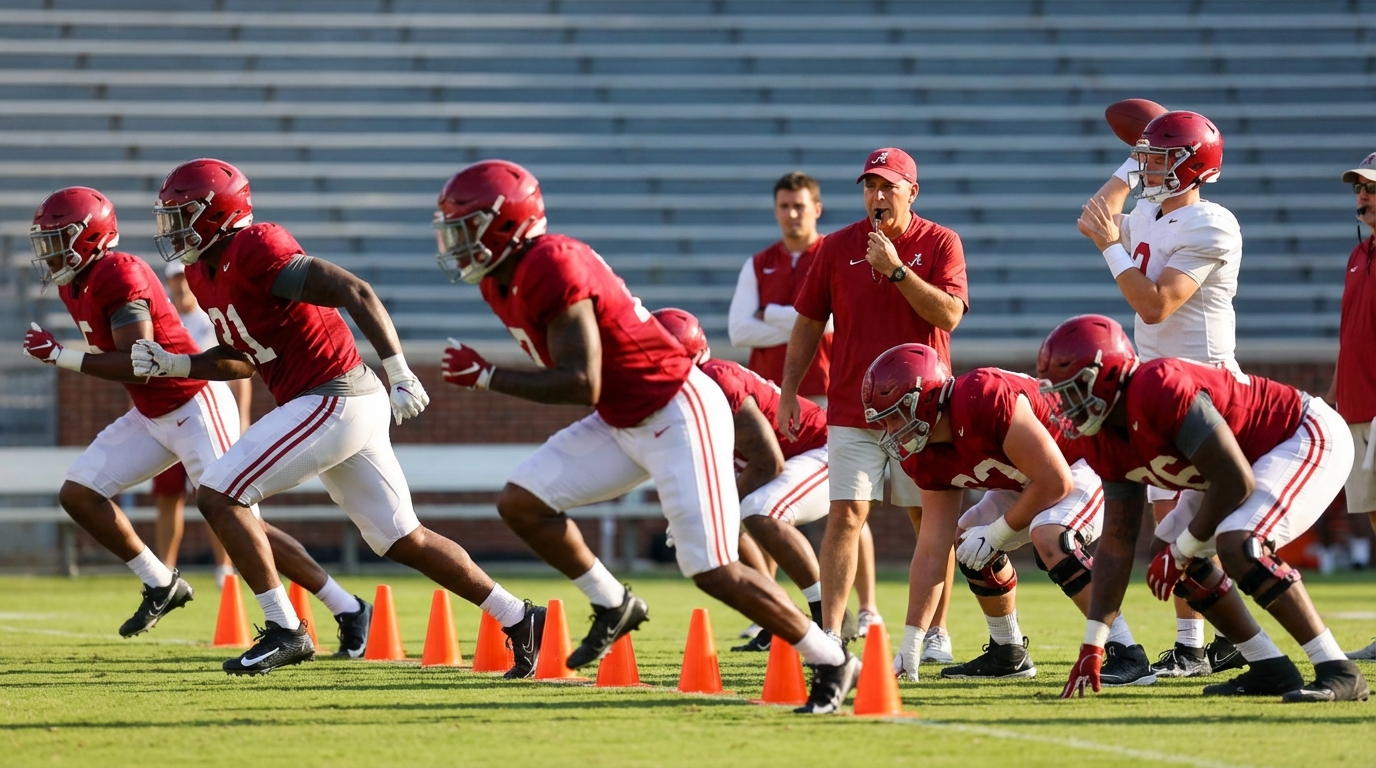
As spring ushers in new possibilities, Alabama football fans are eagerly anticipating the 2026 Alabama spring scrimmage. This year presents a critical examination of both defense and offense, with all eyes on how these units will perform and the impact of strategic changes. The Crimson Tide aims to refine communication on the field and improve their defensive takeaways. Meanwhile, offensive developments are the talk of the scrimmage, especially with significant changes on the horizon.
Amidst these strategic shifts, the transfer of Josh Ford from Oklahoma State has generated considerable buzz. Ford, standing tall at 6-foot-6 and weighing 267 pounds, brings strength and a spirited demeanor to the Tide. His capability in run blocking coupled with ongoing development in the passing game makes him a potentially invaluable asset. Ford’s addition is expected to provide a boost to Alabama’s offensive line, a factor that could pivotally influence their performance in the scrimmage.
Keep an eye on how the dynamics of defense and offense play out in this year’s spring scrimmage, as Alabama continues to push boundaries and redefine its defensive strategies and offensive potentials.
Alabama spring scrimmage 2026 preview: defense and offense questions plus Josh Ford transfer — Key issues
Alabama arrives at scrimmage No. 2 with clear questions on both sides of the ball. On defense, coaches want crisper communication and more takeaways. Kane Wommack’s unit shows flashes, but the group must reduce missed assignments. Keon Sabb provides experience in the secondary, and Caleb Woodson looks locked into the starting inside linebacker role. Woodson will likely act as the Mike or green dot, and young linebackers must complement his play.
Defensively, the priority remains forcing turnovers and playing fast. Consequently, coaches emphasize situational awareness and tackling technique. DeBoer stressed the team’s mentality, saying “I love the aggressiveness that they have. They’re not gun shy.” Therefore, the staff wants that aggressiveness to translate into interceptions and forced fumbles. The secondary must also sync with the front seven, because effective pass rushes create interception opportunities.
Offense brings its own set of questions around line play and playmakers. Alabama lists Jackson Lloyd, Jayvin James, Michael Carroll, and Racin Delgatty across the line. Meanwhile, the Josh Ford transfer adds size and run‑blocking polish up front. Kaleb Edwards called Ford “a great addition for us,” and added “He is great at run blocking and is developing in the passing game.” As a result, Ford could accelerate the unit’s physicality in short‑yardage situations.
The receiving corps flashed explosiveness, as Ryan Williams produced multiple big plays. Moreover, DeBoer praised the quarterbacks, noting their aggression and timing. Going into scrimmage No. 2, expect coaches to stress communication, finishing, and consistent execution on both sides of the ball.
Alabama spring scrimmage 2026 preview: defense and offense questions plus Josh Ford transfer — Transfer additions and impact
Alabama’s influx of transfers changes roster math and strategy heading into scrimmage No. 2. Devan Thompkins and Desmond Umeozulu arrived through the NCAA transfer portal to add depth and experience. Meanwhile, Caleb Woodson from Virginia Tech has already secured the starting inside linebacker role. Woodson will likely serve as the Mike or green dot, and young linebackers must quickly learn his cadence and reads.
The most talked about acquisition remains Josh Ford from Oklahoma State. Ford is listed at 6-foot-6 and 267 pounds, and he played in 16 games for the Cowboys. In those appearances he totaled 13 receptions for 137 yards and two touchdowns. As a result, Alabama gains a physically imposing target who also offers run blocking ability. Kaleb Edwards praised Ford, saying “He is going to be a great addition for us. He is great at run blocking and is developing in the passing game.” Therefore, coaches expect Ford to help both the red zone and short yardage work.
DeBoer echoed that view while noting broader development. “They’ve got a year under their belt, and so I like the development and growth there,” he said. He added, “We bring in a Josh Ford to add a little more strength and demeanor in the run blocking. I think that can help that whole group out. I like that.” Consequently, Ford’s presence could free up protection schemes and create mismatch chances for the wide receivers.
Overall, the transfer additions strengthen depth across units. They also force competition, which should raise practice intensity and sharpen situational play before the spring ends.
| Position | Projected starter | Other contenders | Notes |
|---|---|---|---|
| Left tackle | Jackson Lloyd | — | Projected starter at left tackle |
| Right tackle | Jayvin James | — | Projected starter at right tackle |
| Guard spots | Michael Carroll; Mal Waldrep (competing) | — | Carroll listed at a guard spot; Waldrep competing for other guard spot |
| Center | Racin Delgatty | — | Projected center and interior leader |
| Linebacker (Mike) | Caleb Woodson | Reese; Cayden Jones; Luke Metz; Abduall Sanders Jr.; Duke Johnson II | Woodson locked as the Mike or green dot |
| Safety | Keon Sabb | Secondary rotation | Veteran presence; emphasis on communication |
| Tight end H-back | Josh Ford | — | 6-foot-6, 267 pounds; run blocker and developing receiver |
Conclusion
Alabama’s spring period has sharpened the questions surrounding both defense and offense. Defensively, the staff needs improved communication and more takeaways. Kane Wommack’s group must reduce missed assignments. Consequently, coaches will look for cleaner alignment and more consistent tackling in scrimmage No. 2.
Offensively, line play and playmaking remain central issues. The offensive line’s cohesion will determine the success of the passing attack. Josh Ford’s arrival from Oklahoma State adds size and run blocking strength. Kaleb Edwards and Kalen DeBoer praised Ford’s development, noting his ability to bolster short yardage and red zone work. Therefore, Ford could be a key variable in Alabama’s scheming and situational play.
Ultimately, the spring scrimmage offers clarity and more questions. Young linebackers will compete for complementing roles behind Caleb Woodson. Meanwhile, receivers such as Ryan Williams must keep creating explosive plays. As a result, coaches will use scrimmage No. 2 to test communication, finishing, and consistency.
For continued coverage and deeper analysis, follow SECFB LLC at SECFB.com and on Twitter at @ZachGatsby. Their reporting tracks roster movement and preseason takeaways as Alabama refines its 2026 identity.
Frequently Asked Questions (FAQs)
When is scrimmage No. 2 and what should fans expect?
Scrimmage No. 2 is scheduled for Friday. Expect coaches to test communication, situational play, and tackling. Consequently, the session will reveal how the defense creates more takeaways.
What defensive questions is Alabama trying to answer?
The staff wants crisper communication and more turnovers under coordinator Kane Wommack. Keon Sabb brings veteran help in the secondary, and Caleb Woodson anchors the inside linebacker spot. However, young linebackers must show they can complement Woodson and close seams consistently.
What offensive concerns remain heading into the scrimmage?
Offensive line cohesion and short yardage execution rank high. Ryan Williams showed explosiveness, yet the line must sustain blocks more consistently. DeBoer praised the quarterbacks for aggression, and coaches will measure timing and protection under pressure.
How will Josh Ford from Oklahoma State impact the offense?
Ford stands 6-foot-6 and 267 pounds and played 16 games at Oklahoma State. He had 13 catches for 137 yards and two touchdowns, and he brings added run blocking. Kaleb Edwards and Kalen DeBoer praised his physicality and developing pass skills, so Ford could matter in red zone and short yardage packages.
Do recent transfers start immediately or add depth?
Transfers from the NCAA transfer portal mainly add depth and competition. Caleb Woodson from Virginia Tech locked a starting inside linebacker role, while Devan Thompkins and Desmond Umeozulu bolster options. As a result, coaches will use spring reps to sort starters and backups.