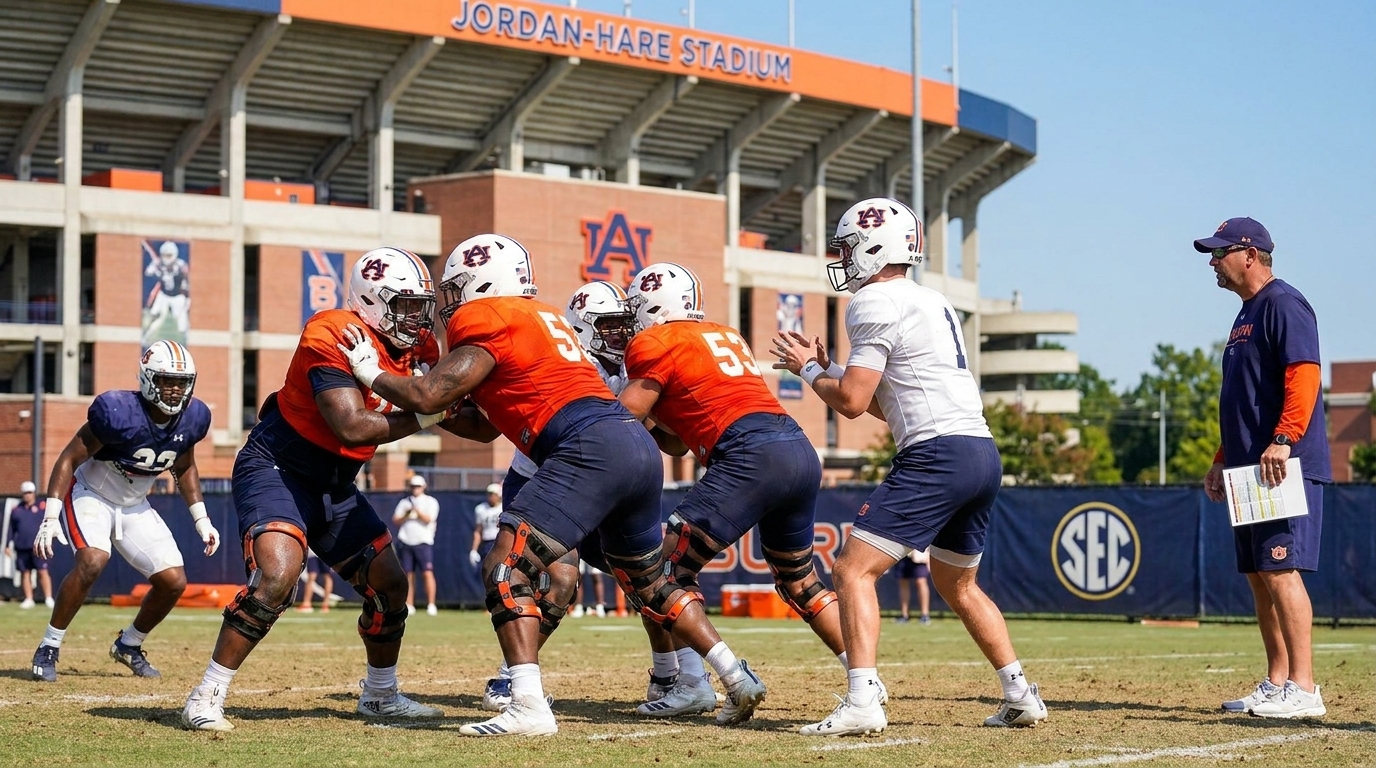
The Auburn offensive line faces perhaps the biggest question facing Alex Golesh’s first team. Because SEC rushers hit hard and fast, protecting the quarterback will decide many games. Joel Gordon joins Golesh as offensive coordinator, and his track record with quarterbacks inspires cautious optimism. However, the line needs cohesion, depth and consistent pass protection to withstand elite edge rushers. Only three of five spots have clear starters, so depth and flexibility matter greatly.
Byrum Brown arrives with Golesh, while Jo Simmons, Tai Buster and others push for roles. The nine-game schedule in 2026 raises the stakes, making every misstep more costly. Therefore, coaches must build a protection unit capable of handling power fronts and creative blitzes. Spring flashes offered promise, yet sloppy snaps and health questions linger into August. As a result, Auburn fans should feel measured hope, but remain realistic about early growing pains. This preview examines personnel, technique and scheme under Golesh and Gordon.
Auburn faces a clear set of offensive line play challenges heading into 2026. Because the SEC features powerful edge rushers and stout interior defenders, depth matters as much as technique. Joel Gordon brings scheme experience and creative protections, but the line must execute. Only three of five spots have clear starters, so coaches will need reliable backups and swing players to survive a nine-game slate.
Jo Simmons looks like a lock at one tackle spot. Playing both tackle positions in camp, Simmons projects as a sturdy edge presence. However, Stanton Ramil remains a what-if. If Ramil stays healthy he could anchor the other tackle spot. If he does not, Auburn will scramble for experienced options and possibly slide players around. Tai Buster helps in that flexibility. Because Buster can play both tackles and guard, he provides the kind of depth coaches prize.
At guard, Miami transfer Deryc Plazz is a name to watch. Plazz brings physicality in run blocking and some pass set polish. Yet depth beyond Plazz is thin. Cole Best surfaced as a leader in spring practice. Despite a couple of bad snaps on A-Day, he was the most consistent performer, according to spring reports. As a result, Best could stabilize the center spot, but the unit cannot afford repeated mental errors against top SEC fronts.
Depth remains the single biggest concern. Auburn Undercover’s Nathan King noted the issue bluntly: there may not be a bigger question for Golesh’s first team at Auburn. Therefore, injuries or poor play can force rotations that weaken protection. The coaching staff must blend veterans and transfers with younger players quickly. Moreover, the nine-game schedule raises the cost of early mistakes. Every missed assignment will compound over fewer games.
Coaches should prioritize continuity and simple, effective protections at first. Joel Gordon’s history with high-volume passing attacks gives hope for quick fixes in scheme. For broader roster context and related Auburn coverage, see this article and recruiting coverage at this link. Meanwhile, Auburn’s programwide challenges and offseason moves appear in other team previews at this preview.
Ultimately, this offensive line has promising pieces. Jo Simmons, Tai Buster and Deryc Plazz offer starting-level traits. Yet Stanton Ramil’s health and the thin depth chart create genuine concern. If the staff stabilizes center play and reduces mental mistakes, the unit can protect Byrum Brown and give Joel Gordon room to operate. Until then, cautious optimism fits the outlook.
| Position | Clear Starter | Potential Starters | Transfer Players | Key Notes |
|---|---|---|---|---|
| Left tackle | Jo Simmons | Stanton Ramil; Tai Buster | Jo Simmons (James Madison); Stanton Ramil (Michigan State) | Simmons projects as a starting tackle; Ramil brings experience if healthy; Buster offers swing ability |
| Left guard | No clear starter | Tai Buster; Deryc Plazz; internal options | Deryc Plazz (Miami) | Depth is thin here; interior pass protection needs reinforcement |
| Center | Cole Best | Backup center candidates; reserve guards | None notable | Best was most consistent in spring despite a couple bad snaps; leadership role; mental errors must be minimized |
| Right guard | No clear starter | Deryc Plazz; Tai Buster; other backups | Deryc Plazz (Miami) | Plazz is a name to watch for physicality in run game; guard depth remains a concern |
| Right tackle | Tai Buster (projected) | Stanton Ramil; internal options | Stanton Ramil (Michigan State) | Buster can play multiple spots and likely starts somewhere; Ramil’s health is the key variable |
Notes: Three of five spots currently show a projected clear starter (Simmons, Best, Buster). Injury watch on Stanton Ramil could force position shuffles. Depth and flexibility will determine Auburn offensive line durability against SEC rushers.
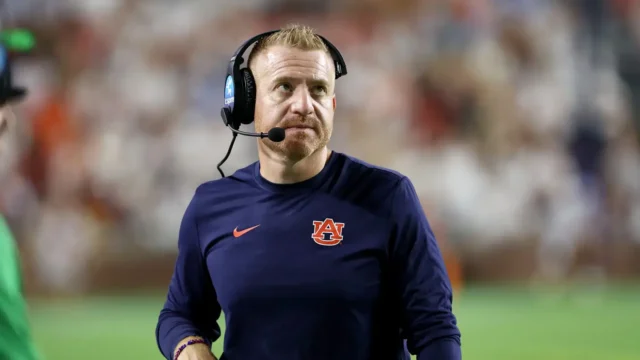
Alex Golesh’s arrival brings renewed focus to line development. Joel Gordon’s hire adds offensive credibility and schematic variety. Together they deliver cautious optimism about the Auburn offensive line and QB play. However, optimism must meet hard work in the weight room and on the practice field.
Joel Gordon has a strong record developing 3,000 plus yard quarterbacks. In eight seasons as a play caller and QB coach, he helped produce high-volume passing attacks. Therefore, his presence matters for QB play and the protection plans. Moreover, Gordon favors creative play-calling that uses quick releases, rollouts and RPOs to limit heavy rushes. Because of that, the OL can face fewer full-speed one-on-one rushes.
Alex Golesh brings a cohesive offensive identity. His system emphasizes tempo and scheme diversity. As a result, line calls and protections can simplify against complex SEC looks. For example, pre-snap motion and quick passing concepts can neutralize elite edge rushers. Also, Golesh and Gordon can use multiple personnel groupings to mask inexperienced starters.
Coaching impact goes beyond scheme. Staff priorities include fundamentals, communication and cross-training linemen. They plan to build interior strength and cleaner snap exchange work, which reduces early-game mistakes. In addition, coaches will stress situational protection and slide rules for blitzes. Consequently, the line should improve its consistency over camp and fall practice.
Still, schematic fixes cannot fully erase talent or health issues. Stanton Ramil’s availability and overall depth will shape outcomes. Therefore, the staff must develop backups and emphasize reliability. If Alex Golesh and Joel Gordon execute their plan, the line could protect Byrum Brown and open windows for explosive plays. Until then, measured hope remains the right stance.
CONCLUSION
The Auburn offensive line remains a central question for Alex Golesh’s first full season. There are promising building blocks, yet real depth concerns still exist. Jo Simmons, Tai Buster and Cole Best offer clear traits coaches can trust. However, Stanton Ramil’s health and interior depth will shape the unit’s ceiling. Joel Gordon’s system and creative play-calling improve the outlook for QB play. Therefore, quick releases and scheme diversity can mask inexperience up front. Because the SEC features elite rushers, execution must match schematic hope. As a result, fundamentals, communication and cross-training will matter most in camp. Coaches must also develop reliable backups before the nine-game schedule begins. If the staff closes gaps and limits mental errors, protection will improve. If not, pressure and turnovers could derail early momentum. In short, cautious optimism fits the projection for 2026.
SECFB LLC provides this analysis based on spring reporting and roster moves. Visit SECFB.com for more coverage and follow on Twitter/X at @ZachGatsby. We will update this preview as depth charts and health reports evolve.
Frequently Asked Questions (FAQs)
Who is likely to start?
Jo Simmons, Cole Best and Tai Buster project as starters. Only three spots are settled now. Stanton Ramil’s health could change the tackles.
How will transfers help?
Deryc Plazz and Stanton Ramil add experience. However, interior depth still looks thin and needs reinforcement.
What can coaches change?
Alex Golesh and Joel Gordon bring creative play-calling and QB play development. Quick passes and motion should reduce clean pass rushes.
Does the nine-game slate matter?
Yes. Fewer games raise the cost of early mistakes. Therefore, coaches must lock depth and limit turnovers.
When will clarity arrive?
Expect fall camp and preseason to set the five. Until then, cautious optimism fits the Auburn offensive line outlook. We will track starters, injuries and depth as camp progresses, so readers should check updates frequently via SECFB regular coverage and social updates.