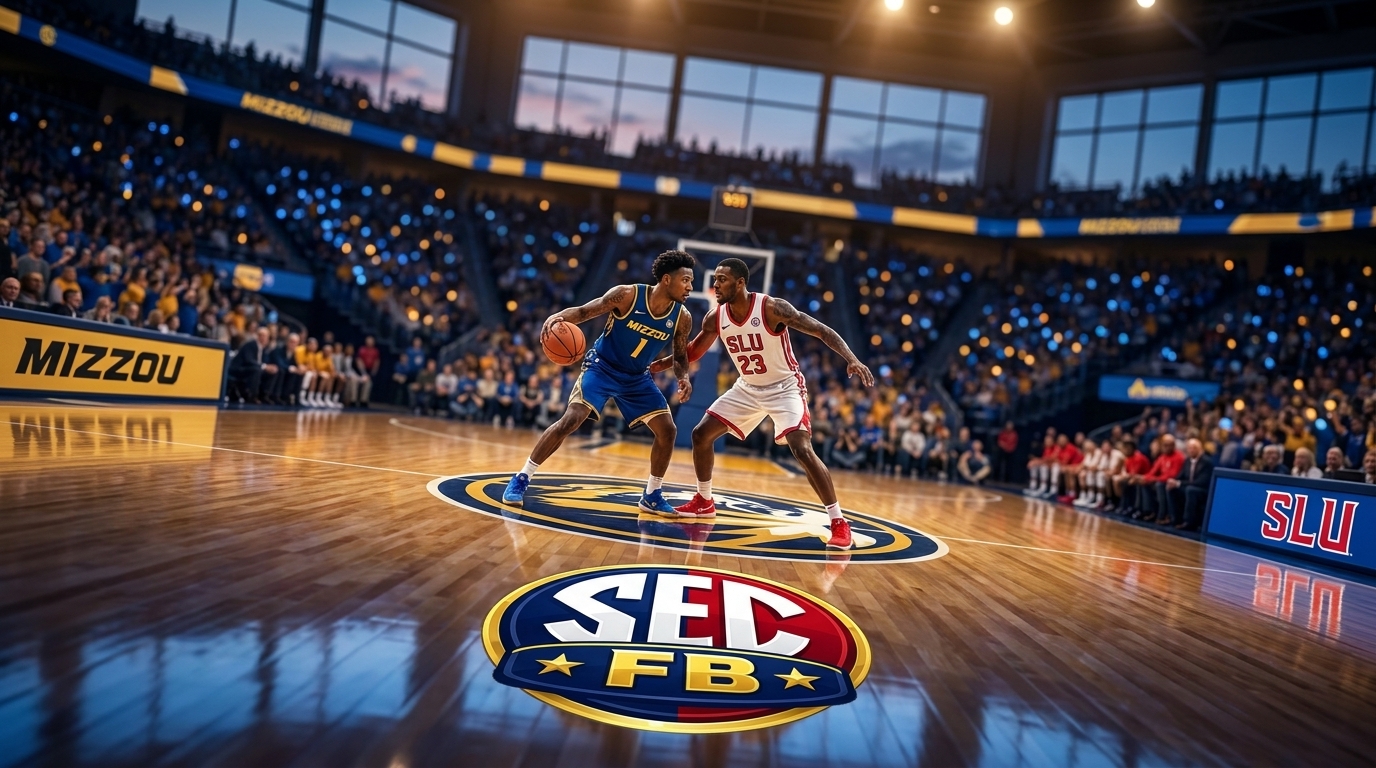
Mizzou-SLU basketball three-game series is close to agreement, and it already stirs fan excitement across Missouri. The tentative date of November 6 at Enterprise Arena highlights the stakes. However, the matchup matters beyond one night for fans and program building.
Analytically, this non-conference three-game series offers Missouri a quality Quad 1 test. Moreover, SLU projects upward on KenPom ratings and on-court resume strength. Therefore, the neutral court setting in St. Louis keeps the game fair.
Coaches and administrators see scheduling upside if future games move onto campus. Fans hope for a true road game, because campus energy fuels rivalries and attendance. Cuonzo Martin era context and recent coaching turnover add narrative interest to the series. As a result, the matchup could grow into a recurring regional rivalry.
Beyond basketball, Missouri sports show growth across softball and track. For example, Abby Carr and Sidney Forrester lead strong offensive seasons. These gains build fan optimism and make the Mizzou-SLU slate more compelling. In short, the potential series fuels hope, ticket demand, and statewide buzz.

Details of the Mizzou-SLU basketball three-game series: Scheduling and Significance
The three-game series currently lists November 6 at Enterprise Arena in St. Louis as the tentative opener. This neutral court date gives both teams a high-profile platform. Moreover, the matchup matters for non-conference strength of schedule and resume building.
Key scheduling facts and implications
- Date and venue: November 6 at Enterprise Arena in St. Louis. This neutral-court site centers the game in the regional market. For more venue details, see Enterprise Center.
- Football conflict: Mizzou plays Texas the following day. Therefore, travel and staffing logistics require careful planning.
- Quad 1 status: Because SLU projects as a top 50 program and Missouri should match that level, the matchup ranks as a Quad 1 game on a neutral court. For an explanation of quadrants, consult the NCAA guide at NCAA guide.
- Future campus games: Administrators hope to move subsequent contests to campus sites. As a result, campus energy could deepen the rivalry.
Analytical perspective and commentary
Jon Rothstein observed, “A three game series would be good as long as Josh Schertz stays there and keeps the program rolling.” This underlines continuity as a benefit. Frank Cusumano added, “There’s only advantages now for both teams. SLU projects as a top 50 level program next season, and Missouri should be as well.” Therefore, both teams gain quality wins or constructive losses.
Why this matters
- Strength of schedule gains and NCAA selection credit follow from playing a Quad 1 game. Because neutral-court games reduce home-court bias, the selection committee tends to reward those matchups.
- Fan interest and ticket demand should rise across Missouri, especially if future games rotate to campus.
- Finally, the series could renew a durable regional rivalry, boosting recruiting and media attention for both programs.
For team pages and roster context, see Missouri athletics and SLU athletics.
| Program | Coaching Turnover | KenPom Rating (avg since 1999) | Projected Team Ranking (next season) | Notable Players |
|---|---|---|---|---|
| Mizzou | 6 head coaches in recent history, indicating coaching turnover | 70 | Projected top 50 program | Roster leaders expected to emerge next season, names TBD |
| SLU | 6 head coaches in recent history, indicating coaching turnover | 111 | Projected top 50 program | Roster leaders expected to emerge next season, names TBD |
Notes
- KenPom averages show long term program performance and help frame expectations.
- This comparison highlights similarity in coaching turnover and projected top 50 status, which makes the series a meaningful Quad 1 neutral court test.
Future outlook: Mizzou SLU basketball three game series and rivalry impact
The three game series has clear potential to become a lasting regional rivalry. If organizers rotate games to campus, intensity will rise quickly. True road games deliver louder crowds and more energized student sections.
On campus possibilities
- Rotate games to each campus to boost home court energy and student engagement.
- Increase ticket sales and local media coverage by staging marquee dates on campus.
- Manage logistics carefully to avoid conflicts with football and other events.
Moreover, campus rotation affects nonconference scheduling and logistics.
Non conference scheduling impact
- Strengthen both teams nonconference slates with Quad 1 level tests that aid postseason resumes.
- Provide high quality neutral site games early in the season to improve RPI and KenPom profiles.
- Create predictable scheduling that helps coaches plan nonconference balance and strength of schedule.
Fan enthusiasm and recruiting
- Give fans a recurring regional matchup to rally around and drive higher attendance.
- Showcase meaningful games for recruits close to home and expand recruiting pipelines.
- Amplify television exposure and local coverage which improves program visibility.
Overall, with steady scheduling, campus rotation, and growing fan interest, this series can become a durable, season to season fixture for both programs.
Conclusion
The Mizzou-SLU basketball three-game series carries clear significance for both programs and for Missouri fans. Analytically, the matchup strengthens non-conference schedules and offers Quad 1 test opportunities. Moreover, because both teams project toward top-50 status, the games will matter to NCAA resumes without penalizing competitive losses. Therefore, coaches, recruits, and administrators all gain tangible benefits from a recurring regional tilt.
From a fan perspective, the series renews local interest and creates yearly moments to rally around. If future games move to campus, the rivalry should intensify. Additionally, true road games can magnify atmosphere, attendance, and recruiting advantages. As a result, the series could evolve into one of the state’s most anticipated non-conference fixtures.
Optimistic projections and continuity in coaching and recruiting make the outlook favorable. In short, the potential renewal of the Mizzou-SLU basketball three-game series promises competitive value, recruiting lift, and renewed fan energy across Missouri. For more insightful sports coverage, visit SECFB.com or follow on Twitter @ZachGatsby.
Frequently Asked Questions (FAQs)
What is the current status of the Mizzou-SLU basketball three-game series?
The series is close to agreement, with a tentative opener on November 6 at Enterprise Arena in St. Louis. Teams are still finalizing logistics, contracts, and venue details.
Why does the date and venue matter?
The November 6 neutral-court site matters because it centers the matchup in the regional market. Additionally, Mizzou plays Texas in football the next day, so travel and staffing logistics require careful planning.
How will this series affect NCAA evaluations and resumes?
Because both programs project toward top-50 status, the series qualifies as a Quad 1 game on a neutral court. Therefore, the selection committee will likely give credit for playing the matchup, and a loss would not unduly harm either resume.
Could future games move to campus?
Many fans hope so, and administrators have discussed campus rotation to boost atmosphere. As one fan put it, “c’mon guys… play a true road game.” Moving games on campus would increase student engagement and home-court energy.
What are the benefits for fans and recruiting?
The series should create stronger local interest, higher ticket demand, and more television attention. Moreover, recruits gain exposure to meaningful regional games close to home, which can help recruiting pipelines for both programs.