Introduction
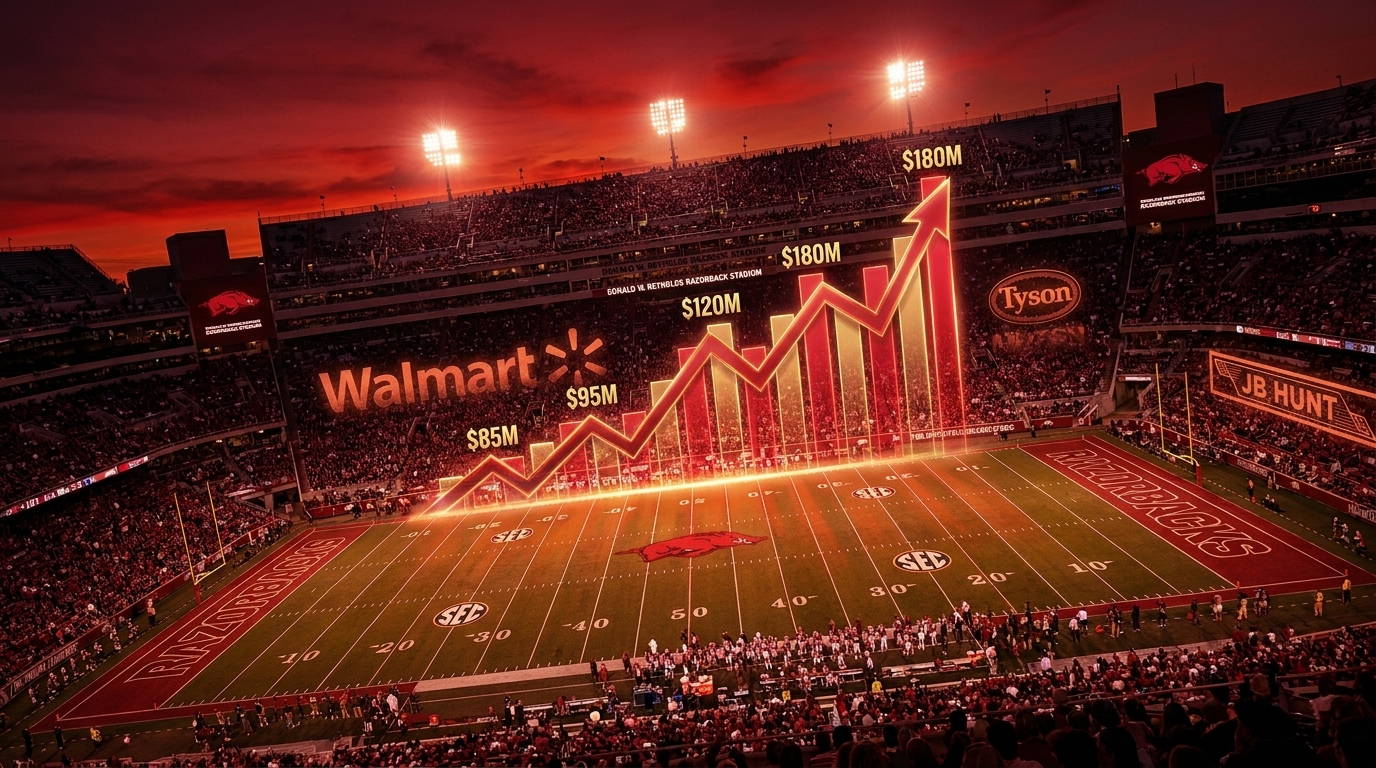
Arkansas multimedia rights deal and stadium naming agreements have produced an unprecedented financial surge for the Razorbacks. Because this boost comes amid a major push for SEC competitiveness, it matters a great deal. As a result, the university can rework budgets, attract talent, and invest in facilities.
Reports suggest the multimedia partner could approach half a billion dollars over 10 to 12 years. Meanwhile, sources call the stadium naming agreement one of college football’s largest deals. Therefore, annual payouts could rise to levels that rival top programs.
That money will support recruiting, coaching pay, and player resources. Moreover, the new revenue helps fund an endowment and long-term stability. Consequently, Arkansas can compete more consistently in the SEC.
Optimistic yet measured, this financial package does not guarantee wins. However, because resources are now available, the Razorbacks gain a clearer path to higher competitiveness. With smart spending and community support, the program can convert revenue into sustained success.
Related keywords and phrases: stadium naming rights, multimedia rights MMR, licensing deals, NIL revenue sharing era, endowment and fundraising.
Arkansas multimedia rights deal: scope and structure
The Arkansas multimedia rights deal could reshape Razorbacks revenue for a decade. Reports place the value close to half a billion dollars over 10 to 12 years. That equates to roughly fifty million dollars per year. Because that scale rivals elite SEC payouts, the university gains immediate financial flexibility.
Key structural points
- Reported term 10 to 12 years, providing long term income certainty.
- Estimated total value close to half a billion dollars, implying about fifty million dollars annually.
- The deal would replace or significantly expand the prior Learfield agreement from 2008. The Learfield arrangement previously totaled about one hundred thirty seven million dollars.
- Revenue can fund recruiting, coaching salaries, player development, and capital projects.
How the Arkansas multimedia rights deal stacks up
To measure impact, compare similar recent deals. These peers set the market for multimedia and MMR contracts. Therefore, Arkansas can benchmark targets and expectations.
Comparative highlights
- Texas A&M secured a long term MMR deal worth roughly five hundred fifteen million dollars, spread over fifteen years. As a result, its annual payout rose to a high competitive level.
- Kentucky extended with a partner for about four hundred sixty five million dollars across ten years. Consequently, its annual average sits around forty six million dollars.
- Auburn signed a shorter deal valued near two hundred thirty million dollars over ten years. That agreement positions Auburn solidly in the middle tier.
- Penn State also partnered with a major rights company, further signaling strong market demand for big conferences.
Implications for Arkansas
- If finalized, Arkansas will join the top revenue tier in the SEC. As a result, the athletic department can increase operating budgets.
- The funding stream reduces reliance on one time gifts. Instead, the program gains predictable annual revenue.
- With prudent allocation, funds could support a fifty million endowment goal and restore previously cut programs.
Overall, the Arkansas multimedia rights deal promises to change the financial baseline. Thus, the Razorbacks gain tools to compete for recruits and staff at a higher level.
Multimedia rights deals: SEC comparison
Quick comparison of recent SEC multimedia rights contracts and partners.
| School | Deal worth | Duration | Approx annual payout | Multimedia rights partner |
|---|---|---|---|---|
| Arkansas | Close to $500 million (reported) | 10–12 years (reported) | ~ $50 million per year (estimated) | Pending partner; replacing Learfield |
| Texas A&M | $515 million | 15 years | ~ $34 million per year | Playfly Sports |
| Kentucky | $465 million | 10 years | ~ $46.5 million per year | JMI |
| Auburn | $230 million | 10 years | ~ $23 million per year | Playfly Sports |
| Penn State | Not publicly disclosed | Not publicly disclosed | Not publicly disclosed | Playfly Sports |
Note: Arkansas previously extended a Learfield deal worth $137 million.
Broader financial strategy and long term implications for Razorbacks competitiveness
Arkansas has pursued more than one major revenue move to boost competitiveness. Because multimedia rights offer predictable annual cash, the athletic department pairs that income with stadium naming rights and endowment growth. As a result, the program gains both short term flexibility and long term stability.
Stadium naming rights and scale
- Sources report that the stadium naming agreement “is on the verge of announcing what it is calling the largest stadium naming rights deal in college football,” according to WholeHogSports. Therefore, the size of that deal could rival the largest private gifts in college athletics.
- Because naming revenue often includes multi year payments and corporate partnerships, it can fund capital projects immediately.
- Consequently, new funds could modernize facilities and enhance fan experiences.
Endowment goals and budget strategy
- The university aims to build sustainable funding, including a reported fifty million dollar endowment drive. This endowment would support operations and scholarships in perpetuity.
- Earlier cost management included temporarily shifting a two point five million dollar tennis program burden onto supporters. However, the program was later reinstated as fundraising recovered.
- The endowment approach reduces reliance on annual discretionary gifts. Therefore, it protects core programs during revenue dips.
How these moves position Arkansas
- Together, multimedia rights and naming revenue create a predictable revenue base. As a result, Arkansas can plan multi year contracts for coaches and staff.
- With new money, the athletic department can increase recruiting budgets, upgrade training resources, and expand support staff.
- Moreover, predictable funding improves bargaining power in conference conversations and NIL era strategies.
Context and caution
- The Donald W. Reynolds Foundation agreement expired roughly two years ago, creating a funding gap. Therefore, these new deals serve as strategic replacements.
- However, revenue alone does not guarantee on field success. Still, when paired with disciplined spending, these moves markedly increase the Razorbacks chance of sustained competitiveness.
Conclusion
The Arkansas multimedia rights deal and the stadium naming agreement mark a turning point for Razorbacks finances. Because the reported multimedia package approaches half a billion dollars, Arkansas gains a new revenue baseline. This predictable income pairs with naming revenue and endowment efforts to fund recruiting, facilities, and coaching stability.
As a result, the athletic department can plan multi year contracts and invest in player development. Moreover, predictable funds reduce reliance on one time gifts and volatile fundraising. However, revenue does not guarantee wins; disciplined allocation remains essential.
For ongoing, data driven coverage of college sports finance, consult SECFB LLC. Visit SECFB.com or follow Twitter/X @ZachGatsby for updates and analysis. These sources track multimedia rights, stadium naming trends, and conference economics.
In short, Arkansas stands in a far stronger financial position than a year ago. With smart stewardship, the Razorbacks can turn this revenue surge into sustained SEC competitiveness. The future looks optimistic and financially resilient.
Frequently Asked Questions (FAQs)
What exactly is the Arkansas multimedia rights deal?
The reported Arkansas multimedia rights deal would grant a partner long term control of broadcast and licensing rights. Reports place the value close to half a billion dollars over 10 to 12 years. Therefore, the deal could deliver about fifty million dollars per year in predictable revenue.
How will the university use this new revenue?
The athletic department plans to boost recruiting budgets and improve facilities. It will also support coach and staff compensation, player resources, and capital projects. Moreover, leaders aim to grow an endowment to protect programs during revenue dips.
How does Arkansas compare to other SEC multimedia deals?
Texas A&M signed a 15 year, $515 million contract with Playfly Sports. Kentucky agreed to a 10 year, $465 million deal with JMI. Auburn’s 10 year deal sits near $230 million. As a result, Arkansas would join the top revenue tier if the half billion figure holds.
Does this deal guarantee more wins on the field?
No. Money improves resources but does not automatically produce wins. However, when paired with smart spending and strong coaching, revenue increases the chance of sustained competitiveness.
What are the next milestones and timeline?
Expect a stadium naming announcement in June, according to sources. Meanwhile, the multimedia partner selection and contract finalization should follow. Consequently, key budgets and endowment campaigns will move forward in the coming year.