College football preseason top-25 rankings for 2026: Man vs. Machine
College football preseason top-25 rankings for 2026: Man vs. Machine frames the debate between expert ballots and algorithmic analytics. This piece explains how humans and models differ in early rankings. We focus on the SEC title race and the ways each method shifts expectations.
Human experts weight roster talent, spring camp impressions, and transfer portal moves. For example, Sam Khan Jr. and Austin Mock ranked their own post-spring top 25 to compare opinions. Their ballots emphasize veteran quarterbacks and incoming transfers. However, analytics models use efficiency metrics, returning production and opponent-adjusted numbers.
As a result, the two approaches produce different SEC title forecasts. Machine models may downgrade teams that lose coaches or starters. Conversely, human voters may overvalue reputation and headline transfers. Therefore, comparing both yields stronger preseason insight and better debate-driven predictions.
Timing matters because less than 90 days remain until college football returns. Consequently, early differences shape media narratives and betting markets. For example, a model that penalizes incoming portal churn may push a team down even if public perception rises. Therefore, readers should weigh both man and machine inputs before trusting any SEC title projection.

The human expert approach to preseason rankings
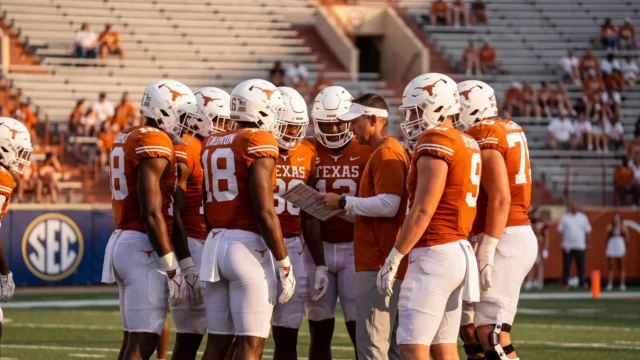
Human experts use scouting, spring observations, and roster context. They weigh transfers, returning starters, and coaching continuity. As a result, they form ballots that reflect on-field potential and storyline momentum. Experts like Sam Khan Jr. and Austin Mock also factor in leadership and intangibles.
College football preseason top-25 rankings for 2026: Man vs. Machine — the human take
Experts tend to prioritize visible roster upgrades. For example, the reigning champs rose in many ballots because they had the No. 2 transfer portal class. Conversely, teams that lost key starters or coaches often fall in expert lists.
Key player and team insights from the human approach
- Quarterback stability matters. Experts reward veteran quarterbacks such as Josh Hoover and Drew Mestemaker for proven production. Therefore, teams with experienced passers often climb.
- Transfer impact is contextual. Experts highlight classes like the Tigers top-ranked portal haul because of players such as Sam Leavitt and Princewill Umanmielen. However, they probe whether newcomers fit schemes.
- Spring camp impressions carry weight. Observers adjust rankings after spring drills and positional battles. As a result, surprise contenders can emerge late in the preseason.
- Recruiting and NFL pedigree influence perception. For instance, pro-level prospects such as Arch Manning and Cam Coleman skew human expectations because they project early impact.
- Coaching and continuity shape votes. Experts downgrade teams that lack returning cohesion. Consequently, roster churn can hurt short-term rankings despite long-term talent.
How experts differ from pure metrics
Experts blend qualitative and quantitative evidence. They assess film and intangibles, while also citing returning production and transfers. Therefore, human ballots often favor roster narratives and player-level evaluations. This method produces rankings that reflect projected chemistry and immediate readiness. As a result, human-driven lists remain essential for interpreting SEC title race implications.
| Rank | Human experts (Khan / Mock consensus) | Machine analytics | Diff (Human minus Machine) | Key transfer portal impact | Ranking logic |
|---|---|---|---|---|---|
| 1 | Georgia | Georgia | 0 | Reigning champs retained top pieces; No. 2 portal class helped depth | Human trust in continuity; machine rewards returning efficiency |
| 2 | Alabama | Ohio State | +1 | Alabama added veteran defenders; portal fits scheme | Experts value recruiting and name recognition; model prefers efficiency metrics |
| 3 | Ohio State | Alabama | -1 | Ohio State gains in OL depth via portal | Machines account for opponent-adjusted offense; humans weigh QB pedigree |
| 4 | Texas | Texas | 0 | Moderate portal turnover, but key starters return | Balance of returning production and roster talent in both methods |
| 5 | TCU | TCU | 0 | Josh Hoover return noted by experts for stability | Human emphasis on proven QB; machine factors past yardage and efficiency |
| 6 | LSU (Tigers) | LSU | 0 | Tigers had the No. 1 transfer class: Sam Leavitt, Jordan Seaton, Princewill Umanmielen | Experts reward headline portal pickups; model tests fit and efficiency |
| 7 | Michigan | Michigan | 0 | Minimal portal loss; depth intact | Continuity favors both ballots and models |
| 8 | Oklahoma | Oklahoma State | +7 | Oklahoma’s portal added playmakers, but machines skeptical of fit | Experts bet on upside; models penalize schematic uncertainty |
| 9 | USC | USC | 0 | Added an experienced receiver via portal | Humans like talent accumulation; machines weight schedule and returners |
| 10 | Florida | Clemson | +3 | Florida’s portal haul includes an impact edge rusher | Experts boost on splash transfers; machines adjust by returning production |
| 11 | Tennessee | Tennessee | 0 | QB battle unsettled after spring | Experts factor leadership; machines project based on historical numbers |
| 12 | Penn State | Penn State | 0 | Defensive transfers strengthen depth | Human view of coaching development; machine uses unit-level metrics |
| 13 | Oregon | Oregon | 0 | Stable offense; portal additions are role players | Machines reward continuity; humans note scheme fit |
| 14 | Clemson | Miami | +1 | Clemson lost and gained via portal; questions remain | Experts consider culture and coaching; machines use adjusted stats |
| 15 | Notre Dame | Notre Dame | 0 | Spot additions in secondary via portal | Human ballots lean on recruiting class; models use returning snaps |
| 16 | North Texas | North Texas | 0 | Drew Mestemaker noted as top returning passer in 2025 | Experts overweight proven passers; machines evaluate passer efficiency |
| 17 | Ole Miss | Ole Miss | 0 | Key WR transfer adds immediate weapon | Humans project game-changing additions; machines need deeper sample size |
| 18 | Kentucky | Kentucky | 0 | Improved OL through portal | Experts reward positional upgrades; machines assess line metrics |
| 19 | Auburn | Auburn | 0 | Coaching continuity debated after spring | Humans vary by storyline; machines penalize turnover in coaching |
| 20 | Missouri | Missouri | 0 | Young QB development cited by experts | Human optimism on development; machines favor past production |
| 21 | Mississippi State | Mississippi State | 0 | Added depth on both lines via portal | Experts value NFL-caliber talent; machines test unit output predictions |
| 22 | Texas A M | Texas A M | 0 | Heavy portal churn but upside talent | Humans gamble on upside; models account for roster volatility |
| 23 | Arizona State | Arizona State | 0 | Incoming portal pieces expected to start immediately | Experts like immediate impact players; machines need proven snaps |
| 24 | Utah | Utah | 0 | Defense retains core starters | Human emphasis on returning starters; machines prefer efficiency continuity |
| 25 | Stanford | Stanford | 0 | Balanced incoming transfers and recruits | Both approaches converge when returners and transfers match |
Notes
- Diff column shows how many spots humans rank a team higher (positive) or lower (negative) than machines.
- Key transfer portal impact uses known portal headlines, for example the Tigers top-ranked class and the reigning champs No. 2 class.
- Ranking logic briefly summarizes the principal reason each method favors or doubts a team.
College football preseason top-25 rankings for 2026: Man vs. Machine — the analytics model
Analytics models convert roster facts into probabilistic forecasts. They ingest returning production, transfer portal data, and opponent adjusted efficiency. For example, models give weight to Josh Hoover because no returning FBS quarterback threw more yards in the past three seasons. Therefore, TCU benefits in machine projections even if public perception lags.
How the model builds its rankings
- Returning production and snap continuity. Models track returning snaps and scoring contribution to estimate unit stability. Consequently, teams that keep core starters score higher.
- Transfer portal weighting and fit. Models count portal talent but test scheme fit with historical player level data. As a result, headline transfers can move a team only when the fit metric is strong.
- Player level stats and sample size. Models use efficiency measures not raw volume. For instance, Drew Mestemaker leads past passing lists, so models adjust for accuracy and yards per attempt.
- Schedule and opponent adjustment. Machines normalize performance by opponent strength and location. Therefore, tough non conference slate can lower a ranking even with strong personnel.
- Predictive techniques. Models run Monte Carlo simulations and use expected points added and win probability. Thus they output a range of outcomes and a confidence score for each team.
Key differences the model exposes
- Machines penalize roster churn more than humans. Consequently, teams with heavy portal turnover often drop in model ranks. However, humans may overreact to splashy additions.
- Machines reward efficiency and continuity. Teams with high returning yards and efficient defense climb even without headline transfers.
- Machines quantify uncertainty. They provide projected win totals and conference title probabilities rather than a single ordered list.
Implications for the SEC title race
Finally, models can shift favorites by revealing underlying efficiency. Therefore, a team that looks stable on paper may outrank a flashier roster. Readers should use both approaches to form a balanced preseason view on the SEC title race.
Man and machine offer distinct value in preseason rankings.
Human experts surface roster context, intangibles, and spring camp reads.
They highlight veteran quarterbacks like Josh Hoover and Drew Mestemaker.
However, analytics quantify efficiency, returning production, and portal fit.
As a result, each method changes SEC title odds differently.
Machines penalize roster churn and reward returning efficiency.
Conversely, experts reward leadership and instant scheme fit.
Therefore, contrasting both produces a fuller preseason picture.
Practically, blend model probabilities with scout observations before betting or writing.
For example, a Tigers portal class can lift human ranks quickly.
Meanwhile, models test that class for fit and measurable impact.
Consequently, readers should treat headlines and numbers as complementary.
SECFB LLC combines analytics and reporting for actionable college football insights.
Visit SECFB.com to read deeper models and roster breakdowns.
Follow Twitter/X @ZachGatsby for quick takes and data alerts.
Finally, use disciplined analysis to judge SEC title forecasts, not hype.
With less than 90 days until kickoff, early signals matter.
Thus analysts should update models as spring and portal news emerge.
In sum, Man vs. Machine is not binary; it is synergistic.
Frequently Asked Questions (FAQs)
What is the difference between Man and Machine rankings?
Man rankings rely on expert judgment, film study, and spring impressions. Experts weigh transfers, leadership, and scheme fit. However, machine rankings rely on data and predictive models. Machines use returning production, efficiency and opponent adjustments. Therefore, both methods highlight different strengths.
How do these approaches change SEC title race predictions?
Experts may favor teams with veteran quarterbacks and big portal hauls. Machines reward continuity and efficiency. As a result, machines can downgrade teams with heavy roster churn. Conversely, experts sometimes boost high upside teams based on fit and coaching.
What role does the transfer portal play?
The portal reshapes rosters rapidly. Experts often reward headline additions quickly. However, machines test how transfers fit systems and measure sample size. Consequently, a top portal class can move human ballots more than machine ranks.
What key metrics do analytics models use?
Models track returning yards, returning snaps, yards per attempt, and efficiency. They also use opponent adjusted metrics and Monte Carlo simulations. Therefore, models output win probabilities and title odds rather than just a list.
How should readers use both methods?
Combine human scouting with model outputs for a fuller view. Use experts for context and machines for probabilities. Meanwhile, update both as spring and portal news arrives. This approach yields smarter preseason decisions.