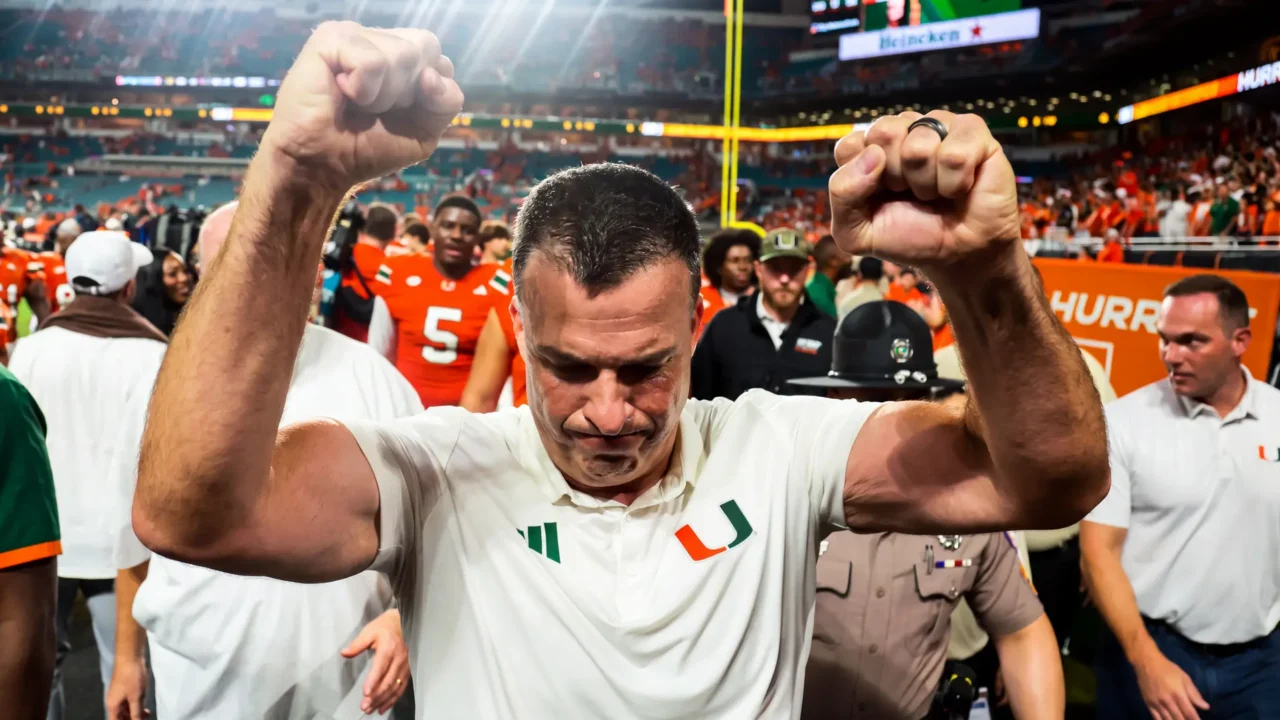
Miami fans and recruits just gained a major piece of certainty: the program will continue under Mario Cristobal as it heads into Year Five under his direction. The Mario Cristobal Miami extension matters because continuity at head coach directly affects staff retention, scheme stability and the message sent to top prospects in Coral Gables.
Per reporting from Saturday Down South, Cristobal has agreed to a long-term contract extension as Miami follows a multi-year climb back to the national stage. The timing comes after a 13-3 season that ended with a run to the national title game and significant roster movement this offseason.
Key Takeaways
- The Mario Cristobal Miami extension was reported by a national beat reporter and signals continuity in Coral Gables for the near future.
- Cristobal enters Year Five after leading Miami to a 13-3 season and a berth in the national title game last year.
- The Hurricanes retained key offensive pieces and added Duke transfer Darian Mensah while keeping core skill players like Malachi Toney and Mark Fletcher.
- Replacing the pass-rush production lost in Akheem Mesidor and Rueben Bain is a clear roster challenge ahead of 2026.
Mario Cristobal Miami extension and immediate coaching outlook
The extension formalizes what many around the program had hoped for: a continued coaching platform around Cristobal’s vision. Cristobal has overseen steady year-to-year improvement culminating in last season’s 13-3 record and national title game appearance, and the reported deal buys more runway for staff continuity and schematic investment.
From a staffing perspective, a signed extension reduces the churn that often follows rapid success and high-profile seasons. That stability makes it likelier the Canes can retain coordinators and position coaches who recruited and developed last year’s roster, limiting mid-cycle disruption that can cost commitments and slow on-field progress.
Stable leadership also helps with installation and refinement of schemes; coaches can iterate rather than rebuild. For players, that means fewer adjustments to playbooks and clearer expectations entering spring work and fall camp. The net result should be smoother offseason development for both offense and defense.
Roster picture and recruiting momentum
On offense, the Hurricanes enter the next cycle with core playmakers in place and a high-profile transfer arriving to lead the unit. Miami added Duke transfer Darian Mensah and kept top contributors such as wide receiver Malachi Toney and running back Mark Fletcher, preserving continuity at skill spots that drive recruiting conversations.
Retaining those offensive pieces gives the staff tangible examples to show recruits: continuity of personnel and a clear path for skill-player development. That pitch matters when competing for late decisions and when trying to convert portal targets who value a stable coaching room and consistent scheme.
On defense, the departures of Akheem Mesidor and Rueben Bain leave a notable gap in edge production that the staff will have to address through recruiting, internal development and the transfer portal. Those losses focus immediate offseason priorities on edge rushers and defensive front reinforcements ahead of spring and fall evaluation windows.
Recruiting posture with an extension
An extension like this reduces a common recruiting friction point: prospect uncertainty about who will coach them. Prospects prioritizing coaching stability now see a clearer path in Coral Gables, and current commits have fewer reasons to reopen lists because the architect of recent progress remains in place.
That steadiness helps at the margins in NIL conversations and late recruiting pushes, where perceptions of program trajectory and coaching commitment carry weight. While NIL dynamics continue to evolve, the ability to promise continuity in coaching is a concrete selling point on campus visits and in conversations with families and trainers.
Seasonal trajectory and roster context
| Context | Details |
|---|---|
| Season records (2022–2025) | 2022: 5-7; 2023: 7-5; 2024: 10-3; 2025: 13-3, culminating in a national title game appearance |
| Returning offensive core and additions | Miami retained WR Malachi Toney and RB Mark Fletcher while adding Duke transfer Darian Mensah to bolster an already gifted offense |
| Pass-rush departures and replacement need | The team lost key edge producers Akheem Mesidor and Rueben Bain, creating a pressing need for both recruitment and development at rush positions |
The table above pulls together the verified trajectory of the program and the roster facts that matter most for both the upcoming seasons and the 2026 recruiting cycle. Those items frame where Miami stands: an ascending program that now must replace key defensive pieces while keeping its offensive momentum intact.
How the extension affects Miami CFP positioning and recruiting path
With Cristobal locked in long term, Miami can sell sustained stability to recruits who prioritize coaching continuity and a clear path to development. That message is particularly useful when selling against programs that use coaching change as a recruiting lever.
On the College Football Playoff front, retaining a coach who delivered a 13-3 season and a title-game appearance preserves institutional momentum toward 2026 goals. The Canes open the 2026 campaign at Stanford, and the extension increases the odds of a prepared, settled roster heading into that non-conference test.
Operationally, the immediate tasks are clear: staff retention, targeted attention to edge depth, and converting continuity into recruiting classes that sustain playoff contention. If the staff executes on those items, Miami’s recent climb can translate into continued presence in the CFP conversation.