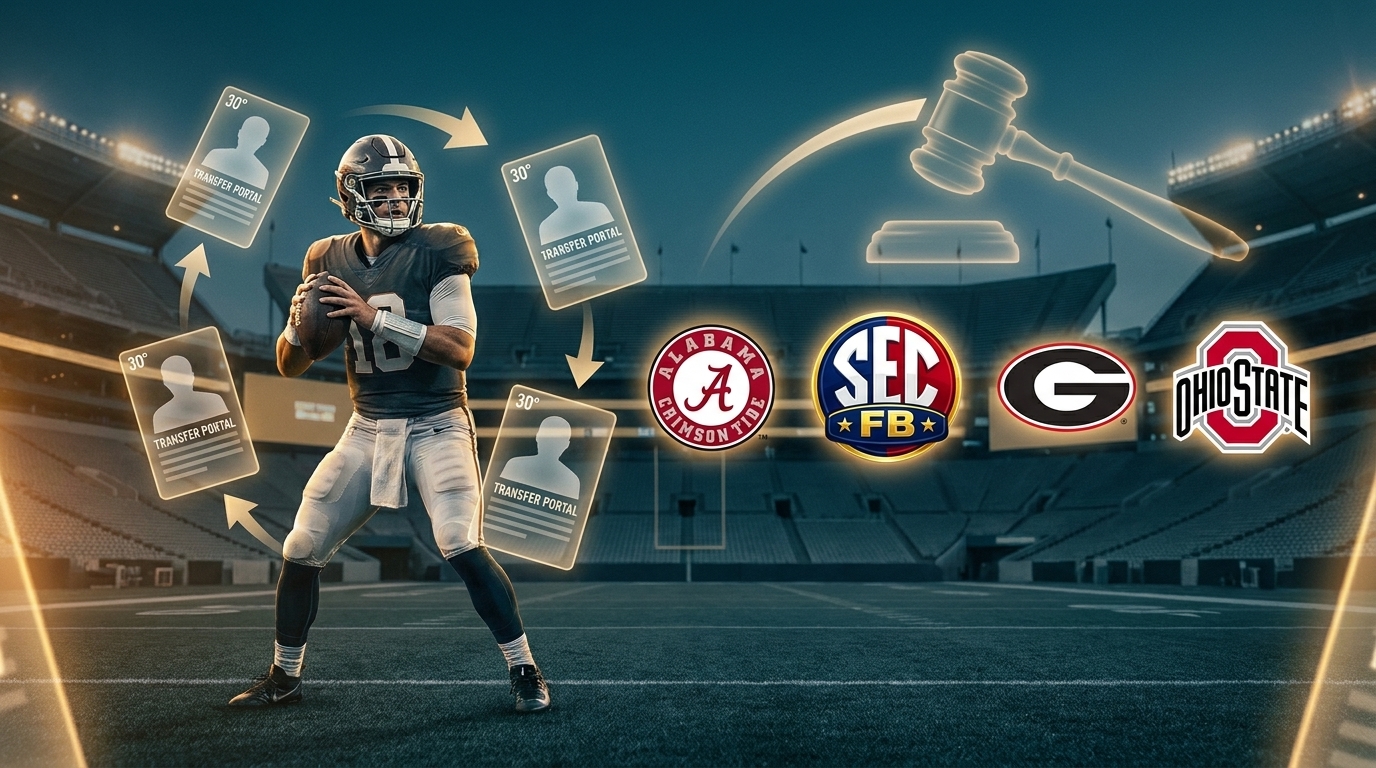
Power 4 offseason moves and NCAA enforcement implications hit college football like a thunderclap this summer. Top transfers, coaching hires and NIL machinations reshaped rosters across the Big 12, SEC, ACC and Big Ten.
However, the Sorsby injunction now forces analysts to ask tougher questions about rules and credibility. Names like Drew Mestemaker following Eric Morris to Oklahoma State, or clusters of players moving through the portal, show that roster management is no longer quiet work but a public spectacle that tests conference power, program strategy and recruiting ethics.
Because schools make the rules the NCAA must enforce, those two forces now collide with legal pressure and public scrutiny that could reshape enforcement priorities and the season itself. If the NCAA fails to present clear, enforceable standards, therefore fans and institutions will face more chaos, and college football could enter a governance crisis that changes who wins on and off the field.

Power 4 offseason moves and NCAA enforcement implications: roster ripple effects
The offseason produced a wave of transfers, coaching hires and roster management gambits that reshaped several Power 4 rosters. Teams used the portal and recruiting networks aggressively. As a result, depth charts look different than they did just months ago. This section breaks down the headline moves and their strategic meaning.
Major moves and patterns
- Drew Mestemaker and Caleb Hawkins followed coach Eric Morris from North Texas to Oklahoma State. Mestemaker led the nation with 4,379 passing yards as a redshirt freshman. Moreover, both were among 17 players who moved from Denton to Stillwater.
- Darian Mensah brought Cooper Barkate with him from Duke to Miami (FL). That pairing shows how coaching relationships shape transfer decisions.
- Eget arrives after throwing 5,555 yards and 30 touchdowns across two seasons as a starter at San Jose State.
- Haynes bolsters backfields after running for 857 yards and 10 touchdowns at Michigan.
How coaching hires drove transfers
Coaching hires fueled portal activity, and coaches acted like architects. For example, Eric Morris rebuilt Oklahoma State’s depth by importing a Denton core. Therefore program identity can shift quickly when a coach changes jobs. Meanwhile, other Power 4 schools targeted players who fit schematic needs rather than just star power. That approach improves roster management because it balances experience and positional need.
Recruiting, strategy and roster management takeaways
These moves underline a new normal in offseason moves and transfers. Programs use NIL, relationships and contact networks to win the portal race. However, that speed creates volatility and forces athletic departments to recalibrate scholarship plans. In short, the transfer era rewards decisive coaching and nimble roster management, and therefore teams that move fastest will likely gain competitive edges next season.
Power 4 offseason moves and NCAA enforcement implications: summary table
| Player/Coach Name | Previous Team | New Team | Position/Role | Key Stats or Highlights | Impact on Team |
|---|---|---|---|---|---|
| Drew Mestemaker | North Texas | Oklahoma State | Quarterback | Led nation with 4,379 passing yards as a redshirt freshman | Immediate quarterback upgrade; brings Go-Go offense familiarity |
| Caleb Hawkins | North Texas | Oklahoma State | Wide receiver | Part of 17-player Denton-to-Stillwater group; reliable route runner | Adds depth and continuity to Morris offense |
| Eric Morris | North Texas | Oklahoma State | Head coach | Hired as OSU head coach and catalyst for multiple transfers | Reshaped roster identity and offensive scheme |
| Darian Mensah | Duke | Miami (FL) | Assistant coach/staff | Brought Cooper Barkate with him from Duke to Miami | Strengthens recruiting ties and positional continuity |
| Cooper Barkate | Duke | Miami (FL) | Player (transfer) | Followed Mensah in transfer; known for scheme versatility | Immediate depth and matchup flexibility for Miami |
NCAA enforcement and the Sorsby injunction: a governance crossroad
The Sorsby injunction pushed NCAA enforcement into full view. Because a court granted relief, the association now faces acute legal and credibility risks. The case highlights fractures between rulemaking and real-world outcomes. Therefore observers must reassess how enforcement will work in the transfer era.
At the center sits a stark fact: a player received an injunction despite betting on his own team. Brendan Sorsby is granted an injunction, even though he placed bets on his own team. That sentence alone undercuts common-sense expectations about integrity. Moreover, it forces conferences and schools to ask whether eligibility rules can withstand courtroom pressure.
Consequently critics ask blunt questions about the NCAA’s value and authority. What value does the NCAA have given that a player betting on his own team can remain eligible? This rhetorical charge matters because enforcement depends on perceived fairness. If stakeholders doubt the NCAA’s judgment, therefore enforcement becomes theater rather than governance.
The injunction also reshapes Power 4 offseason dynamics. Coaches and athletic directors now plan knowing legal outcomes can reverse disciplinary actions. As a result, roster management and recruiting strategies must account for legal uncertainty. Power conferences will face pressure to create clearer internal standards, because federal courts will not always defer to historic practices.
In short, the Sorsby ruling is a five-alarm warning for NCAA credibility. If the association cannot align rules, enforcement and legal resilience, then the transfer-driven offseason will intensify governance chaos. Therefore the next months will test whether the NCAA can restore authority or watch it erode further under legal scrutiny.
CONCLUSION
The Power 4 offseason moves and NCAA enforcement implications reveal a season of rapid change. However, transfers through the portal and coaching hires remade rosters across conferences. Because coaches moved and players followed, depth charts shifted overnight. The Sorsby injunction exposed legal fault lines that complicate enforcement. As a result, the NCAA faces hard questions about credibility and consistency. If the association cannot show consistent enforcement, then its authority will weaken.
Power 4 programs must now plan for legal uncertainty alongside recruiting, NIL and roster management. Moreover, roster management will require contingency planning and sharper recruiting strategies. Athletic departments will need to coordinate compliance, legal and recruiting staffs. Therefore conferences should craft clearer internal standards and faster adjudication processes. Fans and stakeholders should expect more courtroom fights to touch eligibility decisions.
SECFB LLC will continue to track these developments with deep reporting and analysis. Visit SECFB.com for continued coverage and follow @ZachGatsby for real time updates. Our reporting aims to explain impact, strategy and governance trends for readers.
Frequently Asked Questions (FAQs)
What are the biggest Power 4 offseason moves to know?
The biggest moves include high-profile transfers and coaching hires. For example, Drew Mestemaker and Caleb Hawkins left North Texas for Oklahoma State. Darian Mensah brought Cooper Barkate from Duke to Miami (FL). Meanwhile other programs used the portal to fill schematic needs quickly. In short, coaches reshaped rosters by importing trusted players.
What is the Sorsby injunction and why does it matter?
The Sorsby injunction is a court order affecting a player’s eligibility. Critics note the oddity that Brendan Sorsby is granted an injunction, even though he placed bets on his own team. As a result, courts can override NCAA decisions. Therefore the injunction raises questions about rules, integrity and legal risk.
How does the injunction affect NCAA enforcement credibility?
The ruling weakens the NCAA’s perceived authority. Observers ask, “What value does the NCAA have given that a player betting on his own team can remain eligible?” Consequently conferences may adopt stricter internal standards. In addition, schools will coordinate compliance and legal teams more closely.
What should fans expect during the season?
Expect legal challenges, roster churn and unexpected returns. Teams will adjust depth charts constantly. Therefore preseason projections carry greater uncertainty.
How should programs respond to this era of transfers and legal risk?
Programs should tighten roster management and document recruiting practices. They must also align NIL, compliance and legal strategy. As a result, teams that plan well will gain competitive edges.