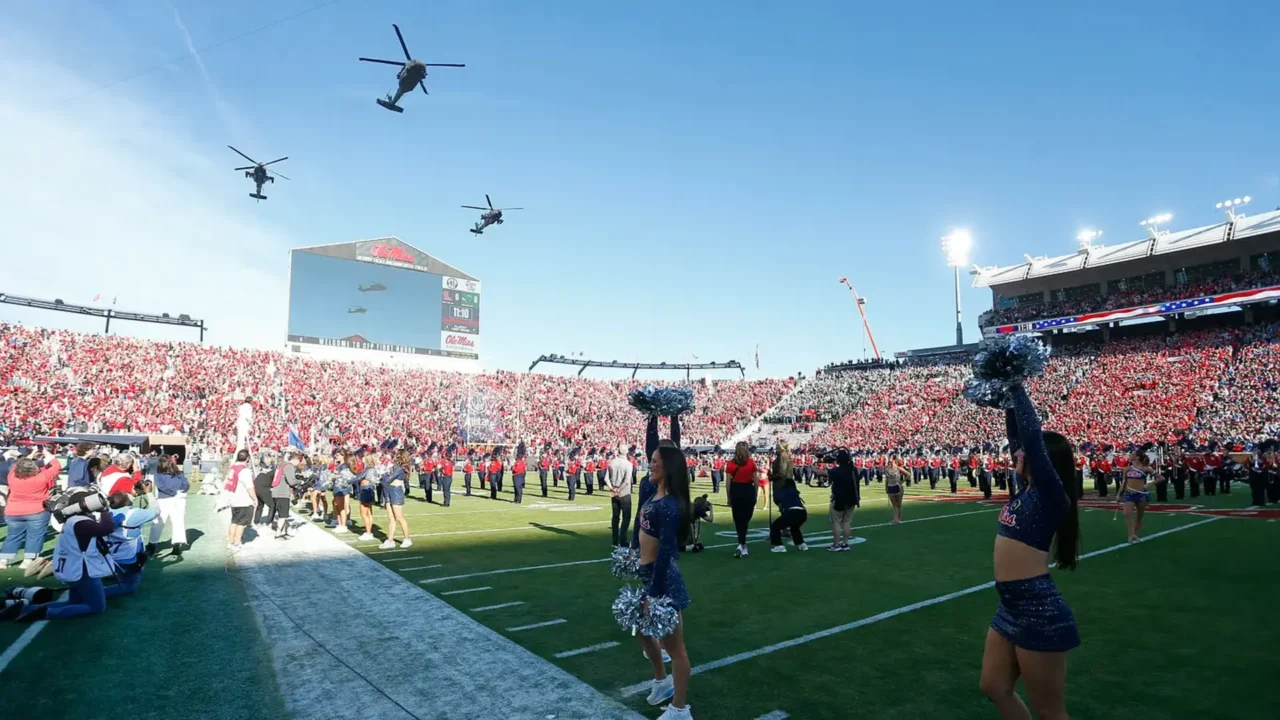
An Ole Miss on-field logo sponsor is poised to be added to the playing surface at Vaught-Hemingway Stadium as athletic departments across the SEC expand visible sponsorships. The move to secure an on-field partner reflects a direct attempt to cover rising roster and program costs while changing the look of gameday at The Grove.
Per reporting that broke the news, Ole Miss Rebels On SI says the program is expected to announce a multi-year agreement with Progressive Insurance that will place the company’s logo on the field as part of a reported three-year deal, with the partnership potentially unveiled as early as next week.
Key Takeaways
- Ole Miss is expected to announce Progressive as an on-field logo sponsor in a reported multi-year, three-year arrangement that would begin this season.
- University of Mississippi athletic director Keith Carter has publicly warned roster costs have risen “generally anywhere from 20 to 50 percent over, year over year,” calling those increases “significant.”
- The House v. NCAA settlement is cited as a factor tightening athletic department budgets and prompting schools to pursue new advertising and sponsorship revenue.
- The NCAA approved up to three corporate logos on football fields in 2024, and Tennessee was the first SEC program to add an on-field partner last season.
How the Ole Miss on-field logo sponsor fits budget planning
The expected Progressive deal arrives against a backdrop of rising operating costs inside college athletics and new revenue obligations tied to the House v. NCAA settlement. Athletic director Keith Carter’s candid comments this offseason about roster expenses underscore why extra gameday revenue matters to administrators balancing scholarships, travel, and support staff budgets.
From a budget-planning perspective, an on-field sponsor is a visible, recurring revenue source that can be timed to start with the season opener and be counted on in multi-year projections. The report indicates the agreement could be announced next week and would place Progressive’s logo on the Vaught-Hemingway playing surface beginning with the Rebels’ season opener.
While the specific financial terms were not disclosed in the reporting, administrators commonly use such agreements to offset incremental costs rather than core operating funds, targeting marketing, facility upgrades, or direct program support tied to high-profile gameday exposure.
On-field sponsorships, jersey patches, and NCAA rule changes
Policy shifts from the NCAA have made on-field branding and uniform patches practical revenue streams for major programs. The NCAA authorized schools to permit up to three corporate logos on football fields in 2024, clearing a path for stadium-level commercialization that was previously restricted.
Within the SEC, Tennessee led the way by installing an on-field logo in partnership with Pilot last season, demonstrating a familiar playbook for other league members. Nationally, programs including Ohio State and Notre Dame have leaned into major commercial relationships, announcing high-profile deals tied to banking and financial-services partners.
Verified program comparisons and rules
| Program / Item | Deal type | Notable details |
|---|---|---|
| Ole Miss (expected) | On-field logo partnership | Reported three-year deal with Progressive to place a logo on Vaught-Hemingway field beginning this season |
| Tennessee | On-field logo partnership | First SEC program to place an on-field logo, executing a Pilot partnership last season after the NCAA rule change |
| NCAA policy | Field and uniform commercial approvals | Authorized up to three corporate logos on football fields in 2024 and approved commercial jersey patch sponsorships effective this August |
SEC revenue and roster implications
The Ole Miss on-field logo sponsor move will have ripple effects across revenue planning, recruiting optics, and gameday branding for the Rebels. Even modest field-level sponsorships can be repurposed into recruiting visits, facility enhancements, or targeted roster support that complements NIL strategies without directly becoming NIL payments.
For roster construction, added sponsorship revenue helps athletic departments absorb the higher recurring costs Keith Carter described, reducing pressure on institutional subsidies or cuts to other sports. That financial breathing room can preserve or expand recruiting budgets, meal stipends, on-campus amenities, and support staff allocations that tangibly affect competitive positioning.
Beyond internal dollars, visible partnerships change public perception and fan experience; corporate marks on the field alter broadcast presentation and in-stadium branding, which can feed secondary sponsorships and localized marketing ties. If Ole Miss leverages a Progressive partnership effectively, it could set a precedent for additional field or patch deals that magnify revenue across the SEC calendar.
This reporting draws on coverage from Rebels247’s Chase Parham and public remarks from athletic director Keith Carter that frame the fiscal context for the decision.