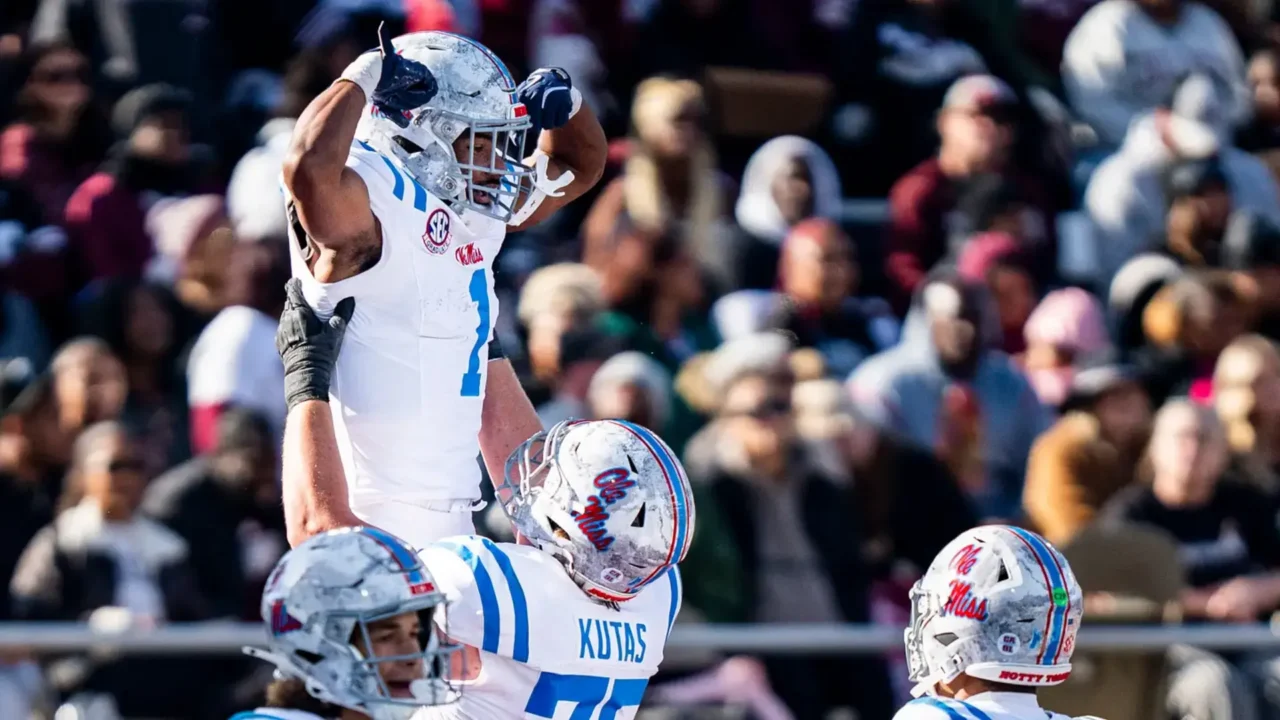
The Ole Miss 2026 depth chart is starting to take shape with returning stars and several high-impact transfers positioning the Rebels as a likely top-15 team heading into the year. Early projections center on Trinidad Chambliss at quarterback and Kewan Lacy at running back, and Ole Miss Rebels On SI laid out the initial pecking order and position battles.
Those preseason placements matter because Ole Miss returns multiple established contributors from a 2025 squad that won two playoff games and raised expectations for the program. The roster depth across skill positions and along the line will be tested in fall camp and will shape game plans and rotation patterns for 2026.
Key Takeaways
- Trinidad Chambliss is projected as the starting quarterback and returns for his fifth and final season.
- Kewan Lacy is listed as the lead running back after what the projection calls the best running back season in program history.
- Tight end and parts of the offensive line are among the positions most likely to be decided during fall camp.
- The defensive front highlights Kam Franklin, Will Echoles, and Suntarine Perkins as veteran anchors for the front seven.
Quarterback room outlook
Projected QB depth lists Trinidad Chambliss as the starter with Deuce Knight, Walker Howard, and AJ Maddox behind him. Chambliss is returning for a fifth and final season and enters 2026 with significant national buzz.
Deuce Knight is identified as the primary backup after transferring from Auburn and provides a versatile option in the rotation. The remainder of the room supplies experience and competition that should be sorted in fall camp.
Running back outlook and volume plan
Kewan Lacy is listed as the lead back after a historic 2025 campaign and projects to be a central offensive weapon in 2026. The depth chart behind him reads like a committee designed to preserve his workload across a long season.
Makhi Frazier, JT Lindsay, Joshua Dye, and Shekai Mills-Knight are each noted as rotational pieces who can spell Lacy in short stints. That structure is intended to keep the offense flexible while protecting the feature back.
Tight ends and offensive line continuity
The tight end room projects as a two-man battle between Luke Hasz and Caleb Odom with Michael Smith and Brady Preiskorn providing depth. The projection emphasizes Hasz’s blocking profile and Odom’s vertical upside as contrasting strengths.
At offensive line, Brycen Sanders returns at center and anchors a unit that includes Terez Davis and several contenders at tackle. Carius Curne, a transfer from LSU, is highlighted as a candidate to compete at right tackle while Davis is listed as the projected left tackle starter.
Defensive line and linebacker outlook
The projection highlights Kam Franklin, Will Echoles, and Suntarine Perkins as the defensive line’s core contributors who helped the team in 2025. Those players are expected to provide pressure and run-stopping presence up front.
At linebacker, Keaton Thomas and Luke Ferrelli are the main projected starters after arriving via transfer paths in 2025. The linebacker room remains fluid with multiple players competing for rotational snaps and special teams roles.
Secondary and slot roles
Cornerback depth lists Antonio Kite and Auburn transfer Jayln Crawford as the likely starters, supported by Sharif Denson and Jalyn Braxton. The projection notes Johntay Cook as the incoming slot option after transferring from Texas.
Safeties Joenel Aguero and Edwin Joseph are identified as the primary options at safety and provide experienced coverage for the back end. The mix suggests veteran coverage pieces paired with new matchup options in the slot.
Experience and transfer comparison
| Position group | Key returning contributors | Transfers and new additions | Notes on depth and roles |
|---|---|---|---|
| Quarterback | Trinidad Chambliss | Deuce Knight, Walker Howard, AJ Maddox | Starter returns with experienced transfer backup and additional competition behind him |
| Running back | Kewan Lacy | Makhi Frazier, JT Lindsay, Joshua Dye, Shekai Mills-Knight | Feature back supported by rotational pieces to preserve workload |
| Offensive line | Brycen Sanders | Carius Curne, other incoming pieces | Center continuity combined with transfer competition at tackle for stability |
| Defensive front | Kam Franklin, Will Echoles, Suntarine Perkins | Landon Barnes, Blake Purchase, Michai Boireau | Veteran interior and edge presence supplemented by depth additions |
| Secondary | Antonio Kite, Joenel Aguero, Edwin Joseph | Jayln Crawford, Johntay Cook | Established safeties and corner with transfer additions to bolster coverage and slot options |
How the depth chart shapes Ole Miss SEC and CFP prospects
With a likely top-15 preseason placement and returning playmakers at quarterback, running back, and along the defensive front, Ole Miss enters 2026 with a clear path to compete in divisional play and pursue a College Football Playoff berth. Significant production from Chambliss and Lacy would materially affect the program’s ceiling in league competition and national perception.
Recruiting momentum and roster construction will depend on sustained production from veteran starters and the ability of incoming transfers to plug holes immediately. Fall camp outcomes on the offensive line and at tight end will be particularly meaningful for the Rebels’ offensive identity as conference play begins.