Overview
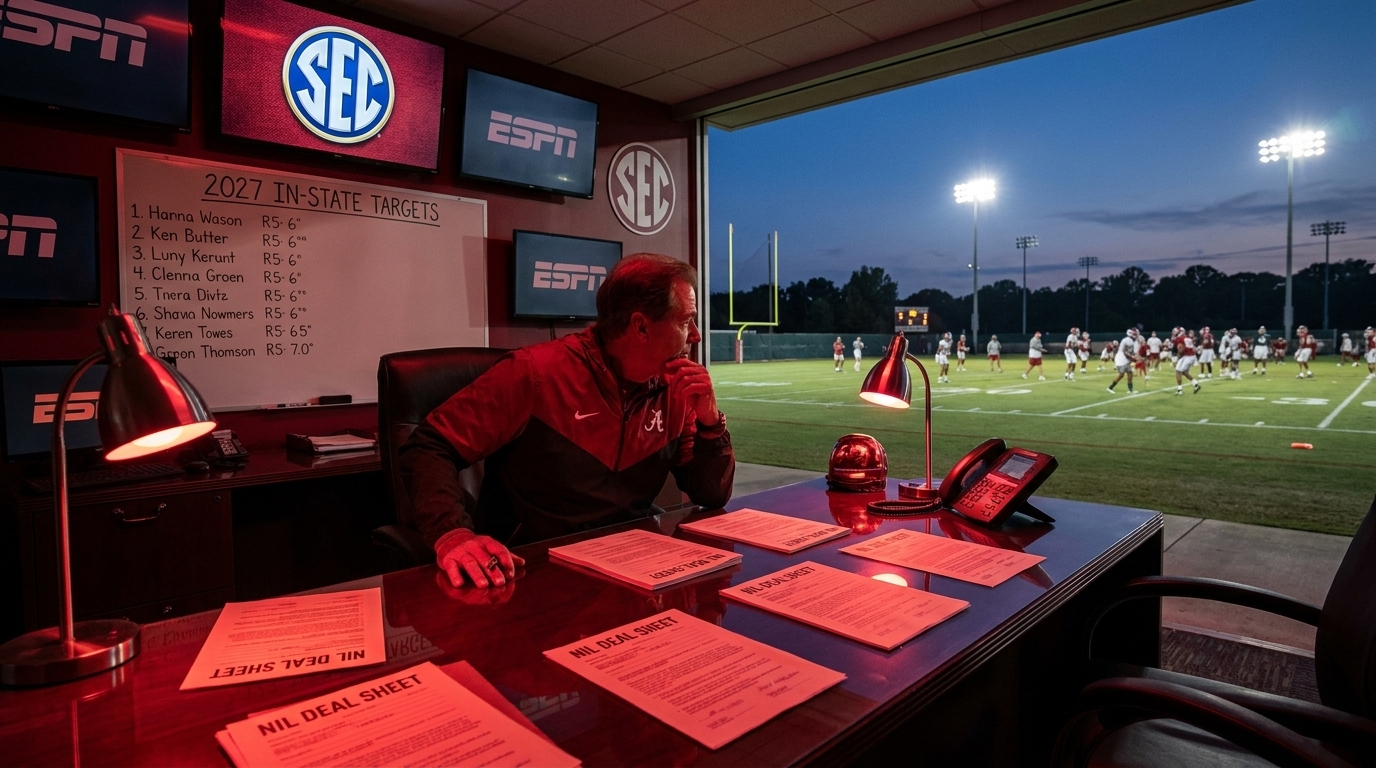
Alabama’s NIL recruiting policy centers on disciplined, consistent rules that guide offers and visits. Because the program refuses to chase market-bending packages, it prioritizes long-term roster balance and program integrity. However, that means coaches sometimes decline to bring prospects on official visits if they cannot reach terms. This posture reflects a defensive policy stance rather than an inability to compete.
What this means
The Crimson Tide has publicly accepted tradeoffs in the NIL era. For example, leaders have cancelled official visits rather than match outsized financial requests. As a result, high-profile prospects may leave the race, and recruiting boards get reset. Yet the team continues to recruit at a high level under Kalen DeBoer. General Manager Courtney Morgan defends the approach as sustainable.
Why it matters
This stance tests common assumptions about NIL recruiting and competitive balance. While other programs chase maximal deals, Alabama emphasizes policy coherence and athlete fit. Therefore, the Tide’s model raises questions about enforcement, market signaling, and long-term roster health. Readers curious about recruiting mechanics will find this debate central to understanding the evolving landscape.
What to watch next
Expect tight NIL negotiations and clearer public messaging going forward. Meanwhile, enforcement debates and market pressure will shape future recruiting cycles.
Alabama’s approach to NIL recruiting
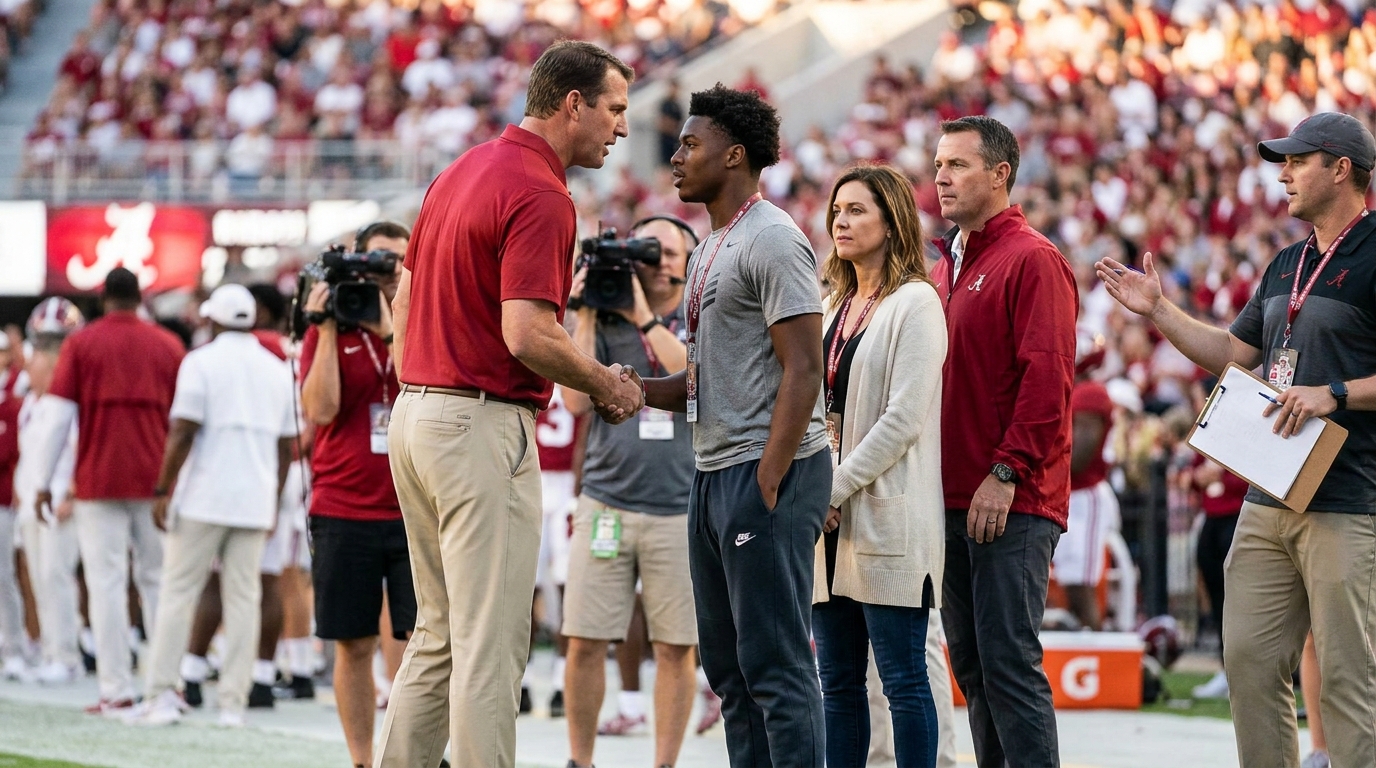
Alabama maintains a strict, policy-driven approach to NIL recruiting. Because the program refuses to chase market-bending packages, it stresses roster balance and long-term program health. General Manager Courtney Morgan frames the policy as non-negotiable. He said,
“If we can’t come to an agreement, you just don’t bring them for an OV — we’ll cancel the kid’s visit.”
Alabama describes the stance as defensive and deliberate. Therefore, staff view limits on offers as a way to protect program culture and competitive fairness. The result is a recruiting posture that accepts tradeoffs in the short term.
Key policy highlights
- Consistent offer structures rather than ad hoc escalations
- Official visit (OV) invitations tied to reaching NIL agreements
- Willingness to cancel an OV if terms remain unresolved
- Priority on roster balance and long-term development over one-off deals
- Updates to recruiting boards when prospects pull out of the race
That posture has produced visible consequences. For example, a top prospect told staff Alabama could not compete with the numbers offered elsewhere and pulled out of the race. Also, there was a big-time player last year, top of his position, whom the program told not to bring because terms could not be met. As a result, Alabama recently reset its 2027 in-state recruiting boards. Meanwhile, the program continues to recruit at a high level under Kalen DeBoer and Courtney Morgan.
Defensively, Alabama argues this policy reduces market distortion and avoids a bidding war that harms depth. Because officials emphasize fit and structure, they accept losing certain targets rather than reshaping standards. Therefore, the Tide trades some short-term wins for a stable roster strategy.
This approach forces clearer negotiations and sharper public messaging. However, it also raises questions about competitive balance in the evolving NIL era.
NIL recruiting comparison
Alabama’s NIL recruiting stance contrasts sharply with programs that chase market-maximizing deals. The Tide uses firm frameworks and clear thresholds for offers. As a result, staff will cancel an official visit (OV) when negotiations stall. Because of this, top prospects sometimes pull out of the race rather than accept the numbers offered. However, Alabama defends the approach as necessary to protect roster depth, culture, and long-term program health. Therefore, the table below summarizes the core differences. It compares recruiting philosophy, typical NIL agreement size, official visits policy, and outcomes on recruiting boards. Read on to see how a conservative, policy-driven model stacks up against aggressive, donor-driven strategies. Meanwhile, remember outcomes depend on local markets and donor networks.
| School | Recruiting Philosophy | Typical NIL Agreement Size | Official Visits Policy | Outcomes on Recruiting Boards |
|---|---|---|---|---|
| Alabama Crimson Tide | Policy-driven; disciplined offers, roster balance prioritized. | Moderate, structured offers rather than headline market-making deals. | OV invites contingent on reaching NIL agreement; will cancel OV if no agreement. | Boards reset occasionally; some prospects pull out of the race; depth preserved. |
| Ole Miss | Donor-driven, flexible; aggressive pursuit of star talent. | Higher, market-oriented packages often above moderate ranges. | OVs used to finalize deals quickly; visits rarely canceled for financial reasons. | Boards often filled quickly; recruits shift toward Ole Miss on NIL value. |
| Texas | Large-market, booster-backed; focuses on maximizing single-player value. | Very high, top-tier deals for blue-chip prospects. | OVs frequently used as negotiation leverage and to seal agreements. | Recruiting boards show rapid movement; spikes in commitments post-deals. |
| Market-maximizers (aggregate) | Aggressive, opportunistic, donor-led strategies. | Wide range with capacity for headline offers. | OVs commonly proceed even under aggressive terms. | Short-term talent gains; potential depth and balance issues. |
How NIL recruiting stance affects recruiting results and program stability
Alabama’s deliberate NIL recruiting posture shapes outcomes in clear ways. The program accepts short-term recruiting losses to protect long-term roster balance. Therefore, coaches trade some headline signings for consistent depth and culture.
The reset of the 2027 in-state recruiting boards shows that tradeoffs are real. Staff recalibrated priorities after prospects pulled out of the race when Alabama would not match market-bending numbers. For example, a top prospect told staff Alabama could not compete with the numbers offered elsewhere and exited the race. Courtney Morgan summed the approach bluntly: “If we can’t come to an agreement, you just don’t bring them for an OV — we’ll cancel the kid’s visit.”
Kalen DeBoer and staff remain confident despite these disruptions. DeBoer has emphasized program stability and sustained recruiting under his leadership, which underpins the Tide’s defensive posture. Readers can see context about DeBoer’s extension and its signal of stability here: Kalen DeBoer Extension.
Key insights
- Short-term recruiting volatility: Some elite targets pull out of the race when offers lag. However, the program avoids erratic escalations.
- Board management: The 2027 in-state recruiting boards were reset to reflect realistic commitments and fit.
- Culture over cash: Alabama prioritizes roster depth and development, not one-off headline deals.
- Negotiation clarity: Tying official visits to completed NIL agreements reduces uncertainty and sets expectations.
Consequences for program stability
Because Alabama sticks to its rules, roster construction stays consistent. At the same time, donors and boosters must align with policy, or recruiting shifts to other markets. For perspective on enforcement and wider conference dynamics, see the Power 4 offseason piece here: Power 4 Offseason.
Even with the conservative approach, Alabama continues to recruit at a high level. For ongoing recruiting updates and context, refer to SECFB’s program updates: Alabama Football Recruiting Program Updates.
Ultimately, the Tide’s defensive yet confident NIL strategy accepts occasional misses. Therefore, Alabama bets on long-term stability over short-term market wins.
Conclusion
Alabama’s NIL recruiting stance remains firm because leaders value consistency and long term program health. Rather than chase headline packages, the Tide sets boundaries to protect roster balance and team culture. As a result, officials sometimes decline official visits when terms do not match policy. Courtney Morgan put it plainly: if the parties cannot agree, the program will cancel the kid’s visit.
This posture creates tradeoffs. On one hand, elite prospects may pull out of the race when numbers offered elsewhere eclipse Alabama’s offers. On the other hand, the program preserves depth and avoids reactive spending that can erode competitive balance. Kalen DeBoer has reinforced that stability matters, and the staff continues to recruit at a high level despite market pressure.
For readers who want a steady, policy focused approach, Alabama’s model offers clarity. For those tracking the NIL era, expect continued tension between market driven bids and program led standards. For more coverage and updates, follow SECFB LLC at SECFB LLC and on Twitter at @ZachGatsby.
Looking ahead, the Tide appears ready to defend its framework while adjusting tactically when necessary. Therefore, Alabama will likely accept occasional misses while it pursues sustained success.
Frequently Asked Questions (FAQs)
What is Alabama’s NIL recruiting policy?
Alabama uses a policy-driven approach to NIL recruiting. It prioritizes roster balance and consistent offer structures. Therefore the staff avoid market-bending one-off deals.
Why would Alabama cancel an official visit (OV)?
The program ties OV invitations to completed NIL agreements. Because negotiations sometimes stall, staff will cancel visits rather than change standards.
Does this stance cost Alabama recruits?
Yes, some elite prospects pull out of the race when Alabama cannot match numbers offered elsewhere. However, the program argues these misses protect long-term depth.
How does this approach affect program stability under Kalen DeBoer?
DeBoer and staff emphasize stability and sustainable roster construction. As a result, Alabama maintains competitive recruiting while avoiding volatile spending spikes in the NIL era.
Will Alabama change its NIL recruiting stance?
The Tide remains defensive but pragmatic. They may adjust tactically, however they will likely retain core policies to preserve culture and balance.