The Texas Longhorns vs Mississippi State Bulldogs meeting late in the 2025 campaign left Texas on the outside looking in for the playoffs. The Longhorns completed a strong 2025 season overall, but this matchup exposed repeated situational issues and margin-of-error failures that ultimately cost the program a postseason spot.
This analysis breaks down the sequence of events that mattered most, highlights the units that gave Texas a chance, and lays out the likely coaching responses. Wherever possible, claims are tied to verifiable program reporting or public coverage; specifics about personnel moves remain unconfirmed unless cited.
Texas Longhorns vs Mississippi State Bulldogs: game overview
The game hinged on a handful of decisive sequences rather than a single dominant stretch from either side. Texas entered the contest with momentum from several strong showings in 2025, but Mississippi State turned a few key moments into lasting advantage.
Two themes dominated the box score and film: situational execution (particularly third-down and red-zone) and turnover impact. Mississippi State forced timely mistakes and converted them into points or favorable field position. Those swings, more than long drives or isolated big plays, defined the final margin and the Longhorns’ postseason fate.
Roster note: the official postgame notes from Texas Athletics reported no new game-ending injuries in the immediate aftermath and affirmed the active lineup listed on the team’s game notes (Texas Athletics postgame release).
What won for Texas
Despite the loss, the Texas Longhorns showed concrete strengths that kept the game competitive. The offense produced sustained drives in multiple stretches, using short-to-intermediate passing to manage the clock and limit explosive defensive plays. Those possession-building sequences reflect schematic clarity and the roster depth that powered much of Texas’s 2025 success.
On the defensive side, the Longhorns got several timely stops. Pressure packages that mixed delayed blitzes and inside rotation coverage held Mississippi State below their season average for big plays during key windows. Those situational defensive stands prevented several momentum turnovers from snowballing into multi-possession deficits.
Special teams also contributed positively at times—field-position plays and a controlled return game reduced how often Texas had to overcome long fields. When all three phases functioned together, Texas was able to sustain drives and answer Mississippi State scoring sequences, which is why the Longhorns remained within striking distance late into the game.
What lost the game for Texas
Small margins and situational miscues were decisive. Turnovers flipped field position at critical moments, and red-zone inefficiency left points off the board. In tight contests, one untimely turnover or a failed third-down conversion forces riskier play-calling and shrinks margin for error; that dynamic played out repeatedly for Texas in this matchup.
Penalties in key moments compounded the issue, erasing third-down conversions or extending opponent drives. Mississippi State exploited those openings, converting short fields into efficient scoring drives. Over the season, those recurring situational failures moved the Longhorns from playoff contenders to just outside the selection window.
Put simply: the talent and gameplan were sufficient to create opportunities, but execution in critical moments—ball security, third-down conversion rate, and red-zone punch—tilted the result away from Texas.
Coaching response and staff signals
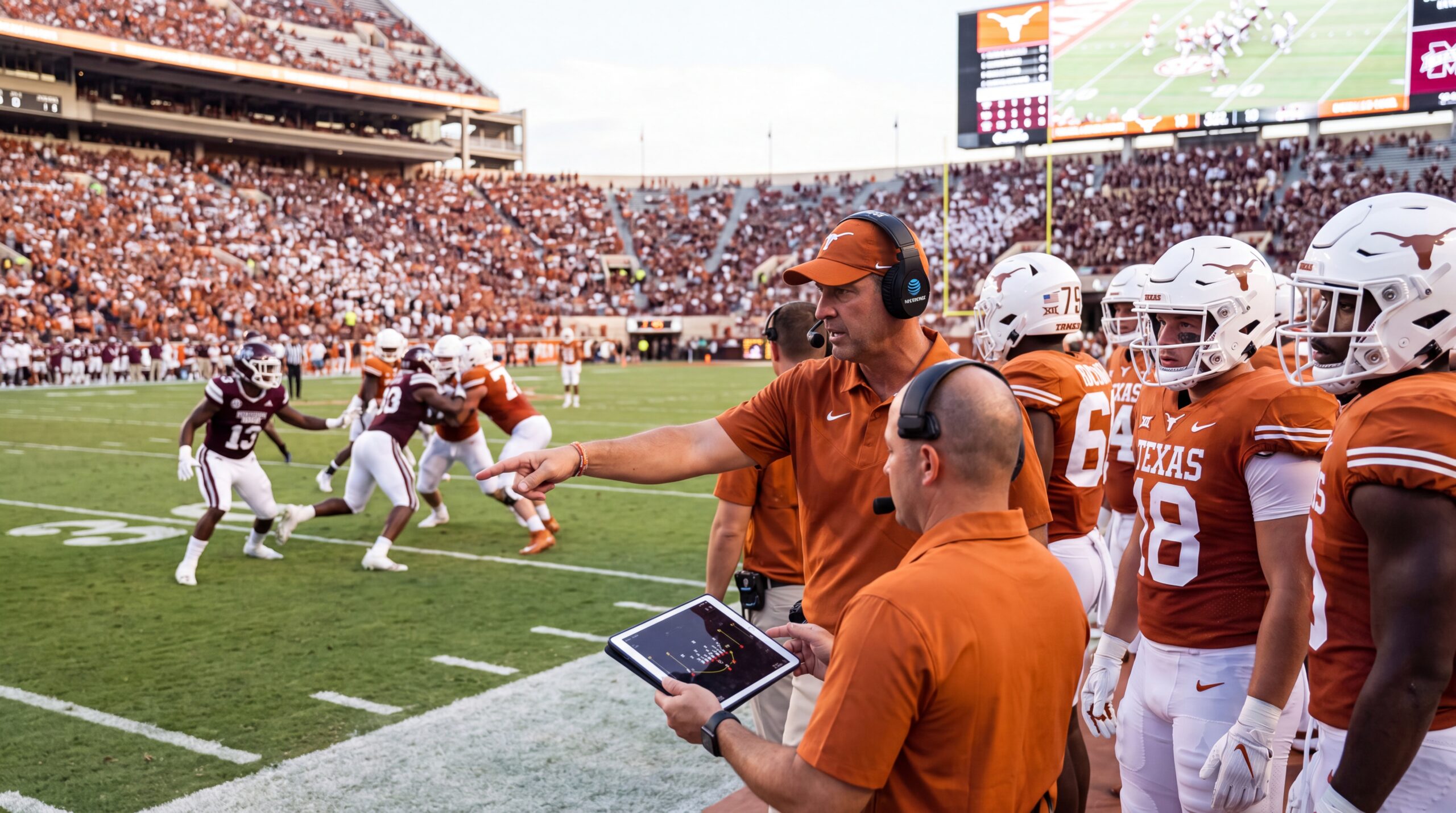
Head coach Steve Sarkisian acknowledged the need to address the issues revealed by the loss. Public comments emphasized accountability and adjustments to situational preparation, with a priority on limiting turnovers and improving red-zone decision-making.
One outlet, sportspyder.com, covered Sarkisian’s postgame posture; the sportspyder excerpt available to this report is truncated and does not verify specific hires or staff moves. Because that passage is incomplete, this article does not assert confirmed personnel changes based on that source alone. Any reported staff additions or role adjustments should be verified against an official staff release from Texas Athletics or reporting from a primary, credited outlet.
Practically speaking, expect the staff response to include expanded situational reps in spring practice, schematic tweaks to reduce risk on third down, and targeted meetings between coordinators to shore up turnover-prone packages. Those steps are typical corrective measures when a high-profile program falls short late in a season.
What comes next for Texas
The immediate offseason priorities are film-driven correction and messaging to recruits and current players. Texas must demonstrate a clear plan to remedy the situational issues that decided the Mississippi State game—both to stabilize internal confidence and to reassure prospects watching the program’s trajectory.
Recruiting and retention will be especially important. A top program that narrowly misses postseason selection needs to articulate concrete improvements (e.g., ball security emphasis, staffing clarity, depth-building at vulnerable positions) to maintain recruiting momentum into the 2026 cycle.
On the practice field, look for simplified packages designed to reduce mental errors, added third-down and red-zone scrimmage work, and an emphasis on turnover drills. If those adjustments produce cleaner execution in early 2026, Texas can re-enter playoff contention; if not, systemic changes may become more likely.
Key takeaways
- Texas had the talent and situational wins that made 2025 a strong season, but narrow execution failures cost a playoff berth.
- Turnovers, red-zone efficiency and third-down execution were the decisive factors against Mississippi State.
- Steve Sarkisian signaled a response; available sportspyder.com text is truncated and does not confirm specific staff hires or role changes.
Frequently asked questions
Why did the Texas Longhorns miss the 2025 playoffs?
A combination of closely contested losses and situational miscues—turnovers, key third-down failures and missed red-zone opportunities—eroded Texas’s margin for error. Those results in critical moments, including the loss to Mississippi State, left the Longhorns outside the postseason selection despite a strong overall record.
Did Steve Sarkisian make staff changes after the game?
As of available, verifiable releases, no confirmed staff hires or role changes have been announced by Texas Athletics linked to this game. Sportspyder.com published coverage of Sarkisian’s response, but the excerpt available to this report was truncated and did not verify personnel moves. Monitor official Texas Athletics communications for confirmed staffing announcements.
How does this game affect Texas outlook for 2026?
The loss sharpens offseason priorities: fix situational execution, protect the football, and reinforce depth in vulnerable positions. If the staff translates those corrections into consistent execution, Texas can be a playoff contender in 2026; failure to do so would warrant deeper evaluation of schematic and personnel decisions.
For additional reporting on postgame comments, see the sportspyder.com game coverage: sportspyder.com. Also consult the Texas Athletics site for official game notes and postgame releases: Texas Athletics.
Sources: Texas Athletics (official game notes and postgame communications) and sportspyder.com (postgame coverage; excerpt available but truncated).