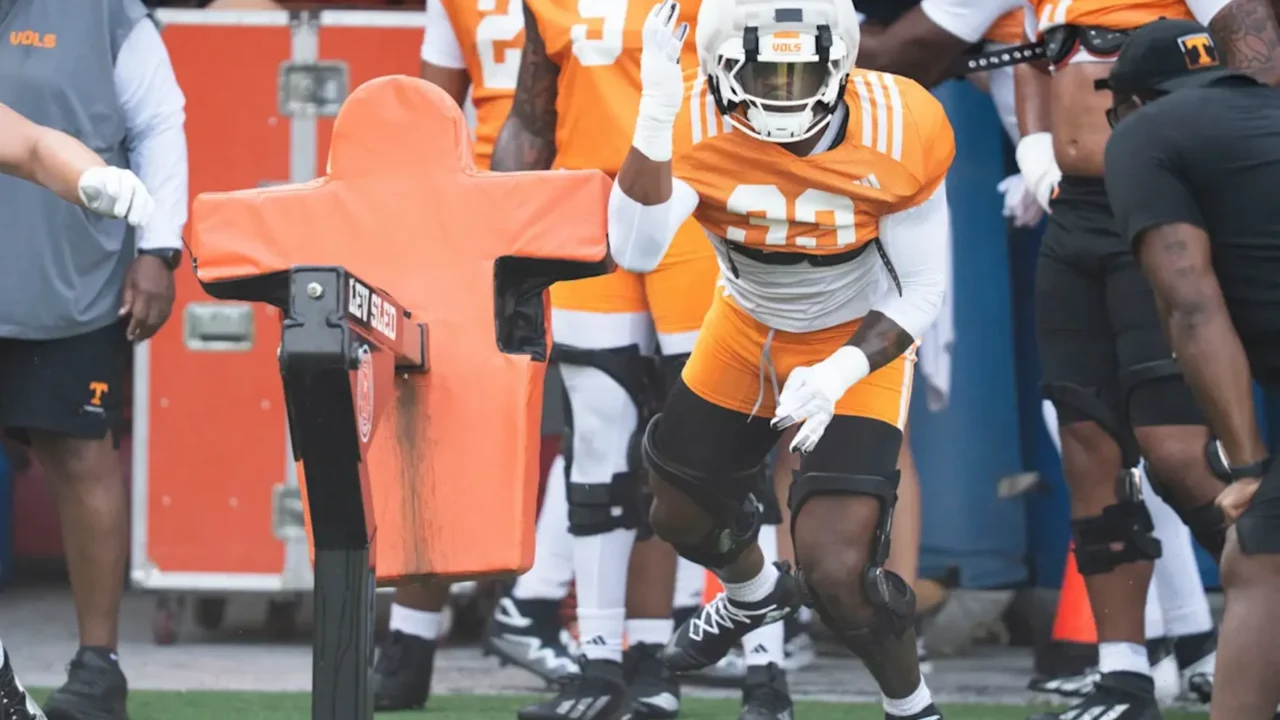
Rodney Garner has singled out transfer Jordan Norman as a critical component of Tennessee’s defensive plans, language that narrows focus on the Volunteers‘ short-term depth and rotation. As reported by Yahoo Sports, Garner’s comment places Norman at the center of the positional conversation in Knoxville and suggests the staff expects meaningful early snaps.
That public designation shifts expectations inside the program and among opponents because it signals the staff views this move as more than marginal depth. The phrasing matters for fall camp reps, special-teams planning and how coaches sequence practice work in the weeks before the opener.
Key Takeaways
- Rodney Garner publicly described transfer Jordan Norman as a critical addition to the Tennessee Volunteers’ defense.
- The coaching staff appears to expect Norman to provide immediate depth and rotation value rather than functioning solely as a developmental prospect.
- Garner’s labeling reshapes fall camp priorities and communicates higher short-term expectations for defensive snaps and special-teams contributions.
- The assessment also factors into roster messaging and how Tennessee balances returning players with targeted transfers.
How Jordan Norman fits Garner’s defense
Garner’s choice to call Norman “critical” is significant coming from a defensive coordinator who manages rotation and depth planning daily. That word indicates the staff sees a concrete role for Norman rather than treating him as optional depth to be developed over multiple seasons.
Coaches make those distinctions publicly to set internal expectations and to inform how they allocate practice reps; a player identified as critical will often see prioritized installation in scheme work and situational packages. For Tennessee, that means Norman would be involved in tactical walk-throughs and situational drills earlier in camp relative to transfers who are slotted as long-term projects.
The staff framing also provides a shorthand to players and recruits about urgency and readiness: it signals the staff believes Norman can contribute in the near term and that the position group he joins is a priority for performance stabilization. That message has practical implications for how coaches balance veteran reps with opportunities for newcomers during preseason scrimmages and early-season rotations.
On the field, the practical expectations tied to the “critical” label translate to coaches watching for immediate technique consistency, assignment reliability and special-teams availability. Evaluation in those areas will determine whether Norman earns a rotation spot and the degree to which Tennessee leans on him under pressure situations.
Internally, the staff must also manage chemistry and communication when inserting a transfer into a rotation labeled as critical. That management includes clear role definitions for returning players and transparent progression plans so that the group can stabilize quickly and avoid disruption during the season’s most physical stretches.
Transfer returns and defensive need in Knoxville
| Category | Role or Expectation |
|---|---|
| Transfer addition: Jordan Norman | Identified by the staff as a critical contributor expected to provide immediate depth and rotational value |
| Returning defensive pieces | Provide continuity and institutional knowledge that the staff will pair with new additions to stabilize playing time and technique |
The table above presents the factual contrast Garner sketched: Tennessee is combining experienced returners with targeted transfers to shore up depth. That approach reflects a straightforward roster construction method where coaches use transfers to address immediate shortfalls while relying on returners for continuity.
Garner’s emphasis on Norman signals the staff expects this specific transfer to shift how reps are allocated within the rotation rather than merely being insurance on the depth chart. That public positioning can also alter opponent preparation by making Norman a named piece to scout and plan for during game-week scheming.
SEC and CFP implications for Tennessee roster construction
Calling a transfer critical has competitive implications in the SEC because the conference’s depth demands force coaches to prioritize immediate, reliable contributors. Depth and rotational reliability on defense are central to surviving the conference’s physical schedule and preserving College Football Playoff eligibility over a long season.
From a recruiting and roster-construction angle, public endorsements of transfers sharpen Tennessee’s message to prospects and available transfers by signaling a willingness to integrate experienced players quickly when they meet readiness standards. That can help the program attract players who prioritize early playing time and a clear path to contribution.
Labeling a transfer as critical also affects NIL and roster-management conversations because it can influence how staff allocate resources and messaging to current players about roles and opportunities. Those allocation decisions matter when balancing short-term competitiveness with longer-term roster development goals.
Ultimately, while health and performance determine outcomes on the field, Tennessee’s defensive staff is using targeted acquisitions like Norman alongside returning pieces to assemble a rotation they believe can withstand SEC attrition and sustain CFP-level contention across a full slate of games.
Reporting by Emmett Siegel of the Knoxville News Sentinel provided the reporting that informed this analysis.