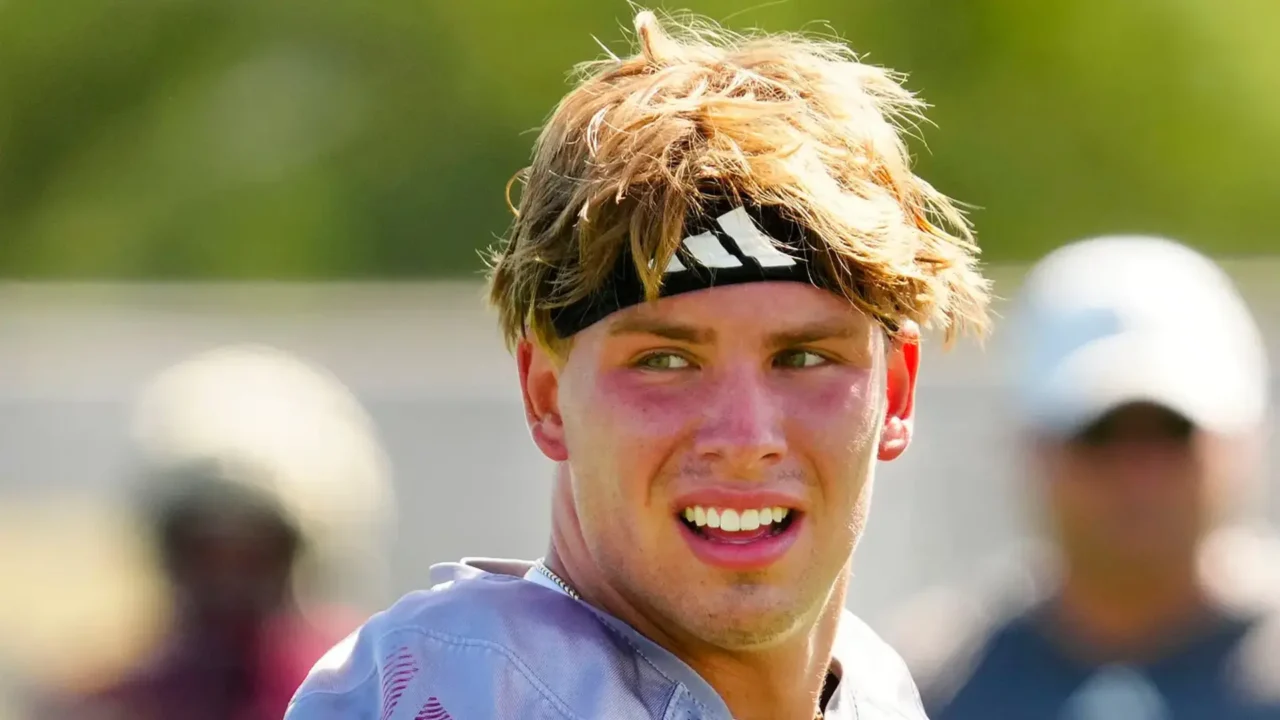
Sam Leavitt arrives in Baton Rouge with clear upside and an outsized résumé from Arizona State, but an anonymous SEC defensive coordinator has framed him as a functional starter rather than a ceiling-setting talent, a view that already touches LSU’s depth chart conversations.
The anonymous coordinator told ESPN’s Adam Rittenburg that he would feel more comfortable facing Leavitt than facing Diego Pavia and that “he’s not the talent level that a normal LSU quarterback would be” while conceding Leavitt “doesn’t freak you out when you watch him, but he is dangerous at times,” as reported by LSU Tigers On SI
Key Takeaways
- Sam Leavitt arrives at LSU with transfer-portal buzz but faces tempered expectations from at least one anonymous SEC defensive voice.
- The anonymous coach told ESPN that he would prefer to face Leavitt over Diego Pavia while labeling Leavitt below the typical recent LSU quarterback talent level.
- Leavitt’s most recent year was limited to seven games, which complicates projection despite prior high-end production.
- LSU’s recent Heisman-level quarterbacks set a performance bar that will shape external and internal evaluations of Leavitt.
How SEC Coaches Size Up Sam Leavitt
The anonymous SEC defensive coordinator’s remarks are a reminder that transfer-portal name recognition does not guarantee universal respect from opponents. The coach framed Leavitt as a player who fits a system and can make plays without being a film-room nightmare for opposing coordinators.
That specific line — that Leavitt “doesn’t freak you out when you watch him, but he is dangerous at times” — is a mixed grade: it acknowledges playmaking while denying elite, game-altering tape. For LSU evaluators and fans, that is useful because it narrows the ceiling and clarifies the immediate pathway for success.
Coaches who view Leavitt this way will prepare differently; they are likelier to emphasize assignment discipline and rush lanes rather than scheming around an overpowering quarterback. That nuance reshapes how LSU’s staff might prioritize protection, quick-game concepts, and the early depth chart order during fall camp.
Leavitt’s Arizona State Production and Injury Context
Leavitt’s recent playing timeline complicates projection because he was limited to seven games in his most recent, injury-affected season. The shortened year raises questions about durability and about how much recent tape coaches can rely on in game planning.
Before the abbreviated season, Leavitt produced a campaign that drew national notice, throwing for nearly 2,900 yards with 24 touchdowns and six interceptions while helping Arizona State to a Big 12 Championship and a College Football Playoff appearance. Those achievements explain why he stood out on the transfer market despite the follow-up health concerns.
Observers also point to the supporting pieces he had in Tempe, including receivers Cam Skattebo and Jordyn Tyson, as context for evaluating how much of his production is repeatable in a new environment. That trio of facts — high-end past production, limited recent availability, and supporting talent — frames legitimate scouting questions for LSU’s offense staff.
Leavitt vs Recent LSU QBs Comparison
| Quarterback | Recent LSU Standard | Contextual Notes |
|---|---|---|
| Sam Leavitt | Transfer starter with portal buzz | Praised for a near-2,900-yard Big 12 season and role in a championship/CFP run; last season limited to seven games by injury |
| Joe Burrow | Heisman-winning elite standard | Represents the highest recent performance benchmark LSU quarterbacks are measured against |
| Jayden Daniels | Heisman-winning elite standard | Another recent LSU signal-caller whose production raises expectations for successors |
| Garrett Nussmeier | Locally regarded as an elite LSU prospect | Referenced in LSU coverage as a recent internal comparison point for quarterback development |
SEC and Playoff Implications for LSU Roster
How conference peers publicly size up LSU’s quarterback matters for recruiting narratives, NIL selling points, and the external expectations that shape opponents’ game plans. A public downgrading from a league coach recalibrates the optics LSU will face when pitching recruits and negotiating roster windows this offseason.
If Leavitt stays healthy and maximizes system fit, LSU can claim a transfer win that quiets skeptics and stabilizes the depth chart; if not, the program faces pressure to accelerate recruiting and development at the position. Either path affects LSU’s SEC outlook and College Football Playoff ceiling because quarterback play remains the primary determinant of high-end postseason runs.