The Auburn offense is entering fall camp as a near-total rebuild, and that reality changes how the team evaluates progress in practice and preseason reps.
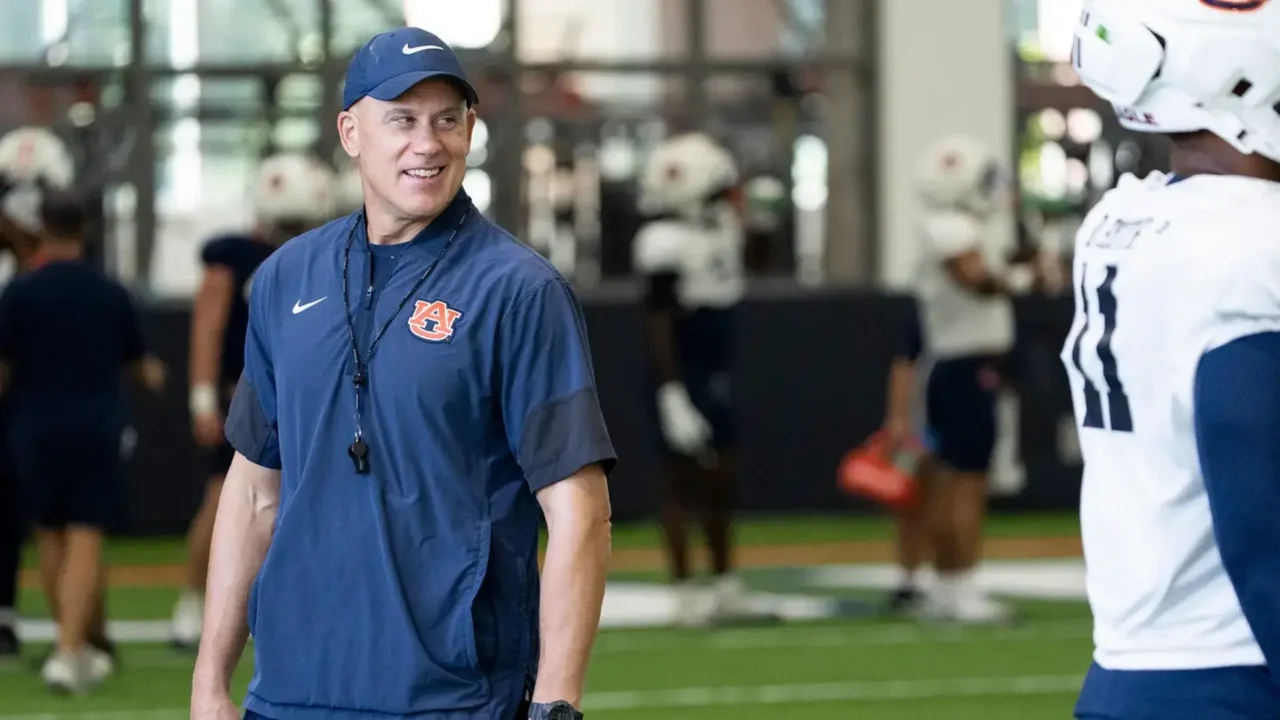
Most of the Tigers’ 2026 offensive production will come from transfers, which raises questions about how quickly the group can acclimate to SEC speed and complexity, and Co-offensive coordinator Kodi Burns has pointed to intra-squad work against DJ Durkin’s defense as a key mechanism for that acclimation; see the full report from Auburn Tigers On SI.
Key Takeaways
- Most of Auburn’s projected 2026 offensive production will come from transfers, which shifts how coaches evaluate practice progress.
- Kodi Burns highlighted that repeated practice work against DJ Durkin’s defense has accelerated the offense’s confidence and processing.
- Auburn lost contributors such as Keldric Faulk and Keyron Crawford to draft and transfer activity, creating immediate depth questions for the staff to address.
- Internal work against a high-level defense provides a clearer baseline for schematic fit and tempo before the SEC season begins.
How the Auburn offense is being rebuilt in camp
Burns framed the offseason work as more than installation and described it as a crash course in facing SEC-caliber looks within the safety of the building.
With a roster tilted toward transfers, the coaching staff is prioritizing tempo, situational reps and schematic clarity so newcomers can internalize adjustments faster.
Breaking down the USF transfer impact
Many of Auburn’s incoming offensive pieces trace back to USF and Alex Golesh’s program, which brings built-in familiarity with concepts and staff preferences.
That continuity can compress the learning curve, but coaches still must calibrate those players to SEC alignment, speed and personnel groupings they’ll face on Saturdays.
Departures and incoming transfer comparison
| Player or group | Status and immediate impact |
|---|---|
| Keldric Faulk | Departed to the NFL Draft, creating a gap in front-seven veteran leadership and edge play that the staff must replace through rotation and coaching |
| Keyron Crawford | Also moved on via draft and transfer activity, removing a proven playmaker from Auburn’s defensive front and increasing reliance on younger or newly arrived contributors |
| USF transfers for the offense | Form the bulk of the projected 2026 offensive snaps; they bring schematic familiarity but will be tested against SEC speed and physicality exposed in Durkin-led practice |
| Cody Sigler | Represents continued quality on Auburn’s defensive line and helps raise the level of intra-squad competition despite departures |
SEC implications for Auburn’s nine-game slate
The nine-game conference slate will be an unforgiving test for a transfer-dependent offense, where depth, matchup planning and in-season development matter more than preseason flashes.
Practicing against Durkin’s unit gives Auburn a head start on processing SEC looks, but regular-season attrition and matchup variance will determine consistency, and how the offense holds up will shape roster construction, influence recruiting and affect late-season positioning for postseason consideration; reporting and context for this piece came from Brooks Crew.