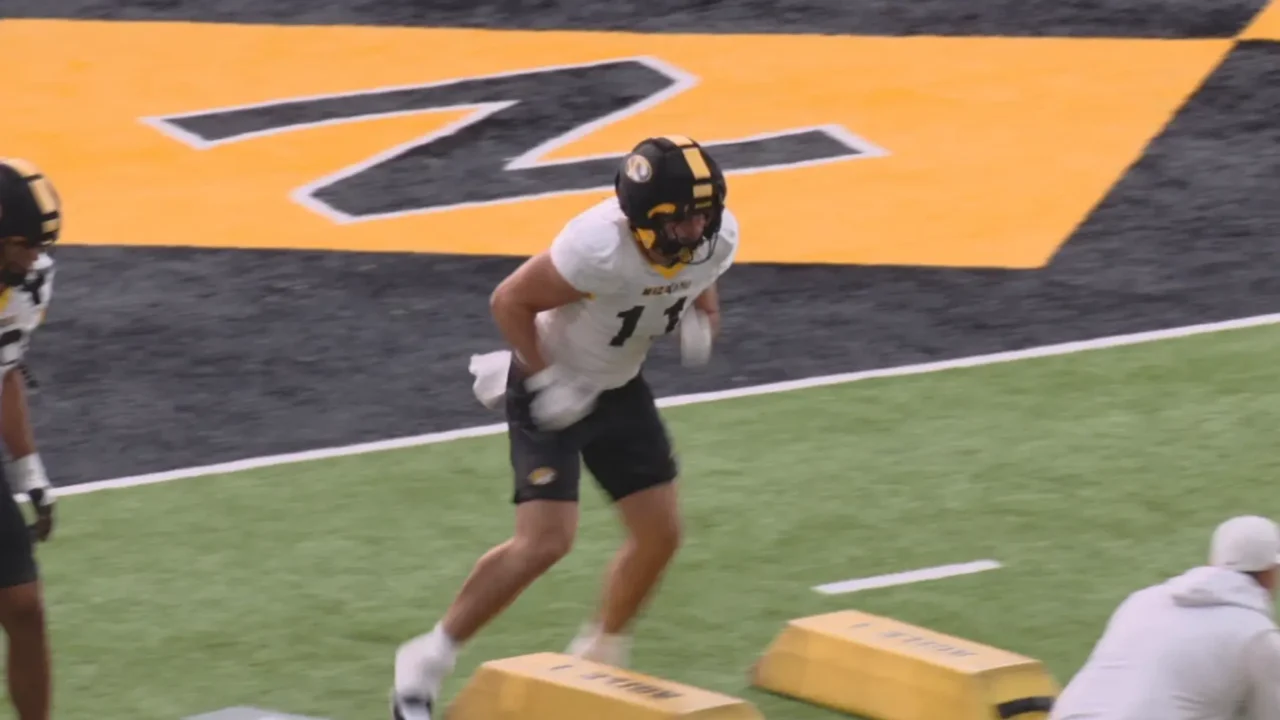
Langden Kitchen and Daeden Hopkins have become names to watch during Missouri’s fall camp as the Tigers close the second week of practice inside Columbia’s indoor facility to escape the heat.
A local video segment and camp reporting highlight both mid-Missouri standouts and their push for playing time, with coverage available from KRCG
Key Takeaways
- Both Langden Kitchen and Daeden Hopkins are entering their second seasons with the Missouri Tigers and are positioned to see more snaps.
- Each player is an edge rusher by designation in defensive coordinator Corey Batoon’s scheme.
- Missouri moved its fall camp indoors during the second week to beat the heat, with camp nearing its conclusion.
- A local video segment profiles both Westran and Hermann graduates as they push for playing time.
Langden Kitchen and Daeden Hopkins camp progress
Both players have been steady presences at practice through the mid-point of fall camp and are explicitly identified as local graduates pushing for larger roles this season.
Kitchen, a Westran graduate, and Hopkins, from Hermann, are listed as edge rushers and have been part of the rotation work during team periods and position drills.
Reporting from camp notes that Missouri moved practices indoors in Columbia during the second week, and that fall camp is close to wrapping up as coaches evaluate depth and situational snaps.
How they fit in Corey Batoon defense
Corey Batoon’s front values speed on the edge and rotational depth; both Kitchen and Hopkins fit that mold as natural edge players who can line up wide or squeeze into the front when needed.
Coaches value versatility in early camp work, and both local standouts are getting snaps in multiple defensive packages as the staff tests personnel groupings.
That role — as rotational edge options rather than single-game scripted answers — is where each player looks most likely to contribute as the Tigers finalize depth charts.
Depth chart context and local recruiting comparison
| Player | High School | Tigers Tenure | Position and Expected Role |
|---|---|---|---|
| Langden Kitchen | Westran | Second season with Missouri | Edge rusher; expected to push for expanded rotational snaps on early-down pass-rushing packages |
| Daeden Hopkins | Hermann | Second season with Missouri | Edge rusher; projected to work in rotation and situational sets as coaches evaluate depth late in camp |
Local production and returning depth
Both local graduates represent the kind of in-state pipeline that helps sustain depth without turning immediately to the transfer market or distant recruits.
As fall camp wraps, the staff will use practice reps to decide how those rotational minutes break down against returning production and incoming talent.
SEC roster and playoff implications for Missouri
Expanded roles for homegrown players impact roster construction by strengthening rotational options and reducing the need for single-solution depth additions during the season.
From a recruiting viewpoint, giving meaningful snaps to in-state products helps the staff’s message to future prospects that local talent can earn playing time at Missouri.
Incremental gains in the defensive rotation matter in the SEC where depth can swing close games; improved edge play contributes to conference positioning and the Tigers’ path to postseason and College Football Playoff conversations.