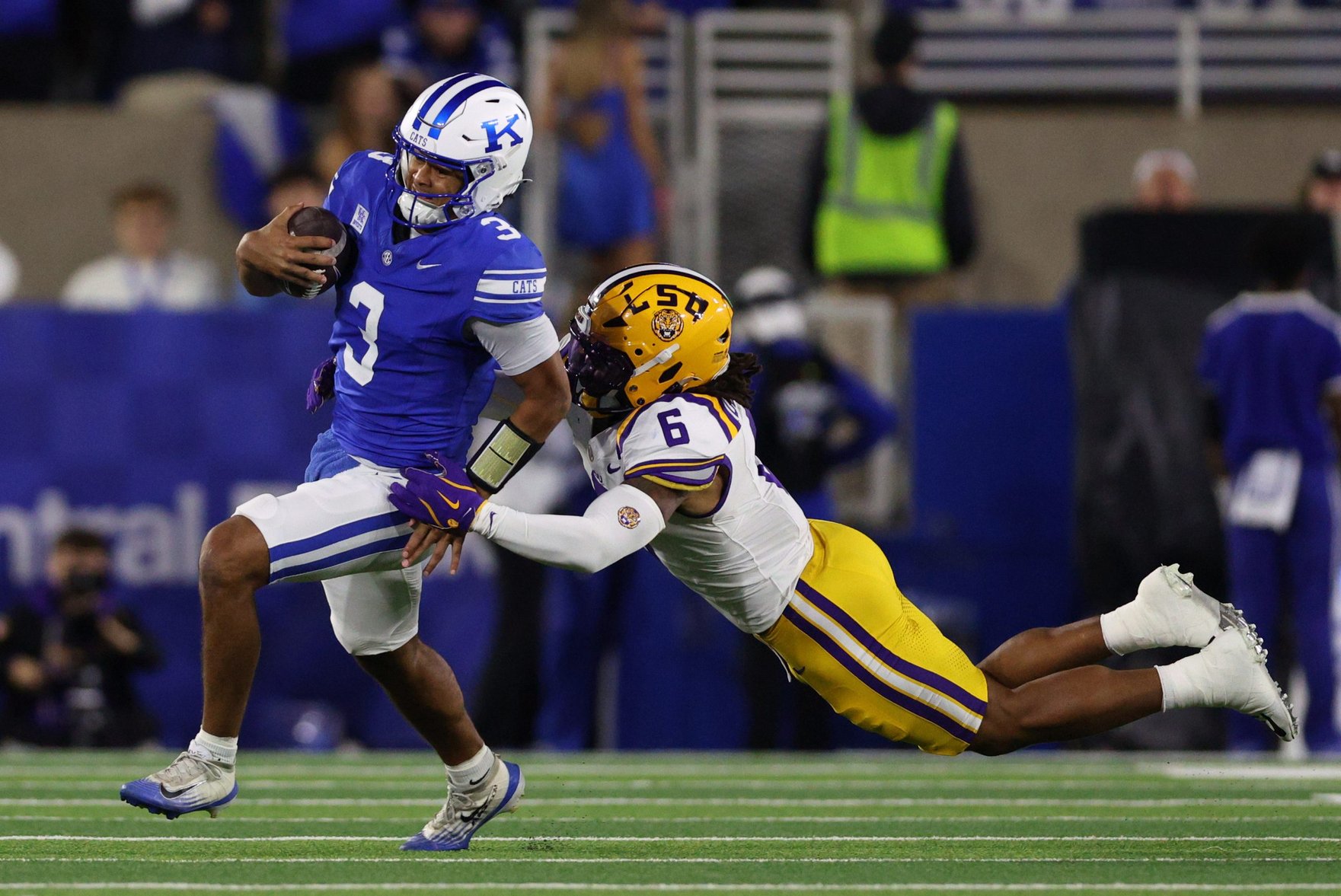

Anto Saka has become one of the most talked-about new faces in College Station this offseason after the defensive end arrived through the transfer portal and an interview clip of him went viral.
The buzz isn’t just about his physique; MARCA reported Saka credits Texas A&M’s strength and conditioning program for early gains, and the Aggies expect him to compete for a starting spot immediately.
Key Takeaways
- Anto Saka joined Texas A&M from Northwestern through the transfer portal and is expected to start at defensive end.
- Saka is a redshirt senior who posted 14.0 tackles for loss and 12.0 sacks across three seasons at Northwestern.
- Standing 6-foot-4 and listed at 255 pounds, Saka’s physique prompted social-media skepticism about his listed age.
How Anto Saka fits Texas A&M’s front seven
Anto Saka projects as a power-edge piece who gives Texas A&M another veteran option on the boundary alongside established seniors.
The Aggies plan to rotate Saka with T.J. Searcy and Ryan Henderson, using his combination of length and strength to provide fresh pass-rush snaps and run-defense snaps across downs.
Coaches have already pointed to the program’s strength and conditioning work as a factor in Saka’s early transformation, and that S&C emphasis is part of why the staff targeted a player with his physical profile.
Saka’s background and collegiate production
Saka came to the Power Five level out of Loyola Blakefield High School and redshirted in 2022 before seeing game action the following seasons at Northwestern.
During three seasons with the Wildcats, Saka totaled 14.0 tackles for loss and 12.0 sacks, numbers that anchor his on-field case for immediate playing time in College Station.
He worked under David Braun at Northwestern during his initial collegiate stretch, then entered the transfer portal and landed in Aggies green to finish his college career.
Saka production and positional comparison
| Category | Anto Saka | Aggies DE room context |
|---|---|---|
| Background | Redshirt senior from Northwestern; recruited from Loyola Blakefield | Room contains senior contributors T.J. Searcy and Ryan Henderson who will rotate at end |
| College production | 14.0 tackles for loss and 12.0 sacks across three collegiate seasons | Room notes veteran rotation rather than a single defined starter; staff will leverage depth |
| Physical profile | Listed at 6-foot-4, 255 pounds with notable strength development | Project fits a schema that prizes size, power and rotational pass-rush bursts |
How Texas A&M can deploy Saka on game day
On early film and from staff descriptions, Saka is most effective as a wide-five or wide-four edge who sets an anchor on early downs and comes on clear rush reps on passing downs.
The Aggies can tailor packages to his strengths by keeping him on the field in sub-packages where he can exploit one-on-one matchups and rotate him into heavier personnel to maintain pass-rush energy late in games.
Expect situational deployment early in the season with increase in snaps as he settles into the scheme and the coaches evaluate matchups week to week.
How Saka’s arrival affects Texas A&M’s CFP and roster construction
Adding Anto Saka gives Texas A&M more experienced depth on the edge, an important factor for a team with College Football Playoff aspirations and a heavy conference slate.
From a roster-construction angle, Saka’s redshirt-senior status and three seasons of production help the Aggies manage rotational minutes while preserving younger prospects for future classes and recruiting cycles.
For CFP implications, a deeper, veteran defensive line reduces late-game fatigue in high-leverage conference matchups and provides the staff with more schematic flexibility against top offenses in the SEC.