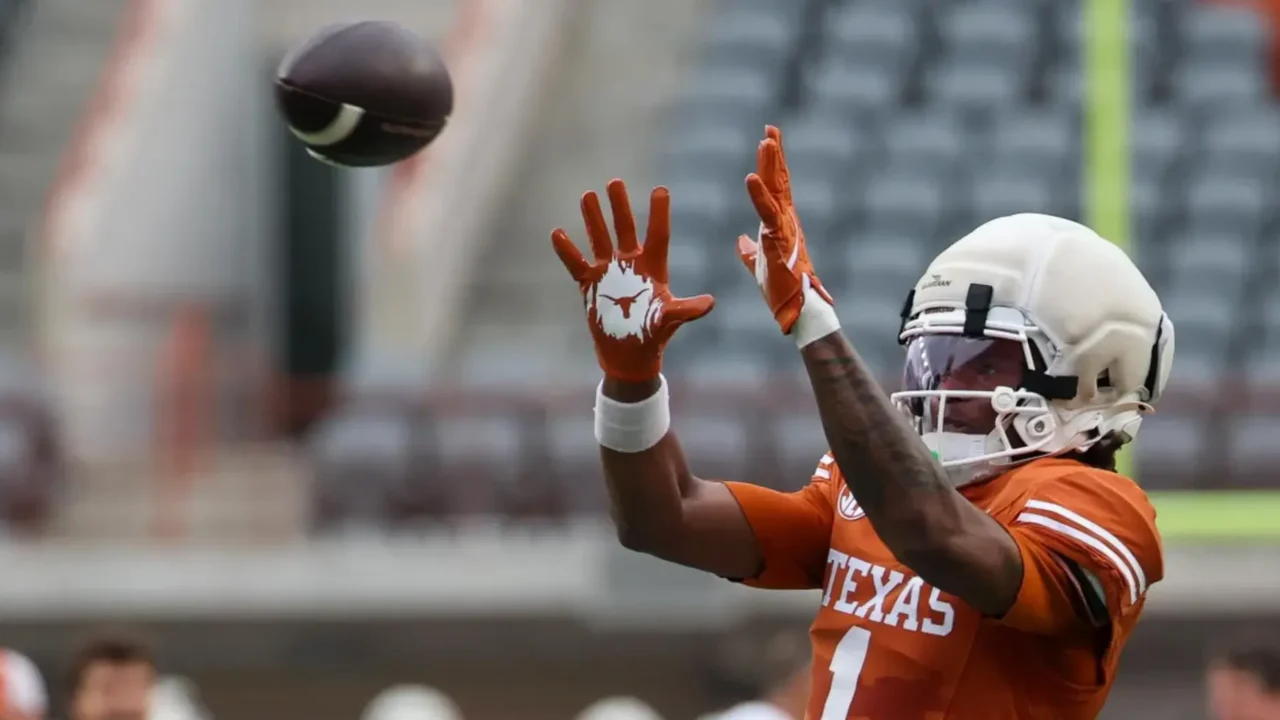
Ryan Wingo enters 2026 with a simple but consequential evaluation point: can he catch consistently? His speed and contested-target profile give Texas upside, but his propensity for drops has been the limiting variable on both play-calling and personnel usage.
The offseason produced competing signals about his hands; reporting on practice work, technology use and surgical improvements is mixed, and those differences matter for how coaches will deploy him during the season. See original reporting at Burnt Orange Nation.
Key Takeaways
- Wingo had seven drops as a sophomore and a 57.4 percent catch rate, making hands the clearest performance concern heading into 2026.
- Contested-catch production was limited, with Wingo securing four of 14 contested opportunities during the referenced season.
- Practice reports are split: some insiders described massive improvements after rehab and LASIK while a scout observed the drop issues returning.
Ryan Wingo offseason work and practice debate
Coaching staff and teammates described interventions aimed at fixing Wingo’s ball security, including high-volume Jugs-machine reps, no-glove fundamentals, and modern training tools to sharpen hand-eye coordination.
A to Z Sports insider Ryan Roberts reported the program used those technologies, and a team source said Wingo showed “massive improvements” after returning from wrist rehab and LASIK surgery.
An independent scout later observed drop issues re-emerge during a Longhorns practice, leaving questions about live-game translation.
How early-season game evidence framed Wingo’s issues
Game samples from the prior season underline why hands are viewed as a gating factor for Wingo’s role; he was targeted heavily at times but converted inconsistently.
Early-season struggles were intertwined with quarterback and schematic factors that compounded timing and anticipation problems.
Pressing and confidence issues contributed to slow starts, which can exacerbate mechanical breakdowns in live reps. Two early interceptions while targeting Wingo illustrated how timing problems and on-field execution combined with drops to limit offensive rhythm.
Wingo hands season and contested context
| Context | Verified fact |
|---|---|
| Season totals | Seven drops and a 57.4 percent catch rate (40 of 94 targets went incomplete) |
| Contested-catch performance | Wingo caught 4 of 14 contested opportunities |
| Early-season sample | Nine receptions on 23 targets with one drop through the first three games in the referenced season |
Wingo’s hands shape Texas 2026 CFP prospects
For the Longhorns, the difference between Wingo becoming a dependable boundary weapon and remaining an inconsistent vertical target has roster and schematic consequences. If he holds catches, staff can exploit matchup draws, simplify route concepts, and open intermediate levels for play-action and seam work.
If the drops persist, play-calling will trend toward risk mitigation with fewer contested targets for Wingo, more quick-game reps, and reliance on other weapons to change coverage priorities. That shifting usage affects recruiting narratives, NIL valuations, and the in-season assessment of receiving depth as Texas chases College Football Playoff positioning.