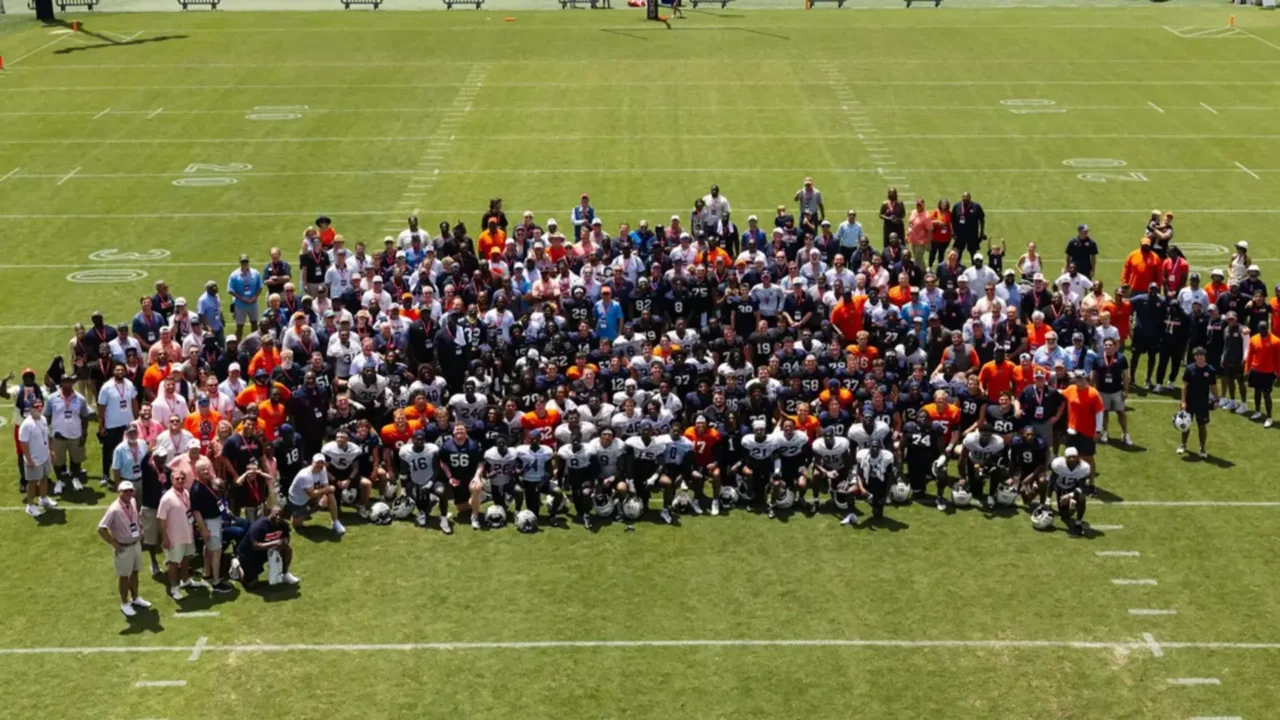
The Auburn football alumni day brought more than 200 former players back to the Plains, folding generations of lettermen into a single afternoon at the Woltosz Center and offering a visible measure of buy-in for the program’s early direction.
“Everybody here helped build this place,” an alumnus said inside the indoor facility, and the gathering mixed era-to-era conversation with direct messages about toughness, accountability and rebuilding from program leaders as noted by Auburn Tigers – Official Athletics Website
Key Takeaways
- More than 200 former Auburn football players from the 1950s to the 2020s attended alumni day and publicly voiced support for the program.
- The staff presence and remarks emphasized returning lettermen to the program fold and setting a tone of toughness, accountability and integrity.
- Jeris McIntrye, serving as director of high school & alumni relations, helped lead the outreach and underscored the value of reconnecting current players with former players.
Auburn football alumni day signals culture shift
The tone at the Woltosz Center leaned practical and personal rather than ceremonial, with alumni trading locker-room memories and staff laying out expectations for the weeks ahead.
Remarks captured at the event repeatedly returned to the same phrase: return to toughness and accountability as core identity markers for the program. The emphasis on those cultural building blocks was voiced directly to the assembled lettermen, and it framed the day as more than a reunion.
Jeris McIntrye, who played at Auburn from 2000-03 and now serves as director of high school & alumni relations, described the gathering as a chance to reconnect roommates and teammates across decades and to show current players what Auburn alumni support looks like in practice.
An associate who spoke to the lettermen before introducing program leadership urged former players to return to practices and games, to offer the kind of sideline mentorship younger players remember, and to help pass along standards from earlier eras.
Several former players who attended used the platform to publicly endorse the new direction and to praise the work ethic they saw on the practice field that day. Those endorsements were cast as encouragement for the current roster and a signal to the fan base that former players are engaged.
Alumni attendance by era and event roles
| Era | Representative roles at the event |
|---|---|
| 1950s–1970s | Longtime lettermen attended to reconnect, offer perspective on program traditions and voice encouragement to younger players. |
| 1980s–2000s | Former starters and position leaders participated in on-field presence, sideline mentoring and public comments endorsing the program’s direction. |
| 2010s–2020s | Recent alumni joined practice observation, sat in on team lunch conversations and emphasized immediate, hands-on support for current position groups. |
What alumni comments reveal about immediate priorities
The language used by attendees and staff clustered around three practical priorities: toughness, accountability and continuity. That trio was offered as both a cultural prescription and a recruiting message for the coming season.
Voices from multiple eras noted the value of alumni presence at practice and games as a tangible way to connect the program’s past successes with its present rebuilding work. Those remarks repeatedly framed alumni involvement as a resource for current players.
Public comments at the event stressed that the players on the field were visibly responding to the level of detail and effort demanded in practice, and alumni singled out specific position groups that looked like they were buying into the process.
SEC recruiting and roster implications
From a recruiting perspective, the optics of 200-plus former players returning to campus are significant because they show a network of former players willing to be visible and involved. That kind of public unity can be useful when staff are selling daily culture and long-term program aims to prospects in the Southeastern Conference.
For roster construction, alumni engagement provides a continuity message to current players and recruits that the program values its own history while asking for a new level of commitment from the roster. That interplay between past and present can help staff make the case for accountability in position meetings and during development windows.
As SEC opponents and national evaluators watch spring and fall workloads, that alumni-backed messaging may help shape perception even if it does not guarantee on-field results. According to local reports, the gathering and the remarks quoted above drew directly from the reporting embedded earlier in this story.