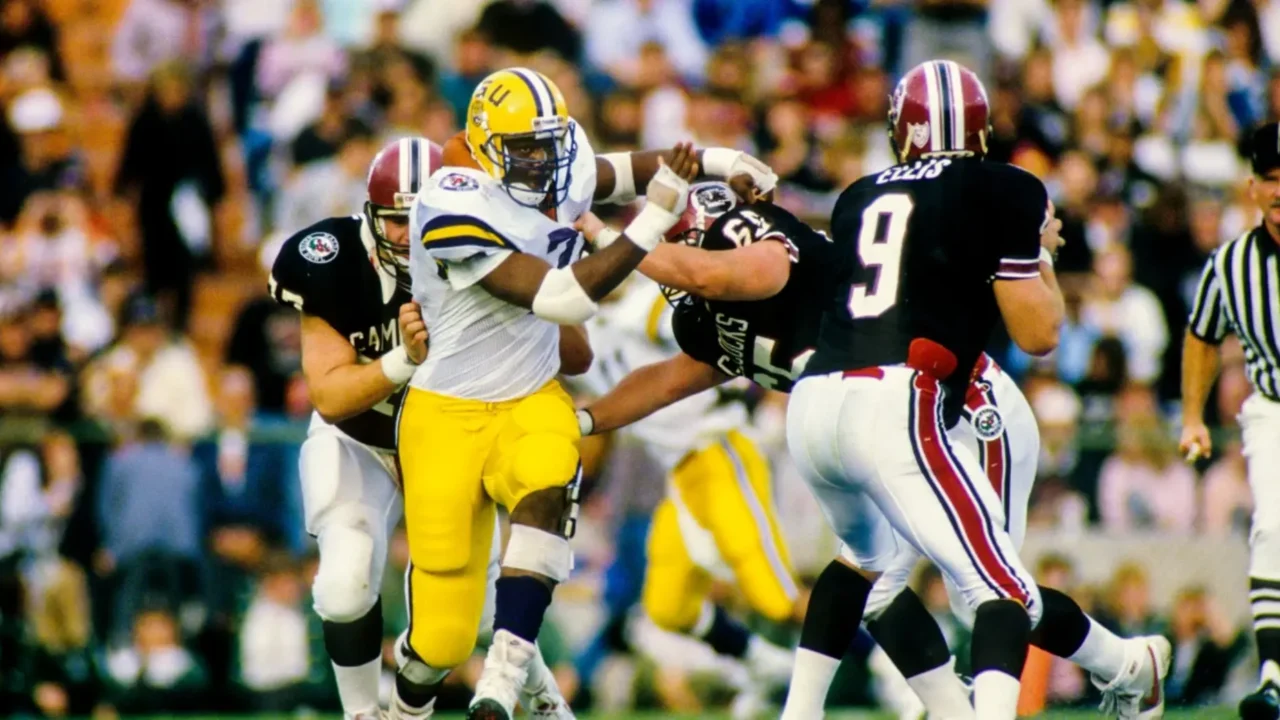
Todd Ellis remains one of the most recognizable figures in Gamecock history as South Carolina prepares to open the 2026 season at Williams-Brice Stadium against Kent State.
The No. 9 jersey Ellis wore from 1985-89 carries weight in Columbia, and it’s a fitting time to revisit how his production and post-playing career shaped the program; this profile draws on recent reporting, including a feature by On3.
Key Takeaways
- Todd Ellis wore No. 9 for South Carolina from 1985 to 1989 and left as the program’s career passing leader with 9,953 yards at graduation.
- Ellis earned Freshman All-American honors and played a central role when South Carolina first adopted the Run-N-Shoot offense.
- Ellis posted a 3,206-yard season in 1987 and a 2,353-yard season in 1988 while throwing to playmakers such as Sterling Sharpe and Robert Brooks.
- After a torn MCL ended his college career he played in the World League, later earned a law degree and became a long-running voice on South Carolina radio with multiple hall of fame honors.
Todd Ellis Run N Shoot years
When South Carolina adopted the Run-N-Shoot, Ellis’s skill set fit the scheme and his numbers jumped into program record territory.
As a redshirt freshman he threw for more than 3,000 yards and topped 20 touchdown passes while earning Freshman All-American honors, and his peak statistical seasons came immediately.
In 1987 he threw for 3,206 yards while the offense fed playmakers such as Sterling Sharpe, and the follow-up season saw Ellis produce 2,353 passing yards with Robert Brooks emerging as a primary target.
Injury, pro path and post playing career
Ellis’s senior year began with him on pace for historic totals, but a low hit against NC State resulted in a torn MCL that ended his college season and altered his pro outlook.
He was part of the 1990 NFL Draft conversation and was eventually selected by the Denver Broncos, then continued his playing career with the Sacramento Surge in the World League.
After hanging up the cleats Ellis returned to Columbia, earned a law degree and blended legal work with a long tenure in Gamecock radio, first as a sideline reporter and color analyst and then as the play-by-play voice beginning in 2003, and he later received multiple hall of fame honors.
Ellis career passing vs program leaders
| Season or context | Passing yards | Top target or note |
|---|---|---|
| 1987 season | 3,206 | Sterling Sharpe was the primary receiving threat |
| 1988 season | 2,353 | Robert Brooks emerged as Ellis’s top target |
| Career total at graduation | 9,953 | Career passing yards mark remaining in program record |
The table places Ellis’s best single-season outputs alongside the career total he left in Columbia, providing direct context for why his No. 9 remains prominent in program memory.
Ellis legacy and Gamecock roster implications
Ellis’s statistical footprint and long-running broadcast presence give the No. 9 jersey added symbolic value that matters on recruiting visits and in-game presentation at Williams-Brice Stadium.
Prospects and fans often see the continuity between past production and the program’s current ambitions, and coaches can point to Ellis’s return to Columbia as an example of alumni engagement and identity.