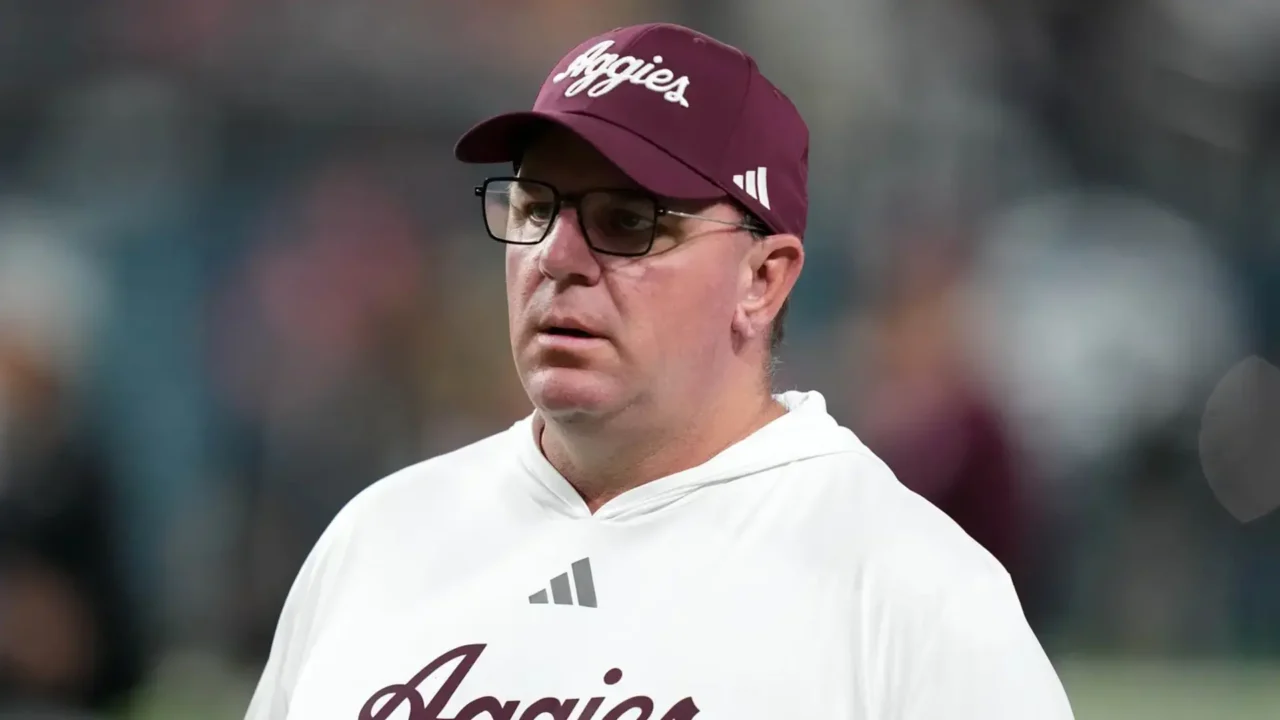
Head coach Mike Elko confirmed that running back Tiger Riden Jr. and defensive tackle Chace Sims will miss the 2026 season, creating immediate roster consequences as fall camp wraps and the opener nears. The losses remove a projected goal-line option and a developing interior rotation piece at a sensitive point in the calendar.
Elko’s announcement is detailed in an account from Sports Illustrated, which notes Riden’s prior work and Sims’ absence from game action last year. Both players have been ruled out for the season, pushing the staff to reallocate snaps and personnel packages.
Key Takeaways
- Tiger Riden Jr. will miss the 2026 season after appearing in five games as a true freshman.
- Chace Sims will miss the 2026 season despite not having appeared in a game last year as a true freshman.
- Riden’s absence increases the expected workload for Rueben Owens II and Jamarion Morrow in short-yardage and goal-line situations.
- True freshman KJ Edwards now has a clearer path to early carries and meaningful snaps.
Backfield rotation and goal-line consequences
Tiger Riden was projected to be one of Texas A&M‘s goal-line backs in heavy personnel sets, offering a compact power profile the staff planned to use inside the five-yard line. At 5-10 and 220 pounds he provided a physical option the Aggies lacked among returning rushers, and his presence would have lightened the pounding on Rueben Owens II and Jamarion Morrow.
With Riden sidelined, the Aggies will lean more heavily on Owens and Morrow to finish drives, and those two will likely see expanded snap shares inside the red zone and on third-and-short. That adjustment forces early play-calling and personnel decisions in physical conference games where short-field efficiency carries weight.
Coaches must balance increased reliance on established rotation backs with inserting younger or heavier personnel and mixing package tight ends to recreate a power presence. Managing carry counts will be essential to limit injury risk while preserving a reliable punch at the goal line.
Riden and Sims status versus returning production
Riden played five games as a true freshman last year, recording 11 carries for 45 yards and one touchdown across 78 snaps, numbers that reflected a limited but promising role. He entered fall as the projected No. 3 back and a clear short-yardage option, so his absence forces a schematic tweak to replace power rushing snaps.
Chace Sims, a true freshman who did not appear in a game last season, will also miss the year and removes a developing option from the defensive line rotation. The announcement did not disclose the nature or timing of Sims’ injury, leaving the staff to reallocate reps along the interior without a timetable for return.
Texas A&M’s staff still possesses depth behind the injured players, but losing both a projected goal-line back and a developing interior lineman compresses margin for error in early nonconference tune-ups and into SEC play. The team will need to maintain rotational freshness while testing different personnel groupings under game conditions.
Backfield depth comparison table
| Player | Prior appearances / production | Role before injury | Recruiting / status |
|---|---|---|---|
| Tiger Riden Jr. | Five games, 11 carries for 45 yards and 1 TD across 78 snaps | Projected No. 3 back and goal-line power option | True freshman who had earned short-yardage snaps |
| Chace Sims | Did not appear in a game as a true freshman last year | Depth on the defensive interior | True freshman season cut short before game action |
| KJ Edwards | Did not play college games prior to 2026 | Projected early-opportunity running back with potential snaps in meaningful situations | One of the top running backs in the 2026 class with immediate role upside |
| Rueben Owens II | Returning running back with expected primary workload | Lead back in rotation; more short-yardage responsibility expected | Established contributor in Aggies’ backfield |
| Jamarion Morrow | Returning running back with expected significant snaps | Complement to Owens as part of the 1-2 punch | Projected to share goal-line and early-down duties |
Texas A&M season-ending injuries and SEC CFP implications
The losses tighten Texas A&M’s margin for error in early-season games and make short-yardage reliability a roster priority as the Aggies enter a challenging SEC slate. Punching the ball in at the goal line is a situational factor that influences close wins, and losing a projected power option changes late-game calculus for play design and personnel choices.
From a roster-construction and recruiting angle, the situation accelerates the timeline for KJ Edwards and increases the value of physical, short-yardage backs in upcoming classes. It also places additional emphasis on interior defensive depth to absorb Sims’ absence without degrading rotational freshness during SEC play.
On the College Football Playoff front, a single positional injury rarely derails a competitive team, but attrition at the point of attack can swing tight divisional races. The Aggies will need early-season cohesion in both rushing and defensive rotations to avoid slipping in conference positioning.
According to local reports, Elko’s announcement confirmed both players will miss the season and the staff will adjust snaps and roles accordingly.