
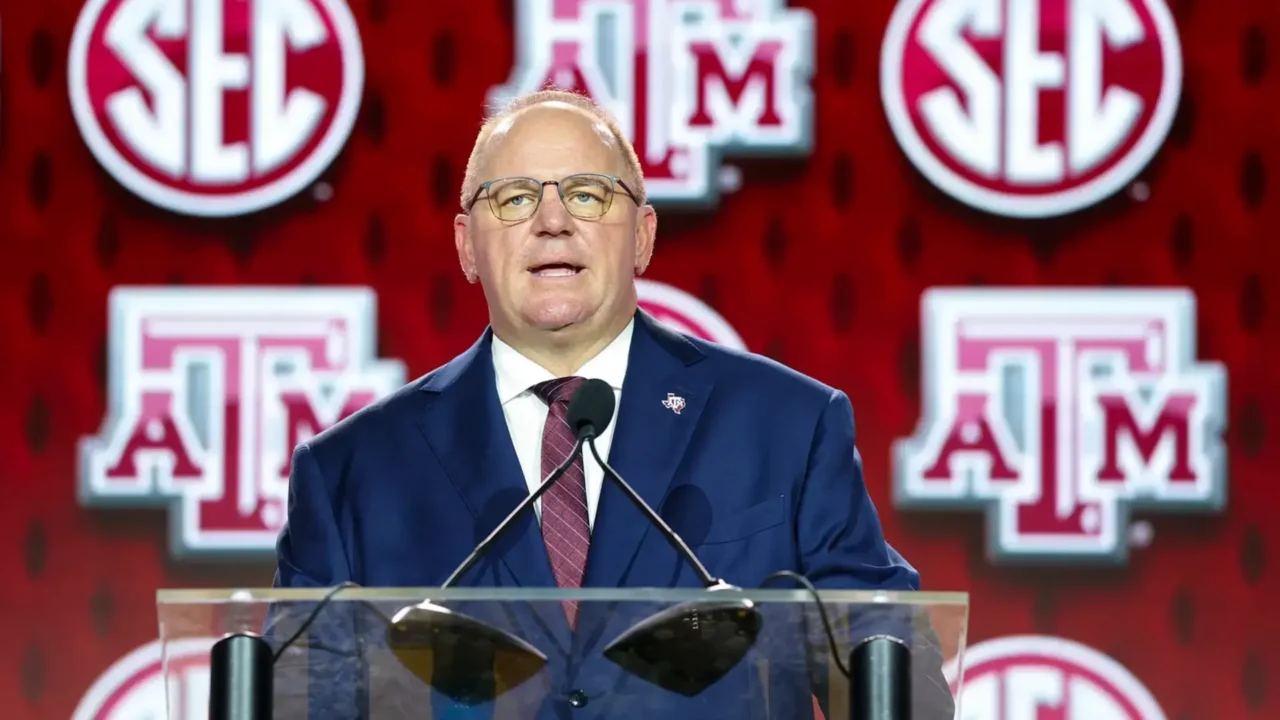
Mike Elko’s third season at Texas A&M represents the pivot point between evaluation and identity for a program with high expectations. Fans and staff will watch whether the foundation he built in Years 1 and 2 finally translates into a roster and culture that look like his program.
Elko spent Year 1 assessing an inherited roster and setting standards, and Year 2 focused on tangible progress and schematic identity; by Year 3 the pieces recruited and developed under his watch should be prominent on gamedays, as noted in a recent piece by Texas A&M Aggies On SI.
Key Takeaways
- Year 3 is when a coach’s recruits and culture typically begin to define the roster and on-field identity.
- Elko’s first season at Texas A&M focused on evaluating an inherited roster and installing standards.
- Year 2 concentrated on progress and adjusting the scheme to available personnel.
- The third season should reveal whether recruits and returning players have matured into the program Elko envisions.
How Year 3 shapes Mike Elko’s roster
By the third season most of the roster has at least two full years inside the same program structure and coaching philosophy. That continuity gives position coaches time to develop players physically and mentally into roles that fit schematic demands.
Roster turnover by Year 3 typically trends toward players selected for the head coach’s system, and that dynamic is central to understanding what to expect from Texas A&M. As the new coach’s early signees and transfers move into upperclassman roles, the roster should reflect personnel choices made to run Elko’s style of football.
From evaluation to identity under Elko
Elko’s opening season was built around assessment: identify strengths, patch weaknesses, and set behavioral standards across the program. Those early standards are reinforced in Year 2 with clearer assignments and more specific expectations for practice habits and game preparation.
With those standards repeatedly reinforced, the cultural habits younger players adopt become durable and less a point of daily emphasis. That cultural solidification is what allows a staff to move from correcting behavior to winning on broader metrics like sustained execution on both sides of the ball.
Which position groups will signal real progress
On the field, the clearest indicators of Year 3 progress are groups where development timelines are typically longer, such as the offensive line, defensive front, and secondary. Those units often require two to three seasons of consistent coaching to land technique, strength and assignment discipline.
When upperclassmen who were recruited by the current staff begin to play primary roles, fans and evaluators should expect cleaner game-to-game play-calling and fewer schematic concessions. That stability reflects not just talent but alignment between roster construction and the head coach’s vision.
Recruiting roster and returning production compared
| Category | Inherited roster at hire | Elko-era returners and early recruits |
|---|---|---|
| Roster composition | Majority of players chosen under the previous staff with mixed fit in the new system | Increasing proportion of players whose skill sets and personality traits match Elko’s system and standards |
| Cultural maturity | Program-wide standards newly established and still being enforced | Underclassmen who have grown up in Elko’s environment and are ready to reinforce standards themselves |
What success looks like in Year 3
Success in the third season will not be measured solely by a single win total but by visible alignment between scheme and roster, fewer schematic concessions by coaches, and consistent in-game decision-making. Those are the operational signs that a program has stopped rebuilding and started executing the head coach’s blueprint on a weekly basis.
Because Texas A&M possesses high-level recruiting advantages and institutional resources, the expectation set by the program and its supporters is that those operational improvements lead to competitive outcomes in the SEC and beyond.
SEC and CFP implications for Elko’s third season
In the SEC, Year 3 outcomes will influence recruiting momentum and league perception; a clear step forward can change how prospects view the program at a time when positional fit matters on signing day. Strong development and roster alignment in Year 3 can also set the table for realistic College Football Playoff conversations in subsequent seasons.
Ultimately, Elko’s third season will be judged by whether the program moves from short-term progress to sustained performance that leverages Texas A&M’s recruiting advantages and institutional resources.
This analysis draws from the reporting linked earlier in the piece and focuses on the roster, culture and recruiting signals that matter as Mike Elko enters Year 3.