
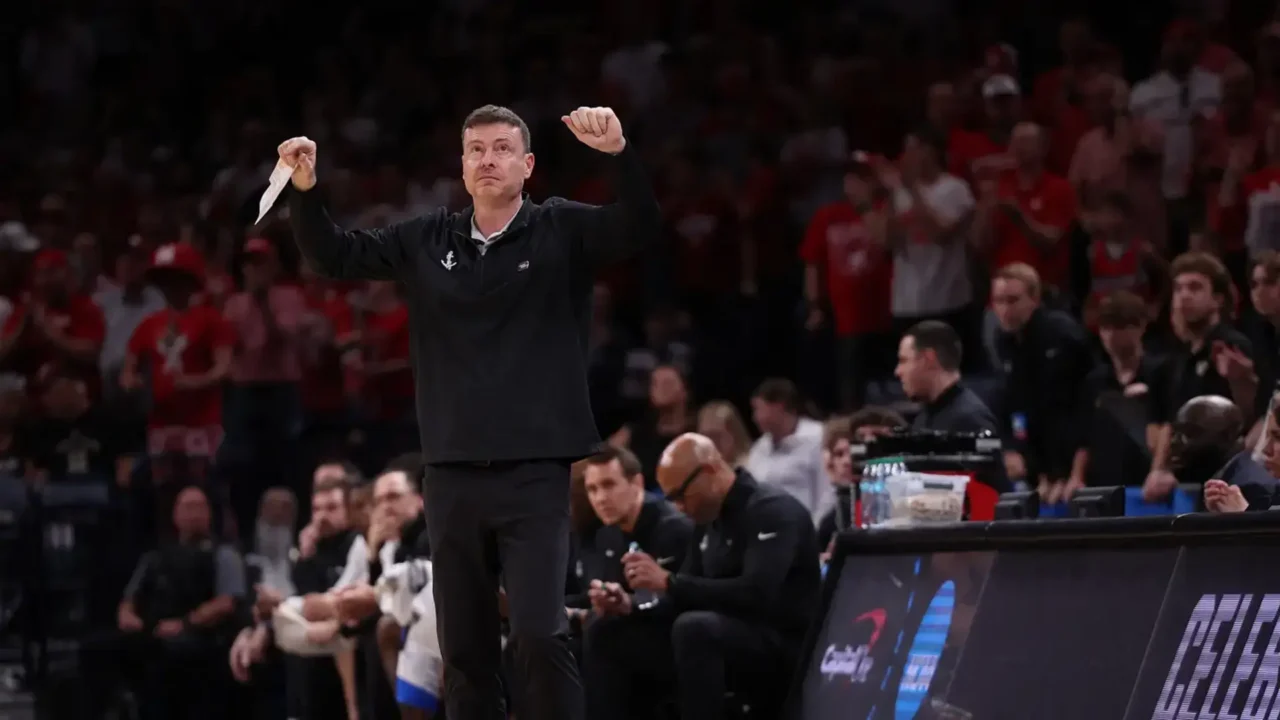
Vanderbilt frontcourt mindset shifted this offseason as Mark Byington intentionally chased size, weight and defensive toughness to change how the Commodores will look in the paint next season.
Byington was blunt about the approach: “I told my staff,” Byington said. “I was like, ‘We better have some guys on our team that not only look like football players, but can play football.'” The staff answer included transfer additions such as Nebraska transfer Berke Buyuktuncel and Colorado transfer Bangot Dak, plus Auburn transfer Sebastian Williams-Adams, and the full reporting is available from Vanderbilt Commodores.
Key Takeaways
- Vanderbilt frontcourt mindset is now centered on size, weight and defensive willingness rather than pure scoring from the four and five positions.
- New frontcourt additions include Berke Buyuktuncel, Bangot Dak and Sebastian Williams-Adams as transfers intended to add physicality and depth.
- Byington expects returning sophomore center Jayden Leverett and top-100 freshman big man Jackson Sheffield to factor into frontcourt rotations.
- The new roster construction prioritizes rebounding and interior defense while accepting that only one incoming player has previously averaged double figures offensively.
Why Vanderbilt frontcourt mindset prioritized size and weight
Byington described a clear pivot from seeking pure athleticism to seeking athleticism with mass and functional strength.
“We had to have athleticism and weight,” Byington said, framing the decision as deliberate rather than reactionary.
He singled out players who already fit the physical profile — Chandler Bing, Devin McGlockton and AK Okereke — as models for the kind of nastiness he wanted more of. In practice and recruiting, the staff widened its search to players whose immediate impact would be measured by defensive presence and rebounding rather than scoring volume.
The result, Byington said, is the biggest roster he has assembled in his Vanderbilt tenure, built to withstand fouls, physical matchups and the attrition of conference play.
How the transfers change frontcourt roles
Berke Buyuktuncel arrives as Vanderbilt’s first transfer portal addition this cycle from Nebraska, projected to bring size and experience against veteran competition.
Buyuktuncel’s role is expected to center on interior defense, screens and cleaning the glass within Byington’s frontcourt plan.
Bangot Dak, identified as Vanderbilt’s first seven-footer, brings a true center option to the rotation and is the only incoming frontcourt piece who has averaged double figures at the college level.
Dak’s presence alters matchups and gives the Commodores a conventional rim anchor.
Sebastian Williams-Adams from Auburn is viewed as a potential face-up big who could stretch defenses more than prior iterations of Vanderbilt frontcourts.
Byington acknowledged Williams-Adams might take a step as a scorer, but emphasized the group’s primary purpose remains defense and rebounding.
Behind the newcomers, Byington plans to lean on returning sophomore Jayden Leverett and freshman Jackson Sheffield as complementary pieces in rotation decisions.
That mix gives the staff flexibility to pair physical rim play with mobility and occasional perimeter shooting.
Frontcourt experience and profile comparison
| Player group | Profile | Experience and projected role |
|---|---|---|
| Bangot Dak | Colorado transfer and the program’s first seven-footer | Most collegiate scoring experience among newcomers; projected rim protector and primary rebounder. |
| Berke Buyuktuncel | Nebraska transfer with size and interior instincts | Projected to provide physical minutes inside and help anchor second-unit rebounding and defense. |
| Sebastian Williams-Adams | Auburn transfer with potential face-up skills | Projected to be a stretch-capable frontcourt option who may handle some scoring duties while prioritizing team defense. |
| Returning pieces | Jayden Leverett (sophomore center) and Jackson Sheffield (top-100 freshman big) | Internal options for minutes and matchups that provide continuity and developmental upside within a bigger rotation. |
SEC recruiting and roster construction implications
The Commodores’ new frontcourt construction alters how Vanderbilt will present itself on the recruiting trail: the staff can now pitch clearer size and immediate defensive fit to prospects who prioritize frontcourt depth.
Opponents in the SEC will have to plan for a more physical Vanderbilt interior in matchup preparation and game planning, which could change late-game substitution patterns across the conference.
Practically, the lineup shift could reduce the frequency with which fouls decide outcomes for Vanderbilt by allowing multiple durable bigs to absorb minutes and give Byington more late-game matchup options.