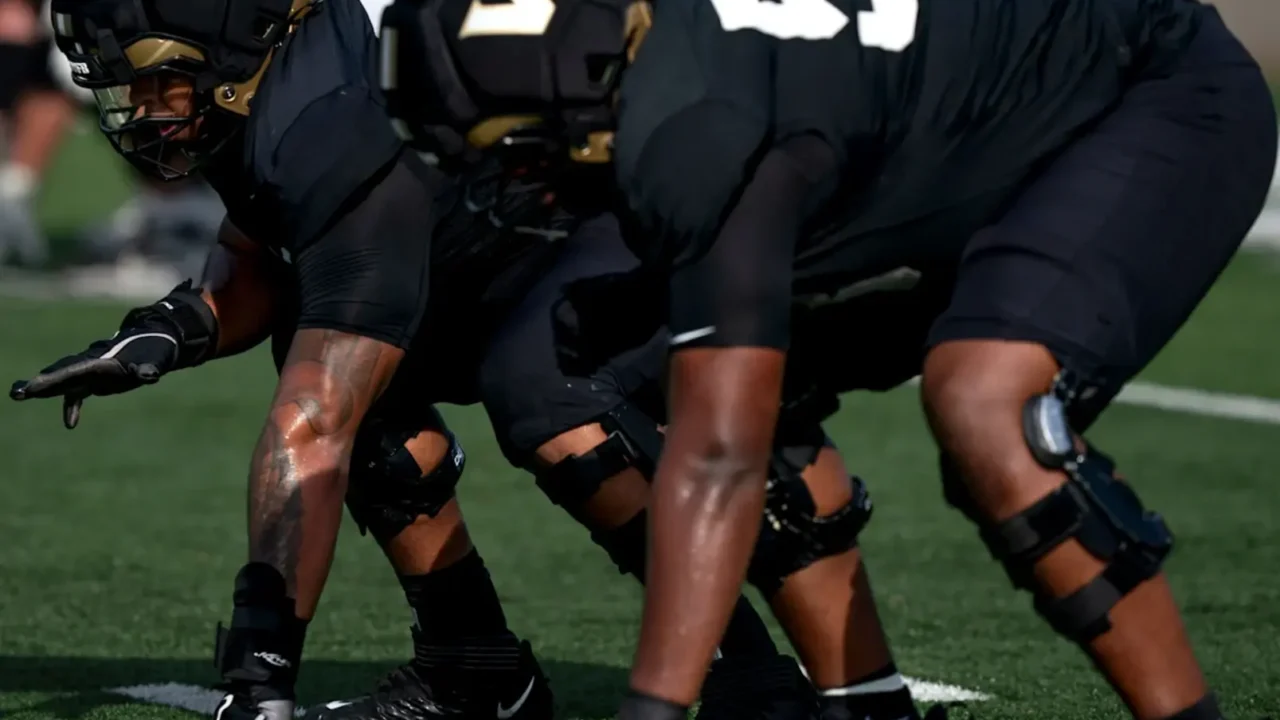
Vanderbilt football offensive line construction has shifted toward a pragmatic pipeline of lower-division transfers, a move that prioritizes immediate availability and experienced depth over traditional multi-year high-school development.
The approach matters for fans in Nashville because offensive-line continuity and physicality are foundational to both the run game and quarterback protection, and this roster model changes how the program recruits and evaluates frontline talent as it competes in the SEC. Reporting that frames this shift is available on Yahoo Sports
Key Takeaways
- Vanderbilt has leaned on lower-division transfers to stock its offensive line, favoring players who can compete immediately rather than waiting multiple seasons for development.
- The transfer-first construction alters on-field expectations by shortening the timeline for physical readiness and positional depth up front.
- This roster model shifts recruiting conversations, making the Commodores a more immediate option for transfers while changing the pitch to high-school prospects about pathway and playing time.
How Vanderbilt football offensive line was rebuilt with transfers
The current offensive-line group at Vanderbilt reflects an intentional roster build that leaned into the transfer market for players coming out of lower divisions and junior-college programs.
Coaching staff priorities emphasized players who brought collegiate game reps and the physical profile to compete in Week 1, rather than projecting multi-year development trajectories from true freshmen.
That strategy reduces immediate exposure to developmental growing pains on the field, but it also requires the staff to integrate varied technique backgrounds and acclimate multiple players to a single blocking scheme in short order.
On-field implications for protection and the run game
Using experienced transfers can stabilize pocket integrity and limit early-season breakdowns caused by inexperience, with the caveat that technique and cohesion still take practice reps to sync.
For the run game, the roster model prioritizes physicality and immediate availability, which can produce more robust short-yardage performance and help sustain drives when the roster is healthy.
At the same time, relying on transfers means continuity from year to year depends on retention and further additions, rather than a predictable ascension of a single recruiting class.
Roster background and comparison of transfer profiles
| Profile | Typical background | What they commonly add to Vanderbilt |
|---|---|---|
| Lower-division transfers | Players from FCS, junior college, or lower-tier programs with college-level game reps | Immediate depth, physical readiness, and shorter timeline to start contributing on game days |
| Internal recruits and high-school signees | Traditional high-school recruits who often need multi-year development | Long-term continuity, system familiarity, and potential for multi-year starter arcs |
| FBS transfers from Power Five and Group of Five | Experienced players with higher-level competition exposure | Immediate technical polish and potential leadership, though availability varies |
The qualitative comparison shows trade-offs: lower-division transfers shorten the window to on-field contribution, while internal recruits offer a steadier developmental path that pays off over multiple seasons.
Vanderbilt’s approach mixes those elements to manage short-term competitiveness while preserving some long-term roster building, but roster balance depends on successful integration and retention of transfer additions.
SEC recruiting consequences for Vanderbilt’s roster construction
In the recruiting marketplace, leaning on lower-division transfers reframes Vanderbilt as an appealing landing spot for players seeking immediate playing time and a fresh start in a Power Five environment.
That reality can help bridge competitive gaps in the short term, but it also requires the program to sell a clear developmental pathway to high-school prospects who might otherwise prefer programs promising multi-year growth and stability.
Reporting by Aria Gerson informed this analysis of Vanderbilt’s offensive-line construction and roster strategy.