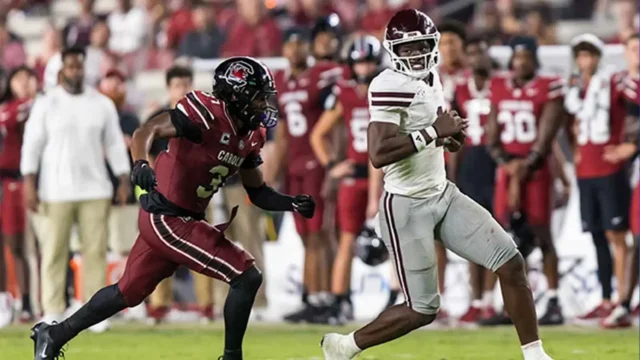
Lane Kiffin arrived in Baton Rouge and has overseen a roster overhaul that prioritized portal additions to address clear offensive needs. One of those additions is Dilin Jones, who transferred from Wisconsin and immediately projects as a candidate to help stabilize LSU’s running attack.
LSU averaged 104 rushing yards per game last season, the fewest in the SEC, making a dependable runner a priority for early game plans. Jones has looked good in practice, showing protection chops, vision and consistent ball carrying as reported by LSU Tigers On SI, and that combination makes him a candidate to shift carries and situational usage in Week 1 against Clemson
Key Takeaways
- Dilin Jones transferred from Wisconsin to LSU and was added as part of Lane Kiffin’s roster overhaul to address the backfield.
- LSU’s rushing attack averaged 104 rushing yards per game last season, the fewest in the SEC.
- Coaches and staff reporting indicate Jones has been strong in pass protection, vision and consistent ball carrying in practice.
- Jones could be an immediate Week 1 X-factor against Clemson given Clemson’s interior defensive turnover and LSU’s need for a steadier run game.
How Dilin Jones fits Lane Kiffin’s offense
Jones projects as a three-down complement who can stabilize early-down rushing while remaining on the field in passing situations due to his protection chops. That role matters because LSU’s running game ranked last in the SEC, creating a clear need for a back who can deliver consistent downhill yards and hold up in pass sets.
His balance and vision make him useful between the tackles, and his pass-protection polish allows play callers to mix personnel without sacrificing quarterback security. That versatility gives Kiffin more freedom to vary tempo and script in the opener while protecting LSU’s passing attack.
Comparing Jones to LSU’s current backfield options
LSU’s existing backfield pieces offer athleticism, but lacked a consistently balanced runner who reliably secures early-down yards and sustains pass protection. The reporting identifies Jones as a more balanced and consistent option compared with the alternatives currently on the roster.
Adding Jones changes how play scripts can be built in the opener by allowing LSU to mix steadier rushing between tempo and quick-passing plans. That helps control clock management and can reduce reliance on schematic passing to hide a thin ground game.
Rushing context and Clemson front seven turnover
| Category | Verified context |
|---|---|
| LSU rushing baseline | LSU averaged 104 rushing yards per game last season, the fewest in the SEC |
| Clemson front seven turnover | Clemson lost Peter Woods and DeMonte Capehart to the NFL plus rotational piece Stephylan Green, creating turnover along the defensive interior |
| Matchup angle | Jones offers a balanced rushing style and pass-protection ability that could exploit a reworked Clemson interior while allowing LSU to control early-down tempo |
How a larger role for Jones shifts LSU’s SEC and CFP implications
Improving the run game from the bottom of the conference average matters for LSU’s short- and long-term goals because it impacts time of possession and late-game resilience. A more reliable rushing attack helps sustain scoring drives and protect LSU’s offense in close games that affect conference standings and late-season College Football Playoff resume-building.
At the recruiting level, having a back who demonstrates pro-style running and pass-protection ability can broaden LSU’s pitch to recruits and reduce urgent positional need in future classes. This reporting draws on the linked story and on observed practice usage in Baton Rouge.