
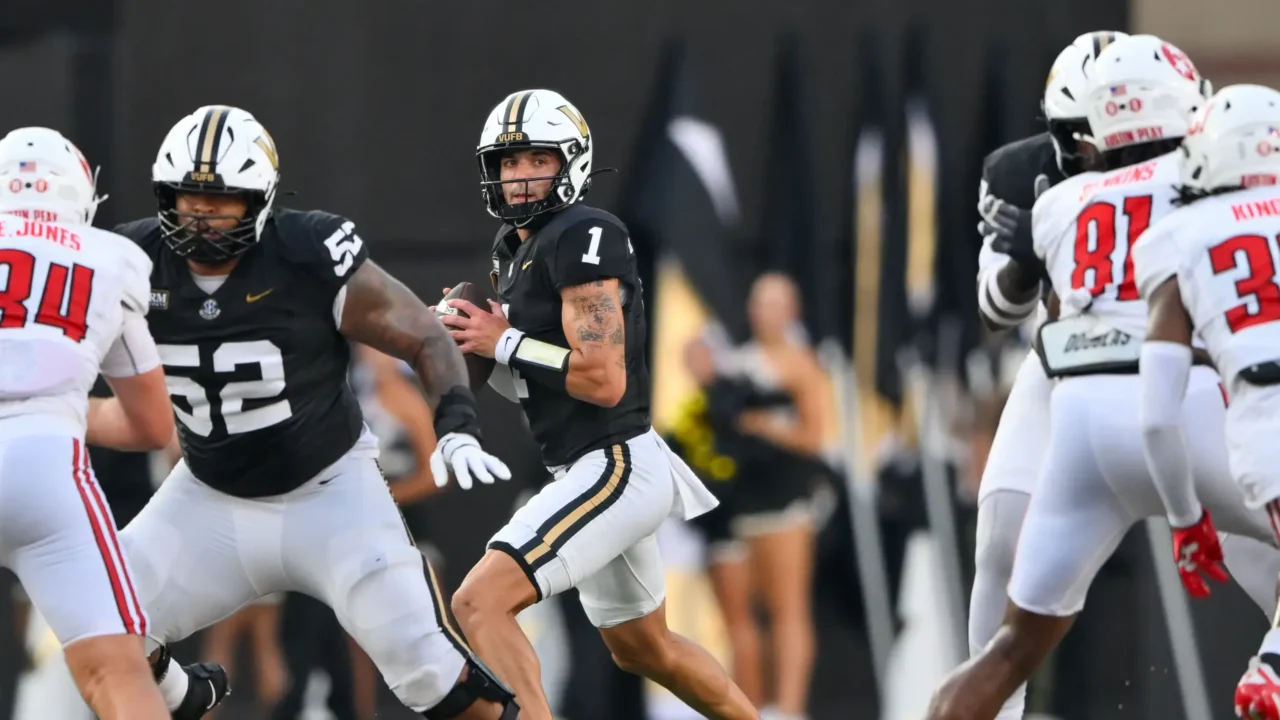
The Vanderbilt offensive line showed enough promise to move the offense but left clear questions that matter for fall camp and early SEC play. Blake Fromang’s breakdown on On3 assigns individual grades, highlights standouts and flags worries at the tackle spots that could shape depth charts.
The short film and game photos include Blaze Berlowitz dropping back at FirstBank Stadium, a visual reminder that pass protection and tackle play will directly affect the quarterback’s rhythm going forward. The grading gives coaches and staff a clear prioritized list of positional needs rather than a set of numeric absolutes.
Key Takeaways
- The Vanderbilt offensive line produced enough against Austin Peay to keep drives alive while revealing tackle-level vulnerability that needs attention.
- The analysis identifies interior linemen as steadier performers compared with the edges, with specific players singled out as contributors.
- Tackle concerns affected pass-protection clarity and create a short-term roster question that will drive recruiting and rotation decisions.
Vanderbilt offensive line tackle concerns
The grading noted that Vanderbilt’s tackle play created the largest area of concern and was the source of most off-edge pressure. Blake Fromang points to pressures allowed and a lack of sustained edge control that mattered on longer drives.
Tackle performance is not an isolated issue for a team running a balanced attack because weaknesses there compound over the course of a game and change play-calling. Coaching staffs will want to see clearer reps from the starters and more reliable backup reps in practice before ramping up game plans against SEC front sevens.
Interior line play and run fit notes
The grading emphasized a quieter positive: Vanderbilt’s interior unit graded out as the more consistent portion of the line. Guards and the center group were credited with creating manageable lanes and keeping interior rush lanes contained during early-down run sequences.
That interior steadiness helped sustain short-yardage efficiency and created enough balance to prevent Austin Peay from teeing off on the quarterback in the middle of the pocket. The analysis singles out interior effort and technique as a building block for upcoming matchups.
Vanderbilt offensive line historical context
| Position group | Austin Peay game note | Analysis note |
|---|---|---|
| Tackles | Flagged as the unit’s primary weakness and the source of most off-edge pressure | Requires clearer depth, better pass sets, and possible rotation to stabilize protection on early downs |
| Interior line | Identified as the steadier group that opened lanes and limited interior penetration | Provides a foundation for both the running game and quicker pass timing to mitigate edge issues |
SEC roster and recruiting implications for Vanderbilt offensive line
From a roster-construction standpoint, the grades make the tackle spots a priority window for recruiting and offseason development. The Commodores will need to turn those qualitative flags into a recruiting checklist that emphasizes length, experience and immediate rotational depth.
Within the SEC context, marginal differences across the offensive line can determine early-season competitiveness. Vanderbilt’s staff will likely prioritize mid-cycle targets and transfers who can provide tackle stability while preserving interior continuity.
Reporting for this piece relied on the primary source’s coverage and grading, with game photography credit to Steve Roberts-Imagn Images.