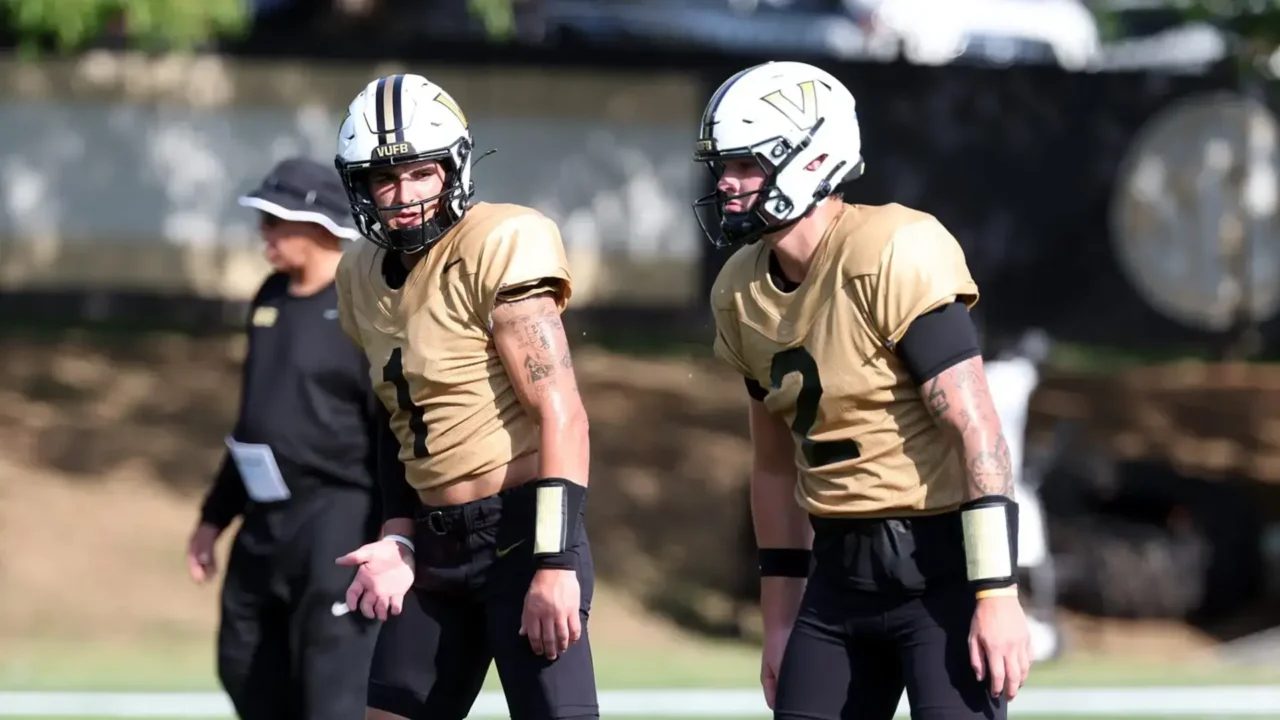
The Vanderbilt quarterback competition is no longer a fall scrimmage storyline — it arrives under lights Saturday as Vanderbilt opens against Austin Peay. The game matters because it provides the first realistic evaluation of live production for Blaze Berlowitz and five-star freshman Jared Curtis, and because Vanderbilt opens as nearly 30-point favorites in a contest the roster is treating like a measuring stick.
Lea has framed the game as a moment to see who can control emotions and execute under game pressure, and he has been clear about his expectations for the roster in practice and beyond. Reporting from Vanderbilt Commodores shows that the coaching staff wants a mature approach, and that Saturday will be the clearest point to judge whether the quarterbacks can provide the kind of leadership the team needs.
Key Takeaways
- Lea expressed clear confidence in his roster and said a mature team must attack every snap the same way.
- The starting job is effectively between veteran Blaze Berlowitz and five-star freshman Jared Curtis.
- The season opener against Austin Peay is the primary in-game evaluation point for Vanderbilt’s quarterback picture and its 2026 competitive window.
Vanderbilt quarterback competition centers on Berlowitz and Curtis
The answer to whether Vanderbilt can compete in 2026 starts with which quarterback can manage an SEC-caliber approach to in-game variables. Blaze Berlowitz arrives with the advantage of in-program experience and a reputation for edge and command in practice; the question is whether that edge converts to consistent in-game decision-making and confidence that reduces turnovers.
Jared Curtis brings an arm profile the staff highlighted over the summer, and he spent time comparing his arm talent to major-league examples during offseason conversations. The central evaluation for Curtis is whether live play slows the game down enough that he makes the safer, more precise choices the staff would require for a true push toward a winning season.
Lea’s comments frame the contest as organizational and outcome-driven. “I’ve got a lot of confidence in these guys,” he said, adding that a mature team “attacks all four quarters the same, attacks every snap the same.” That line underlines why the coaching staff will judge the quarterbacks first on composure and second on playmaking.
Offense experience and roster depth inform expectations
Vanderbilt’s roster profile tempers what a strong quarterback outing will mean. The team enters the opener with the 34th most experienced offense nationally and what the staff described as its deepest roster to date. That combination provides some margin for error and room for a young quarterback to grow without immediate season-ending pressure.
The defense, listed among the nation’s most experienced units, gives the offense a chance to work from favorable field position and game scripts more often than a less experienced defense would. That context raises the bar differently for the quarterback position: the offense is expected to score reliably while the defense can provide stops that keep games within reach.
Lea emphasized the need to “organize the offense” and to operate effectively with whichever quarterback plays. How each signal-caller fits into that organizational requirement will determine whether the offense can expand past game-control tendencies and begin to push the ball downfield regularly.
Experience and role comparison table
| Area | Fact | Relevance to quarterback evaluation |
|---|---|---|
| Offensive experience | 34th most experienced offense in the country | Provides continuity and a supporting cast that can mask some quarterback growing pains while expecting consistent execution |
| Defensive experience | Fourth-most experienced defense in the country | A strong defense reduces immediate pressure on the QB to be perfect and allows evaluation of the QB in controlled comeback or aggressive-drive situations |
Opener outcome will shape SEC perception and recruiting
A clear, confident display from either quarterback will have immediate recruiting value. Prospective targets and transfers track how coaches manage the quarterback spot and whether the starter projects as an offensive leader; a decisive performance simplifies message and roster construction.
From an SEC perspective, winning the opener as expected won’t move the needle dramatically in standings, but how Vanderbilt wins — with a quarterback who can push the ball and limit turnovers — affects early narratives around competitiveness. A showing that suggests the offense can score more than just through clock control alters how the program is perceived heading into conference play.
Saturday won’t define the season, but it will clarify whether the staff has a quarterback who can lead a push for more than foundational growth in 2026. The game will also provide the staff with the practical answers Lea said he needs about maturity, emotional regulation, and in-game leadership. Reporting linked above provides the full profiles and quotes used in this analysis.