The Mizzou running back room entered 2026 viewed as one of the program’s top position groups, and that framing mattered for the Tigers’ offensive identity heading into the season.
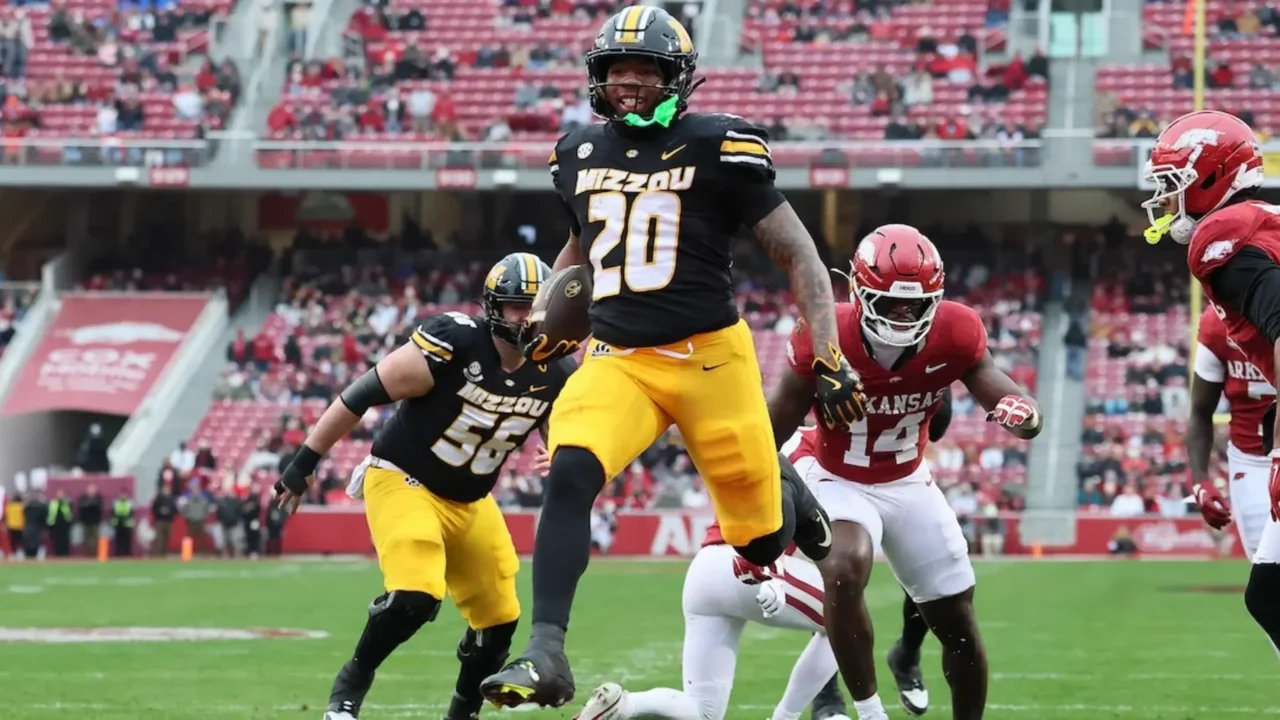
That perception changed rapidly after the program lost an All-American and a backup suffered another injury in Week 1, a development first reported by on3.com and visible in the same game when Jamal Roberts rushed for a touchdown at Donald W. Reynolds Razorback Stadium.
Key Takeaways
- The Mizzou running back room began the year seen as a major strength but has quickly become a roster question due to the loss of an All-American and a Week 1 backup injury.
- Jamal Roberts scored a touchdown in Fayetteville, showing the top back remains productive while the supporting depth has thinned.
- The sudden reduction in available backs will force quicker decisions on carry distribution, snap management, and potential emergency packages.
How Mizzou running back room will reshuffle carries and snaps
With the depth pool shallower than expected, the Tigers will need to manage workload for top options more deliberately to avoid overexposure across a long SEC slate.
Jamal Roberts remains a clear beneficiary of early-season touches and the scoring play noted in Fayetteville confirms he is a focal point for short-yardage and scoring opportunities.
Coaches and position staff will likely compress the rotation, leaning on a smaller number of trusted backs and substituting situational packages rather than a true four- or five-man rotation.
Opportunity and responsibility for returning backs
When depth erodes, opportunity increases for the returning backups who remain healthy and ready to step into larger roles.
Those players will face more reps in both run and pass protection drills as the staff narrows the depth chart ahead of conference play.
Special teams snaps and third-down packages will also be key evaluation points as the staff looks for reliable bench contributors under game pressure.
Roster construction and short-term planning
The shift from strength to question mark affects more than in-game rotations; it changes how the staff approaches practice reps and redshirt scheduling for younger backs.
Shallow depth can force staff to delay developmental timelines for freshmen or accelerate the use of true freshmen who may not have originally been slated for immediate snaps.
The team’s medical and conditioning staff will play a larger role in monitoring workloads to reduce the odds of additional soft-tissue or overuse injuries in a compressed rotation.
Preseason expectations compared to current depth
| Aspect | Preseason expectation | Current status |
|---|---|---|
| Overall positional depth | Mizzou came into 2026 thinking it had one of the best running back rooms in the country | Depth is reduced after the loss of an All-American and a Week 1 backup injury, leaving the room thinner than expected |
| Top-back availability | Projected to carry a heavy share of touches but supported by multiple experienced backups | Top-back remains productive, as shown by Jamal Roberts’ touchdown in Fayetteville, but support behind him has weakened |
| Short-term roster flexibility | Coaching staff expected to rotate to keep backs fresh across the season | Coaches now appear more likely to shorten the rotation and prioritize durability and situational trust |
How Mizzou running back room affects SEC race and CFP hopes
Running back depth is an underappreciated lever for sustaining offensive consistency through a long SEC schedule, and Mizzou’s thinner room raises stakes for each injury that might follow.
Conference opponents that can pressure the line or force multiple-rep drives could exploit thinner depth, which has direct bearing on game management and late-season health entering postseason evaluation windows.
From a roster-construction perspective, diminished depth could shift recruiting emphasis toward immediate-impact backs and might alter carry-sharing philosophies in games critical to College Football Playoff résumé construction.
Original reporting linked above provides the underlying details behind this roster shift.