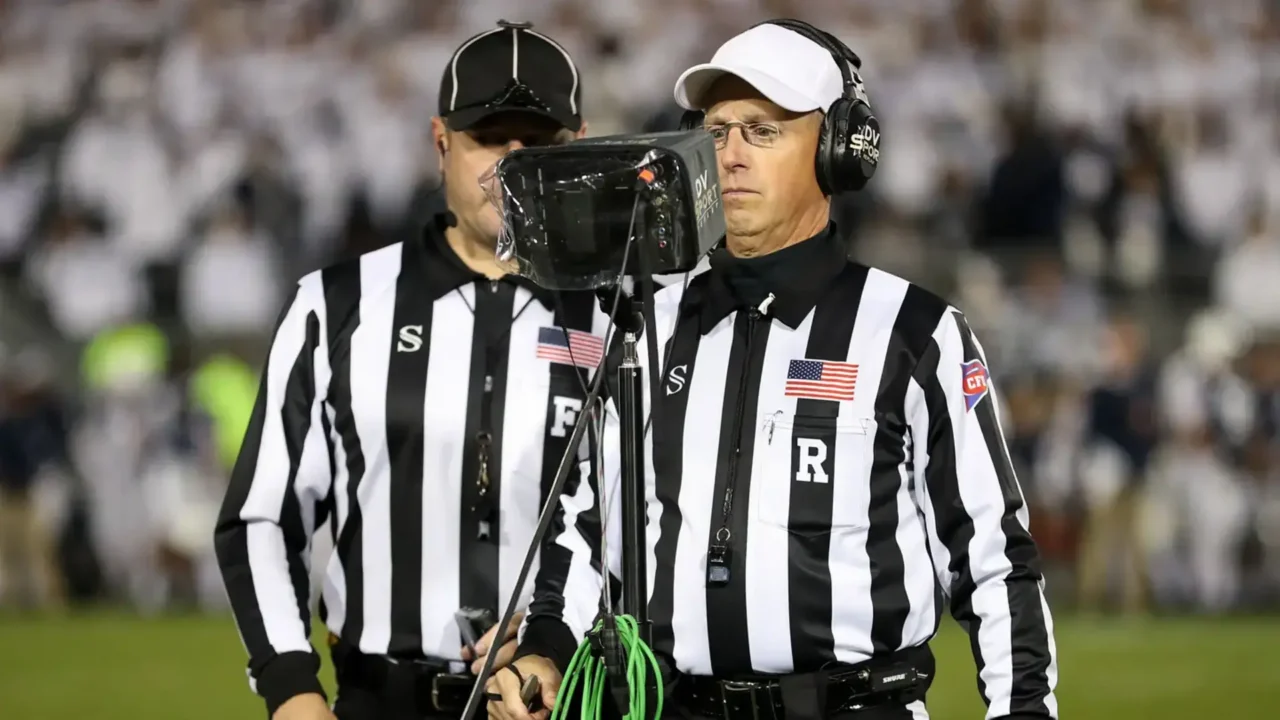
The Michigan officiating controversy grabbed national attention in the first quarter at the Big House and altered early momentum in a game that many expected to be a defensive chess match. Key penalties and a flipped targeting flag left Oklahoma players and fans searching for answers as Michigan extended a drive or two that otherwise looked stalled.
Reporting from CFB-HQ On SI catalogued the sequence of flags and replay outcomes that triggered the backlash and fed a broader narrative already active after last week’s Hail Mary controversy.
Key Takeaways
- Officials called pass interference on the Oklahoma defense after an incomplete pass on third-and-9 from Michigan’s 23, extending a Wolverines drive.
- A pass interference penalty on Sooners defensive back Courtlans Guillory on a third down around midfield handed Michigan a critical first down later in the first quarter.
- Oklahoma safety Michael Boganowski was initially flagged for targeting on Bryce Underwood but the targeting call was overturned on review.
- Fans and social accounts widely criticized multiple calls during the game, with reactions amplified by Michigan’s earlier Hail Mary controversy.
Michigan officiating controversy calls that mattered
The sequence that ignited outrage began on a third-and-9 from Michigan’s own 23-yard line when an incompletion was followed by a pass interference flag against the Oklahoma defense. The penalty erased a likely punt and kept Michigan’s possession alive in a spot where the offense appeared pinned deep and out of rhythm.
A short time later, officials again intervened on a third down near midfield when they flagged Oklahoma defensive back Courtlans Guillory for pass interference. That call produced a fresh set of downs for Michigan and immediately changed the field position dynamics, pushing the Wolverines into scoring range.
Soon after the midfield penalty sequence, Bryce Underwood broke off a 38-yard touchdown rush, the longest TD run of his career, which turned a critical swing in momentum into points. The timing of the play made the sequence feel decisive to viewers and amplified the reaction to the earlier calls.
The officiating narrative took another turn when Oklahoma safety Michael Boganowski was initially flagged for targeting on a hit against Underwood, only to have that penalty picked up after replay review. The overturned targeting call frustrated Sooner supporters who saw the review process produce a different outcome than the on-field signal.
Replay rulings and rule context
The targeting reversal is a straightforward example of replay altering an on-field safety call; the flag was thrown, reviewed, and removed. That sequence underscores how replay can change a game’s emotional tenor, even when it restores a team to a previous advantage.
Pass interference calls remain inherently subjective and are frequently debated in real time because they hinge on the official’s read of contact and the receiver’s route. Observers cited that subjectivity in real time, which contributed to the broad social-media reaction after multiple PI flags fell against the Sooners.
Compounding the scrutiny is the known conference-officials arrangement that put an SEC crew on the field for this road game, a setup intended to limit perceived partiality by matching crews to the visiting team’s conference. Despite that procedural check, emotional responses to a string of high-impact calls have already shaped narratives about fairness.
SEC crew context and call ledger
| Incident | On-field call | Review outcome | Immediate result |
|---|---|---|---|
| Third-and-9 from Michigan 23 | Pass interference on Oklahoma defense | No overturn | Drive extended; Michigan avoided 3-and-out |
| Third down around midfield | Pass interference on Courtlans Guillory | No overturn | Michigan awarded a first down and moved into scoring position |
| Hit on Bryce Underwood | Targeting flag on Michael Boganowski | Flag overturned after review | Boganowski retained his status; Oklahoma avoided a potential ejection and yards penalty |
| Prior game amplification | Big Ten officials restored one second after a Hail Mary | Decision stood and led to a successful Hail Mary | That earlier controversy heightened scrutiny of subsequent Michigan games |
CFP and recruiting fallout for Oklahoma
High-profile officiating controversies can shift public perception in ways that matter for national narratives and College Football Playoff comparisons. When calls visibly alter scoring sequences, they create talking points that opponents and pundits will reference during selection conversations and game previews.
Perception matters on the recruiting trail, and repeated disputes over officiating in marquee matchups can feed into broader impressions among prospects and their families. This article draws on original reporting linked above and aims to separate what happened on the field from the social-media reaction it generated.