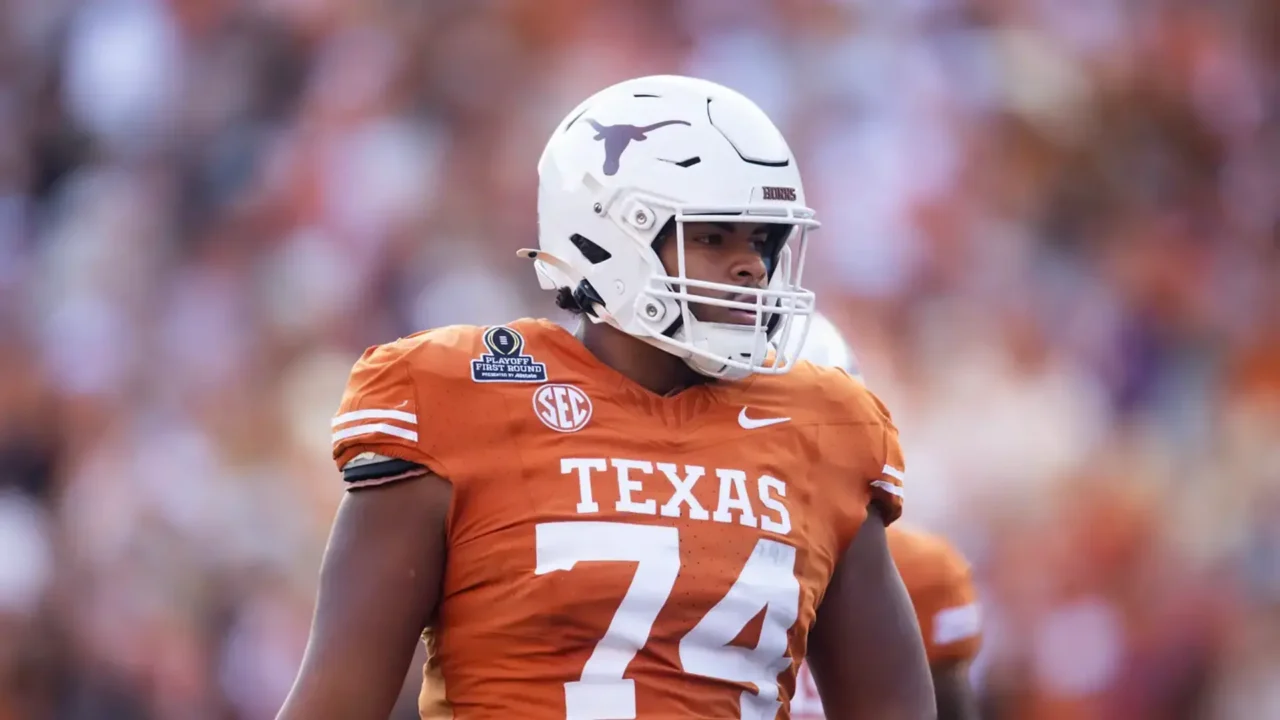
The Texas offensive line was the defining, underreported engine of the Longhorns’ comeback against Ohio State, changing the tone of the game with cleaner pockets and more consistent run lanes.
The unit’s shift showed up in tape and metrics, and the narrative is detailed in reporting by Texas Longhorns On SI, which highlights the line’s pass protection, discipline, and Trevor Goosby’s standout night.
Key Takeaways
- The Texas offensive line delivered a team pass protection rating of 89.3 in the win, a clear improvement from last year’s peaks.
- Trevor Goosby allowed zero sacks and one pressure and earned national and SEC weekly honors for his performance.
- First-team starters on the offensive line have maintained a penalty-free record to start the season, reversing a much larger discipline problem from last year.
Why the Texas offensive line flipped vs Ohio State
What changed against Ohio State was a combination of schematic clarity, personnel adjustments and a different competitive edge at the point of attack.
Coaches leaned on newly assembled pieces from the transfer portal alongside returning starters, and the reworked front created running lanes that allowed Texas backs to sustain drives as the game progressed.
Film shows clearer zone and gap responsibilities on early downs, cleaner reach blocks on perimeter runs, and a discipline that limited false starts and holding penalties in critical moments.
Leadership from veterans on the line amplified that shift; when blockers play with fewer mistakes the quarterback’s reads simplify and the offense sustains longer series.
That cohesion was visible in the protection of the pocket, which allowed the offense to target downfield throws and keep Ohio State’s front from pinning its ears back consistently.
Pass protection and penalty trends
| Metric | Last season | This season (early) |
|---|---|---|
| Team pass-protection rating (PFF) | Highest single-game mark was 86.1 against Sam Houston State | 89.3 in the Ohio State win |
| Penalty profile | Texas committed the second-most penalties in FBS last season, with the offensive line responsible for the majority of those infractions | First-team starters on the offensive line have maintained a penalty-free record through the early slate |
How Trevor Goosby shaped both pass protection and the run game
Trevor Goosby’s night against Ohio State was both a technical and psychological turning point for the line.
He allowed zero sacks and a single pressure, a performance that earned him SEC Co-Offensive Lineman of the Week and national weekly recognition from the Outland Trophy selectors.
Beyond those numbers, his run-blocking posture and ability to sustain contact opened creases and set a physical tone that the rest of the front matched throughout the comeback.
The kind of play Goosby produced simplified assignments for adjacent linemen and reduced the number of help calls, which translated into cleaner, faster pockets for the quarterback.
What schematic and coaching adjustments mattered
Film indicates the coaching staff prioritized consistency in line calls and worked to limit pre-snap confusion that produced penalties last year.
That emphasis on clarity let the unit operate at a higher tempo and trust communication on combo blocks and second-level work.
Those small coaching details—timing of pullers, clearer slide protections and consistent micro-adjustments—showed up as fewer missed assignments and faster development of space in the run game.
SEC and CFP implications for Texas’ offensive line
A more reliable offensive line changes how Texas approaches its SEC slate, both in game planning and in recruiting conversations about immediate line-of-scrimmage playability.
Demonstrating discipline on penalties and a high pass-protection grade early in the season strengthens the Longhorns’ message to prospects and transfers that the line can both protect the quarterback and open running lanes in high-leverage games.
For College Football Playoff considerations, offensive-line consistency matters more than singular box-score plays; a sustained ability to protect and finish blocks will matter when Texas faces the league’s physical front sevens later in the schedule.
Pass-protection data drawn from Pro Football Focus.