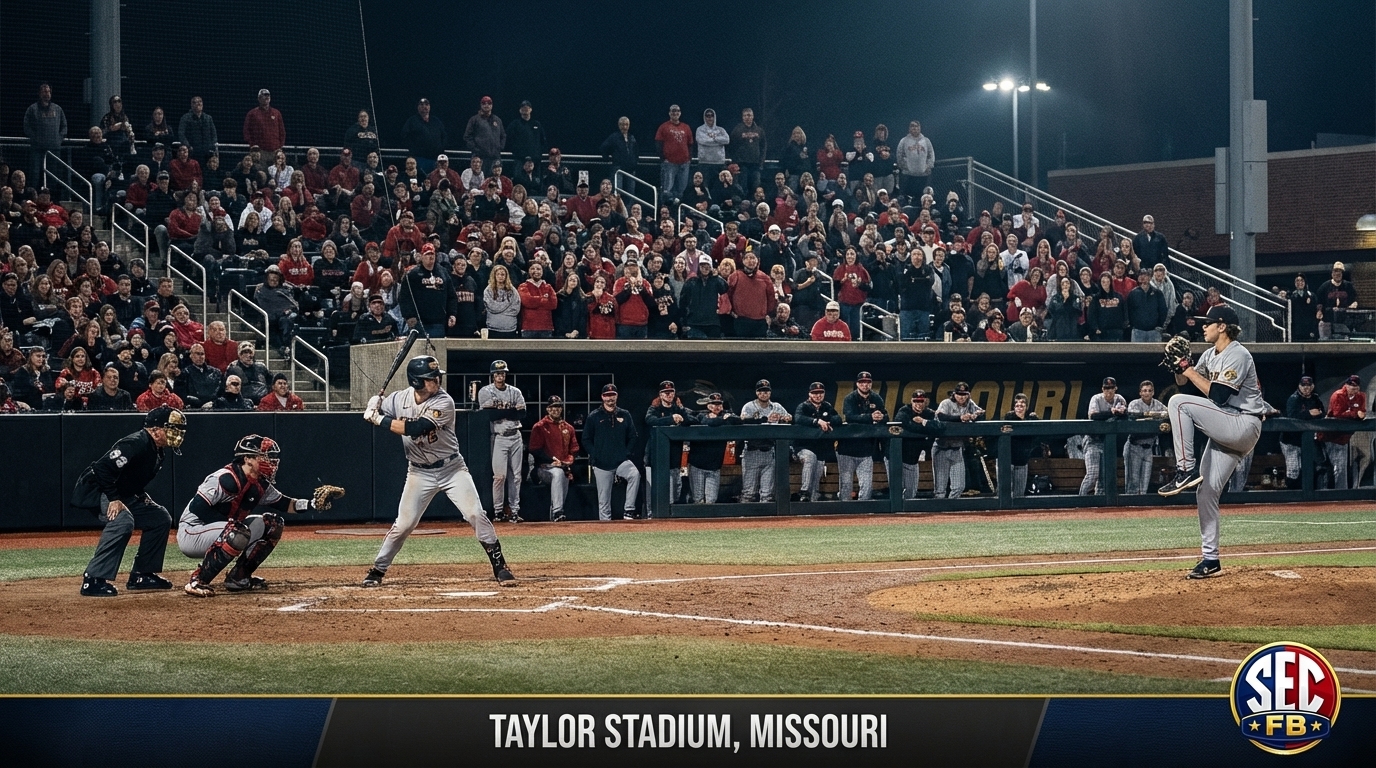
Missouri baseball slow start leads to fifth straight defeat at Taylor Stadium, a troubling line for the Tigers. The hook is simple: early innings have consistently doomed this club this season. Saturday’s 13-4 defeat to Texas A&M exposed those flaws in stark terms. Missouri managed 11 hits, but left nine runners on base, and the deficit widened quickly. Brady Kehlenbrink’s rough outing cost them innings, because he allowed nine earned runs and four walks. Gavin Grahovac’s three run homer and Kam Durnin’s RBI double punctuated the Aggies’ late burst. As a result, Missouri falls to 17-11 overall and 1-6 in SEC play, and questions mount.
However, the story runs deeper than one box score or one bad start. This piece takes an analytical, cautious, and reflective view, because learning how to win takes time. We will probe pitch counts, situational hitting, and bullpen depth to explain the slow starts. Caution guides our conclusions.
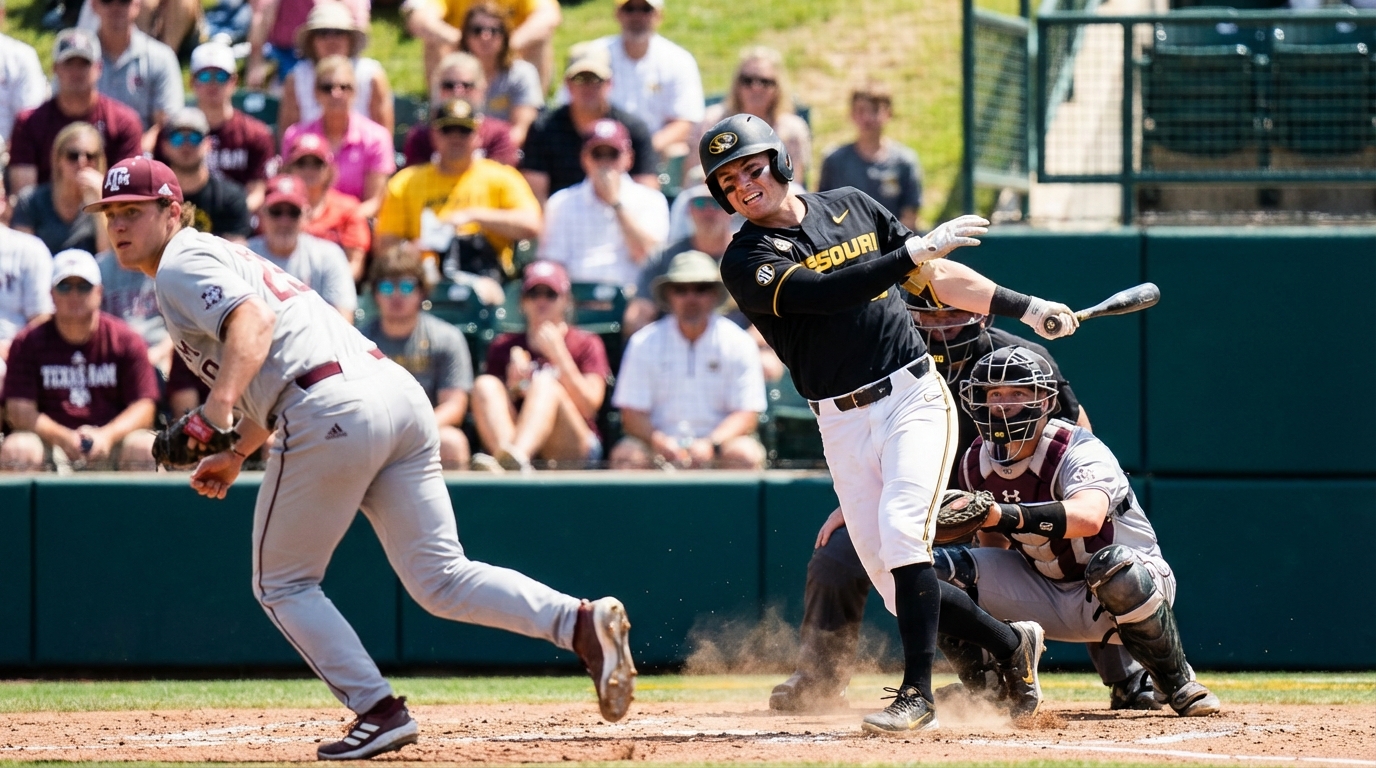
Missouri baseball slow start leads to fifth straight defeat at Taylor Stadium: early‑inning collapse
Missouri again surrendered early runs, and the scoreboard told the story. Entering the third inning, the Tigers trailed 2‑1. After three innings the game stood 6‑1, and after four it was 11‑4. Because those early deficits forced a different game plan, the offense never found a comfortable rhythm.
- Early runs swung momentum quickly and allowed Texas A&M to attack the zone.
- Missouri collected 11 hits, but left nine runners on base. As a result, timing and situational hitting suffered.
- Gavin Grahovac’s three‑run homer, a 405‑foot blast to center, punctuated the Aggies’ early advantage.
However, the data show that the problem starts early. Missouri failed to string productive at bats in the first three innings. Therefore, the club repeatedly played from behind. The late rally attempts, including Donovan Jordan’s first Tiger homer, came too late to change the outcome.
Missouri baseball slow start leads to fifth straight defeat at Taylor Stadium: pitching breakdown and pitch‑count pressure
Pitching struggles magnified the early damage. Brady Kehlenbrink allowed nine earned runs, issued four walks, and surrendered a home run. Because Kehlenbrink could not get quick outs, the Tigers exhausted options early.
- High first‑inning pitch counts hurt both starters, as coach Kerrick Jackson noted.
- Walks and a long homer increased the run total quickly, and the bullpen faced greater stress.
- JD Dohrmann’s status as a game‑time decision highlights rotation uncertainty ahead.
As a result, Missouri must address both execution and depth. Transitioning from analysis to corrective plans means improving first‑inning approach. If the Tigers reduce free passes and tighten sequencing, they might avoid similar slow starts. For now, this pattern explains why the Tigers sit at 17‑11 overall and 1‑6 in SEC play.
| Statistic | Missouri Tigers | Texas A&M Aggies |
|---|---|---|
| Final Score | 4 | 13 |
| Runs Scored per Inning | 0, 1, 0, 3, 0, 0, 0, 0, 0 | 1, 1, 4, 5, 0, 0, 0, 2, – |
| Hits | 11 | 13 |
| Errors | 0 | 0 |
| Pitcher (Brady Kehlenbrink) | 9 ER, 4 BB, 1 HR allowed | – |
| RBI Leaders | Donovan Jordan (1), Kam Durnin (3) | Gavin Grahovac (3) |
Missouri’s offense was inconsistent, with three runs in the fourth and scattered hits.
Kehlenbrink’s struggles highlighted, allowing 9 earned runs.
Texas A&M’s early lead created from back‑to‑back productive innings.
This table sheds light on Missouri’s critical issues like the run differential in early innings and the pitching challenges Kehlenbrink faced. It evidences the game’s flow and Texas A&M’s scoring spikes. The matchup at Taylor Stadium effectively captured the Tigers’ ongoing struggles.
Player performances and pivotal moments
Donovan Jordan provided a rare bright spot for Missouri. He went three‑for‑three and hit a solo homer in the eighth. It was his first Tiger career homer and it lifted the dugout briefly. However the blast arrived late and did not change the scoreboard.
Kam Durnin drove in three runs and finished as Missouri’s primary run producer. His RBI double illustrated timely contact and strong plate discipline. Because Durnin delivered in key spots, coaches can point to his at bats.
Pitching was the real issue, especially Brady Kehlenbrink’s outing. Kehlenbrink allowed nine earned runs and issued four walks. He also yielded a long home run that swung momentum. As coach Kerrick Jackson said: “They just weren’t able to bounce back.” “Both of them had high double‑digit pitch counts in the first inning.” “That makes everything harder.”
Key moments and takeaways
- Donovan Jordan: three‑for‑three, solo homer, first Tiger career homer.
- Kam Durnin: three RBIs, including an RBI double that drove in runs.
- Brady Kehlenbrink: nine earned runs, four walks, one homer allowed.
- Gavin Grahovac: three‑run homer to center that swung the game.
- Team context: 11 hits but nine runners left on base.
In short, those individual flashes could not overcome the slow start at Taylor Stadium. Therefore Missouri must convert early opportunities and stabilize starting pitching. The Tigers need better situational hitting and more bullpen depth in SEC play.
Missouri baseball slow start leads to fifth straight defeat at Taylor Stadium, and the pattern demands attention. Early runs and pitching lapses again decided the game. Because the Tigers trailed after the third inning, they never controlled the tempo.
Brady Kehlenbrink’s outing highlighted the problem. He allowed nine earned runs and issued four walks. As a result, the staff burned through pitchers and lost flexibility.
Offense showed flashes, yet it failed in timely moments. Missouri recorded 11 hits but left nine runners on base. Therefore situational hitting and base‑running execution must improve.
Coach Kerrick Jackson framed this as a learning curve. He noted high early pitch counts make everything harder, and the team must adapt. If the Tigers tighten plate discipline and reduce free passes, they can shorten games and regain momentum.
About SECFB LLC
SECFB LLC covers Southeastern college baseball and football with timely analysis and game coverage. Visit SECFB.com for more content, and follow on Twitter/X at ZachGatsby for updates and commentary. In short, Missouri’s slow starts cost them at Taylor Stadium, and cautious, steady adjustments will determine how quickly they recover.
Frequently Asked Questions (FAQs)
Why did Missouri lose at Taylor Stadium?
Missouri lost because early runs gave Texas A&M control. Entering the third inning, the Tigers trailed 2-1. After three innings it was 6-1, and after four it was 11-4. As a result, Missouri chased the game and used bullpen resources early. Pitching struggles and missed situational hits compounded the problem.
What specifically caused the slow starts?
Slow starts came from walks, early extra-base hits, and pitch‑count issues. Brady Kehlenbrink issued four walks and allowed nine earned runs. Gavin Grahovac’s three‑run homer widened the gap. Therefore the staff faced high early pitch counts and reduced flexibility.
Were there any positives for the Tigers?
Yes. Donovan Jordan went three‑for‑three and hit his first career home run. Kam Durnin drove in three runs and produced timely hits. Although these moments mattered, they arrived too late to change the outcome.
What did coach Kerrick Jackson say about the loss?
Jackson emphasized the learning curve and pitch‑count impact. He said the team couldn’t bounce back when pitchers used many pitches early. If starters lower early counts and the offense executes situationally, the team can improve. The coach called the season a process of growth.
What are the next steps for Missouri?
Short term, the Tigers must tighten plate discipline and reduce free passes. Long term, they need deeper starting options and bullpen management. Meanwhile, practice should simulate high‑leverage early innings. Doing so will help convert hits into runs and avoid repeat slow starts.
If you want updates, follow continuing coverage in the article series. These answers reflect game facts and cautious analysis.