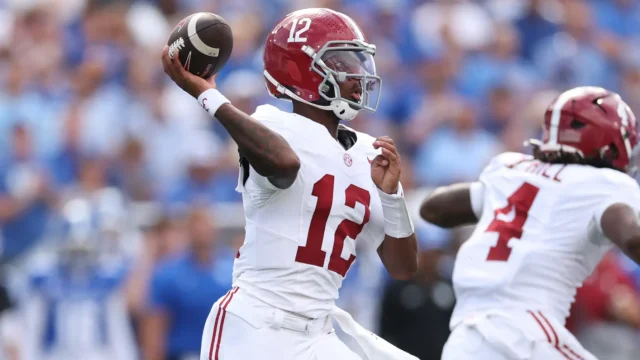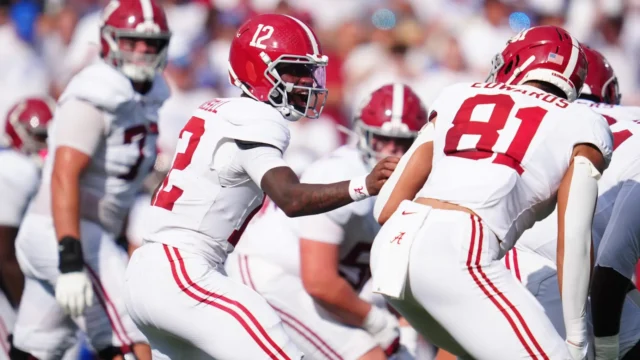
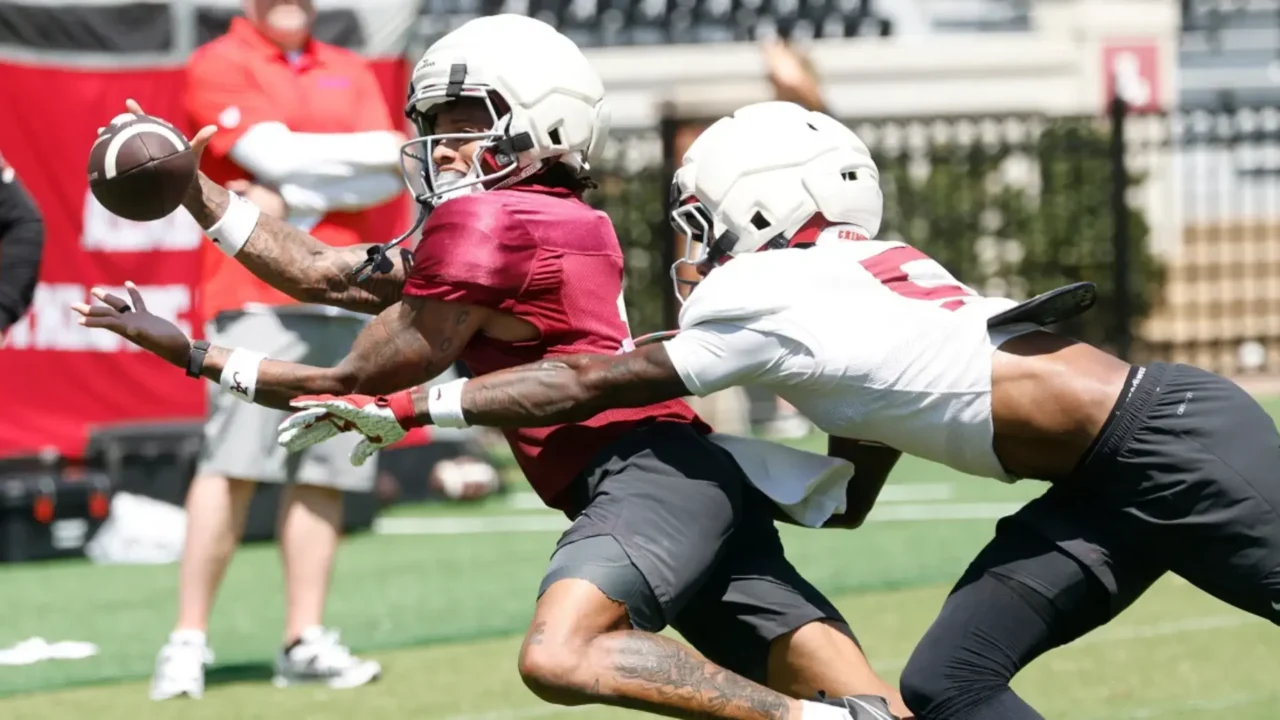
Alabama practice No. 14 returned the Crimson Tide to Bryant-Denny Stadium following two days off after the team’s final scrimmage. The session was conducted in shells and lasted 90 minutes, providing a controlled look at early fall-camp work on the home field.
The gallery and photo captions identify a number of players on the field and credit UA Athletics photography, as published by On3.
Key Takeaways
- Players worked in shells for a 90-minute session during practice No. 14 at Bryant-Denny Stadium.
- The visual update is sourced to UA Athletics photos that were captioned and credited by the publisher.
- Captions in the gallery list named participants across offense and defense, giving fans a roster-level view of the session.
Alabama practice No. 14 player appearances
The photo captions identify quarterbacks Keelon Russell and Austin Mack among the visible signal-callers during the session. Both quarterbacks appear in multiple images, offering clear evidence of their day-to-day presence in fall camp drills.
Receivers and running backs show up repeatedly in the gallery, with names such as MJ Chirgwin, Ryan Coleman-Williams, Ben Jackson, Cederian Morgan, Noah Rogers, Trae’shawn Brown, and Daniel Hill captioned on several frames. Defensive backs and front-seven contributors are also visible, including Dijon Lee Jr. Zyan Gibson, Chuck McDonald III, Justin Hill, and Kedrick Bingley-Jones.
The captions extend into special teams and tight-end position work as well, noting punter Alex Asparuhov, kicker Conor Talty, and tight end Marshall Pritchett in the images. The spread of names across positions underscores the visual, rather than evaluative, nature of the gallery reporting.
What the practice format revealed
Working in shells indicates the staff was limiting full-contact elements and focusing on technique, spacing, and position-group work during this particular session. A 90-minute window in shells is consistent with controlled, high-repetition periods of work late in camp.
The practice took place at Bryant-Denny Stadium after two scheduled days off that followed Alabama’s final scrimmage, which suggests the staff used the time to reset and emphasize fundamentals on the home field. The governor on contact and the length of the session point to situational drills and installation rather than live tackling periods.
Practice No. 14 verified session details
| Element | Verified detail |
|---|---|
| Location | Bryant-Denny Stadium |
| Equipment | Shells (shoulder pads and shorts) |
| Duration | 90 minutes |
| Photo attribution | Photos provided by UA Athletics and credited to Kent Gidley in captions |
SEC fall-camp and roster implications for Alabama Crimson Tide
From a conference perspective, visual confirmations of position-group participation provide recruits, opponents, and analysts a window into who is available and participating on a given day. Regular photo coverage of camp work contributes to the public evaluation of depth charts and positional battles among SEC programs.
For Alabama, steady appearances by multiple quarterbacks, receivers, backs, defensive backs, and special-teams specialists in the same session suggest the staff is keeping options on the table as fall camp progresses. That approach aligns with standard roster construction practices in a conference where depth and rotation matter across a long season.
Short drill windows and shell work also limit injury risk while allowing coaches to evaluate technique, which is a common method across the SEC during late-camp periods. These observations are visual and descriptive; they do not substitute for formal roster announcements or coach evaluations.
Photos were provided by UA Athletics and carry photographer credit to Kent Gidley in the published captions.