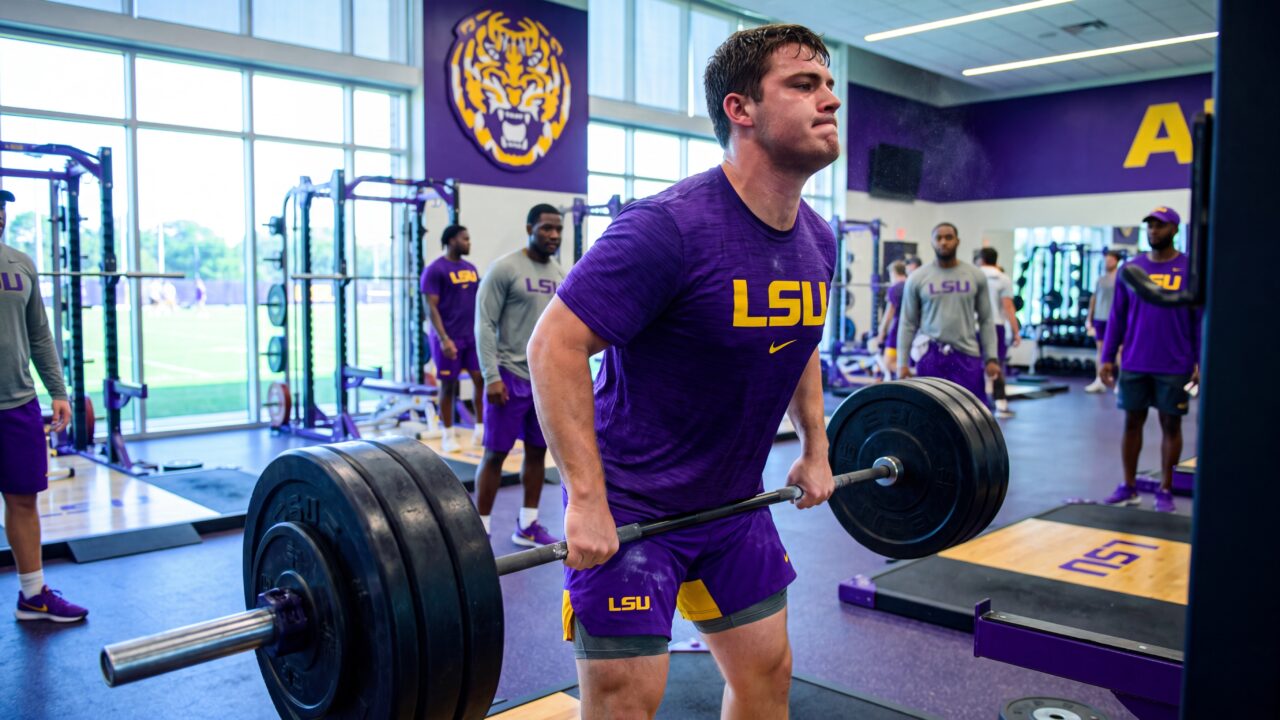
Andrew Shofstahl drew attention this week when video surfaced showing him lifting and moving with notable physical power. The clip matters because raw strength is a primary filter for SEC programs evaluating high-end in-state targets.
Local reporting from And The Valley Shook highlights the footage and labels Shofstahl an LSU in-state target, which places the clip squarely on the radar for local recruiters and supporters.
Key Takeaways
- Andrew Shofstahl’s workout video highlights visible strength that can elevate his profile among regional evaluators.
- The footage provides evaluators an additional data point but does not replace game film or in-person evaluation.
- As an in-state target, Shofstahl’s physical display could sharpen LSU’s recruiting focus in upcoming evaluation cycles.
What the workout reveals about Andrew Shofstahl
The video centers on Shofstahl’s physical output during a controlled training session and emphasizes raw strength as the dominant takeaway. That visible power gives scouts something concrete to weigh alongside game tape and on-field performance.
Workout film like this is most useful when it confirms traits already suspected from game tape or junior sessions. It does not, by itself, prove in-game effectiveness but it reduces uncertainty around a recruit’s physical ceiling.
How Shofstahl projects to LSU physically and on the recruiting trail
For LSU evaluators, an in-state prospect showing pronounced strength answers a recurring question about readiness for SEC-level physicality. Strong lifts and resistance work in a clip can suggest a shorter timeline to collegiate strength development if paired with sound technique and coaching.
On the recruiting trail, footage that highlights a tangible, evaluative trait can change a recruit’s placement on boards and visit lists. Being an in-state target already gives LSU easier access for follow-up evaluations and in-person measurements, so the clip’s existence matters beyond immediate impressions.
Recruiting context and verified comparisons
| Evaluation element | What the workout video shows | Typical LSU evaluation focus |
|---|---|---|
| Strength | The footage shows clear raw strength and force generation during lifts and resistance work. | LSU traditionally prioritizes power for interior players and emphasizes strength for transition to SEC competition. |
| Snapshot versus projection | The clip is a single training snapshot that confirms present physical capability but not consistent in-game application. | Coaches weigh workout clips alongside game film, technique, and repeated evaluations to project long-term impact. |
How Shofstahl’s traits align with LSU’s recruiting needs
LSU’s in-state recruiting often targets players who can adapt to a power-oriented conference schedule, and visible strength is a core qualifier for that profile. Converting a strengths display into sustained recruiting interest requires follow-up film, measurements, and in-person evaluation.
Because the clip is public, it gives LSU and other regional programs a repeatable point of reference during conversations with the prospect’s coaches and evaluators. That access can accelerate evaluation timelines if technique and game tape corroborate the physical traits shown.
How Shofstahl could affect LSU roster and SEC recruiting
Adding a physically advanced in-state recruit has ripple effects on roster construction, especially for depth at positions that demand immediate physicality. If Shofstahl’s strength translates to technique and consistent play, he could shorten the development curve and provide earlier depth for rotation players.
From a recruiting standpoint, strong in-state signings influence nearby prospects and can shift evaluation bandwidth in future cycles. Public training clips can become part of the narrative local staffs use when building relationships with recruits and high school coaches.