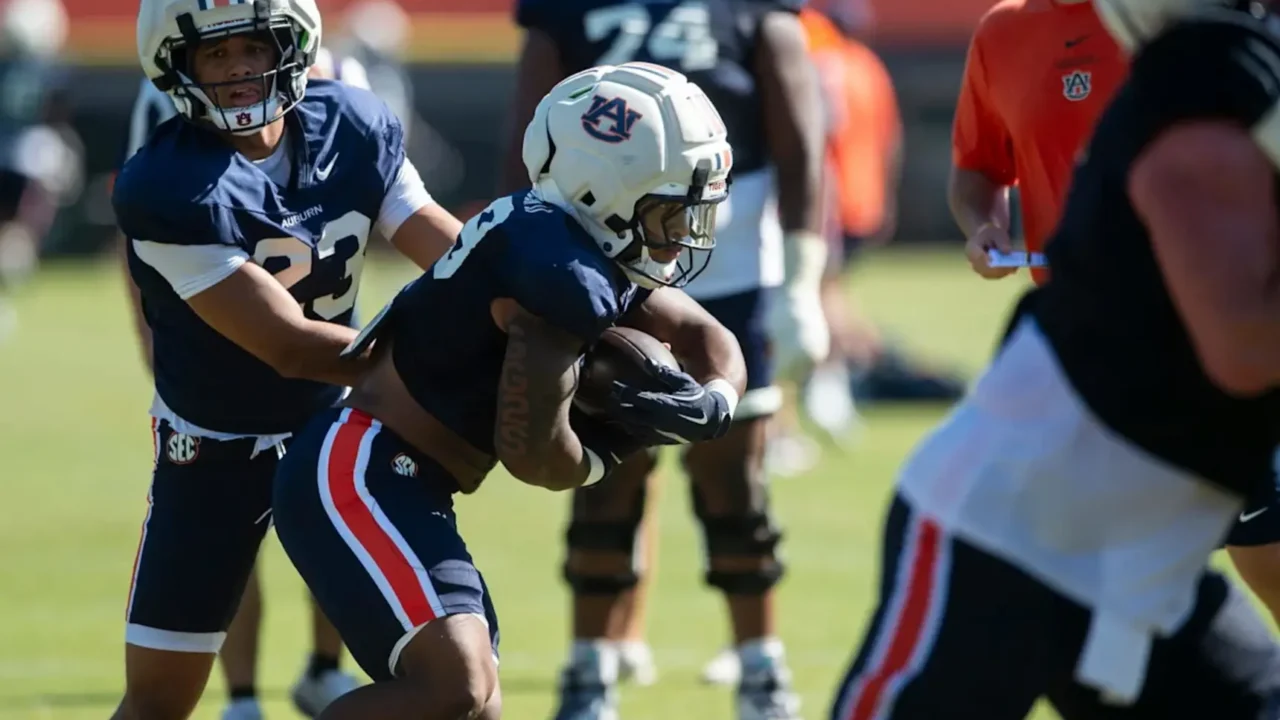
Auburn running back depth is emerging as one of the program’s most tangible advantages heading into the season.
The surplus of capable rushers forces choices about carries, packages, and development paths, and it has drawn national attention in reporting by Yahoo Sports.
Key Takeaways
- Auburn running back depth has created a roster advantage that will allow the coaching staff to deploy multiple running styles within a single game plan.
- The surplus increases competition for playing time and gives Auburn flexibility to manage workloads across a long season.
- Fans should watch how coaches allocate carries early, because those decisions will shape rotation patterns for conference play.
- Depth at the position offers recruiting leverage and tactical matchup advantages against a range of SEC defenses.
How Auburn running back depth was built
The current running back room reflects steady recruiting and retention rather than a single splash transfer or breakout season.
Coaches have consistently targeted versatile runners who can handle inside zones, outside runs, and passing-game reps, which has translated into a crowded depth chart as veterans and younger players matured.
That accumulation of talent produced a surplus that places the staff in a position to design packages around specific opponents without exhausting any single back.
Which backs project to win carries and roles
Rotation scenarios will likely be determined by matchup, player skill sets, and early-season performance in practice and game reps.
Expect a tiered approach: a primary ball carrier for early-down work, complementary backs for third-down and passing downs, and situational specialists for power or tempo packages.
Having multiple proven options means Auburn can preserve explosive players’ snap counts while still sustaining a physical identity between the tackles.
Running back roster comparison
| Roster feature | Auburn | Typical SEC program |
|---|---|---|
| Depth at running back | Multiple capable options across experience levels | Often centered on one lead back with a short rotation |
| Rotation flexibility | High, able to change styles midgame | Moderate, limited by reliance on primary back |
| Recruiting and development leverage | Room provides tangible playing-time paths for signees | May offer fewer immediate carries for newcomers |
How the depth changes play-calling and roster construction
When a staff has multiple trusted backs, it can mask offensive line weaknesses by varying run designs and keeping defenders guessing.
Auburn’s coaches can mix power sets with speed options and use rotating personnel to exploit specific defensive fronts without signaling a predictable play sequence.
That versatility also helps with roster construction: special teams roles can be filled without sacrificing offensive snaps, and freshmen can be eased in behind veteran rotations.
SEC race and roster construction implications
Auburn running back depth gives the Tigers a strategic edge in the SEC by allowing them to tailor game plans to opponents while protecting key contributors across a long conference slate.
Depth at a physical position like running back sends a positive message on the recruiting trail and creates tangible opportunities for players to earn carries, which can influence late recruiting decisions.
While NIL dynamics affect many roster choices across the league, the immediate on-field benefit here is clear: the Tigers can present different looks and keep players fresh during the grind of SEC play and potential postseason stretches.
The reporting on this roster strength was authored by Christian Rauh for USA TODAY Network via Reuters Connect.