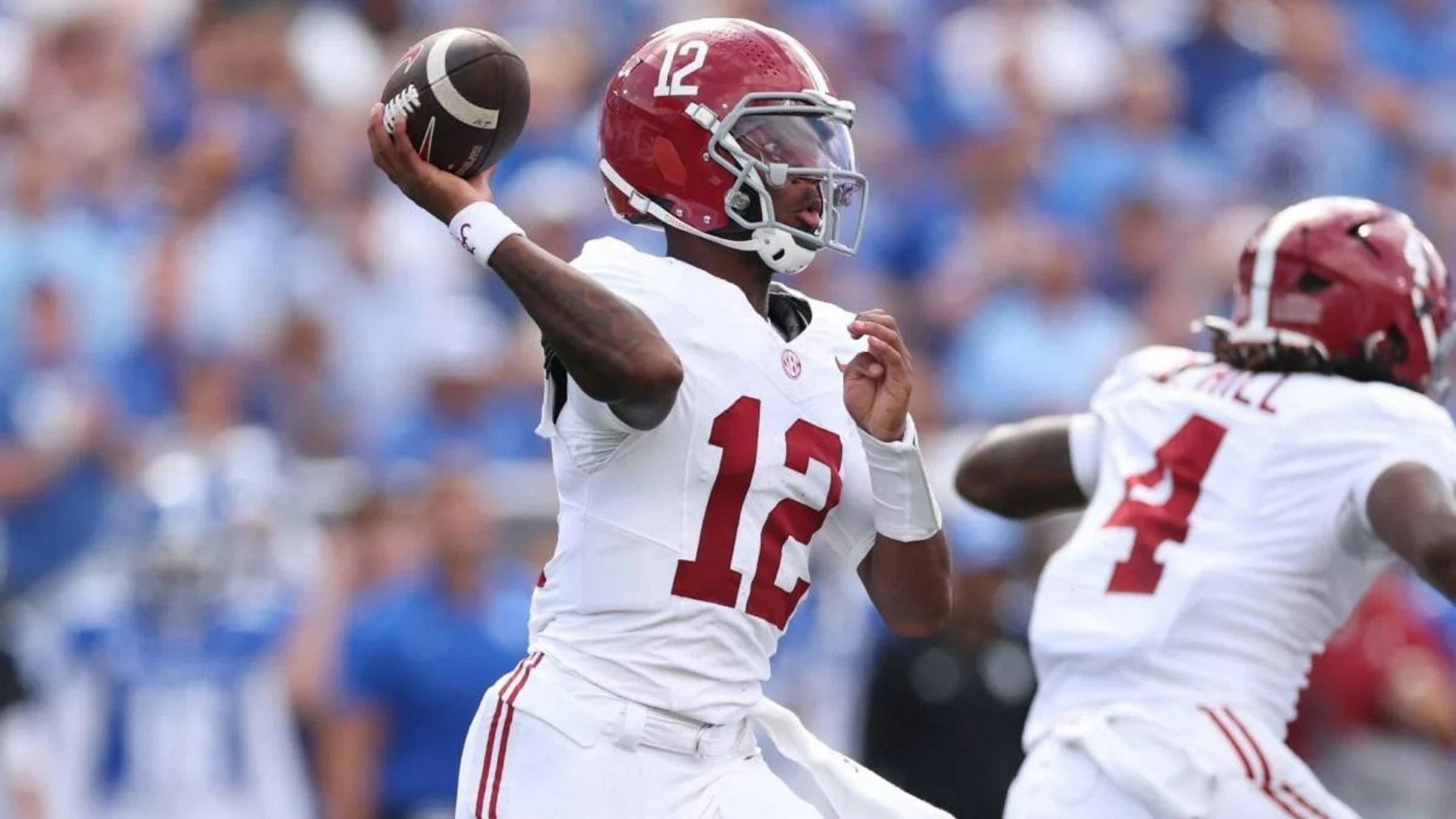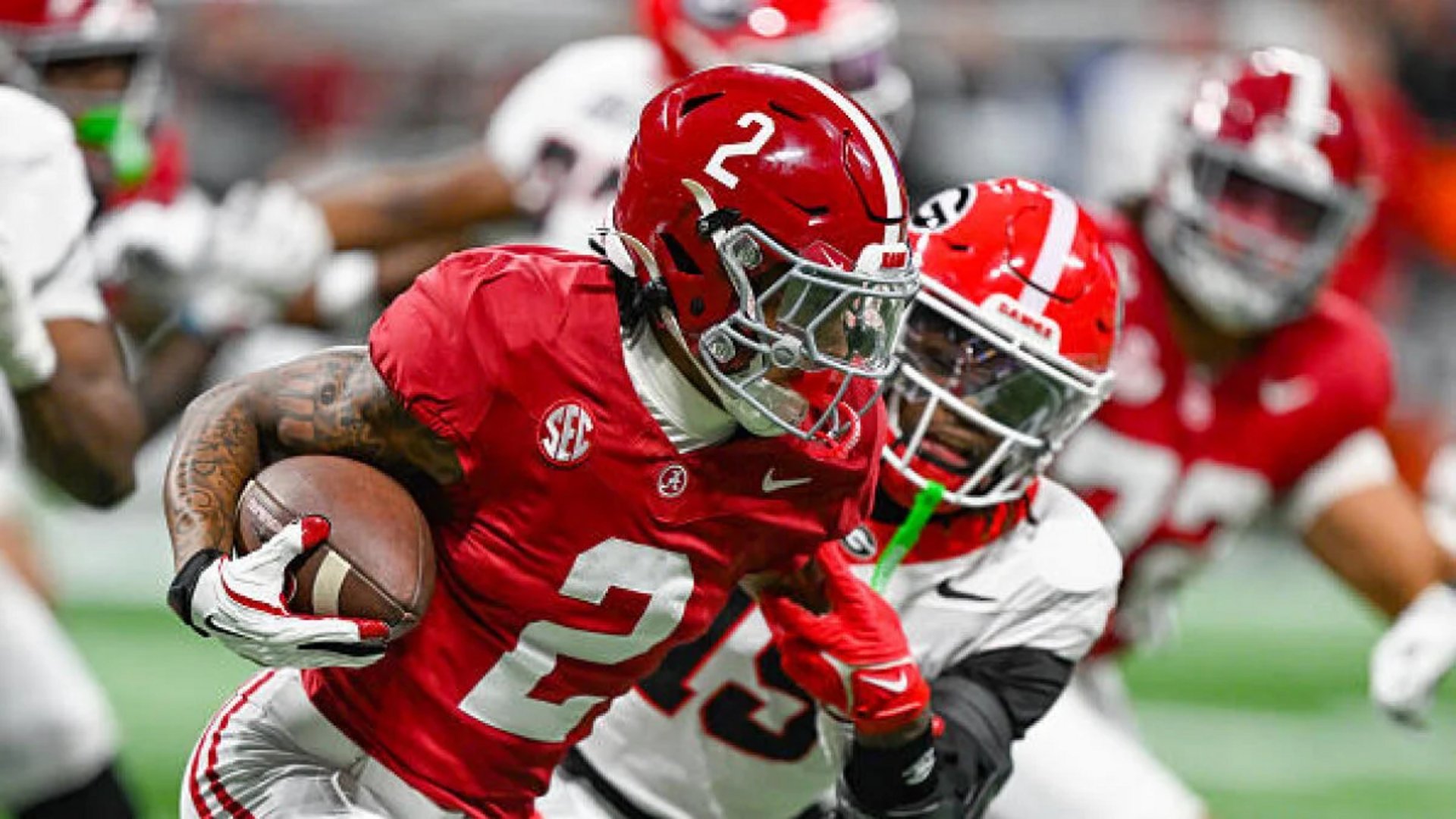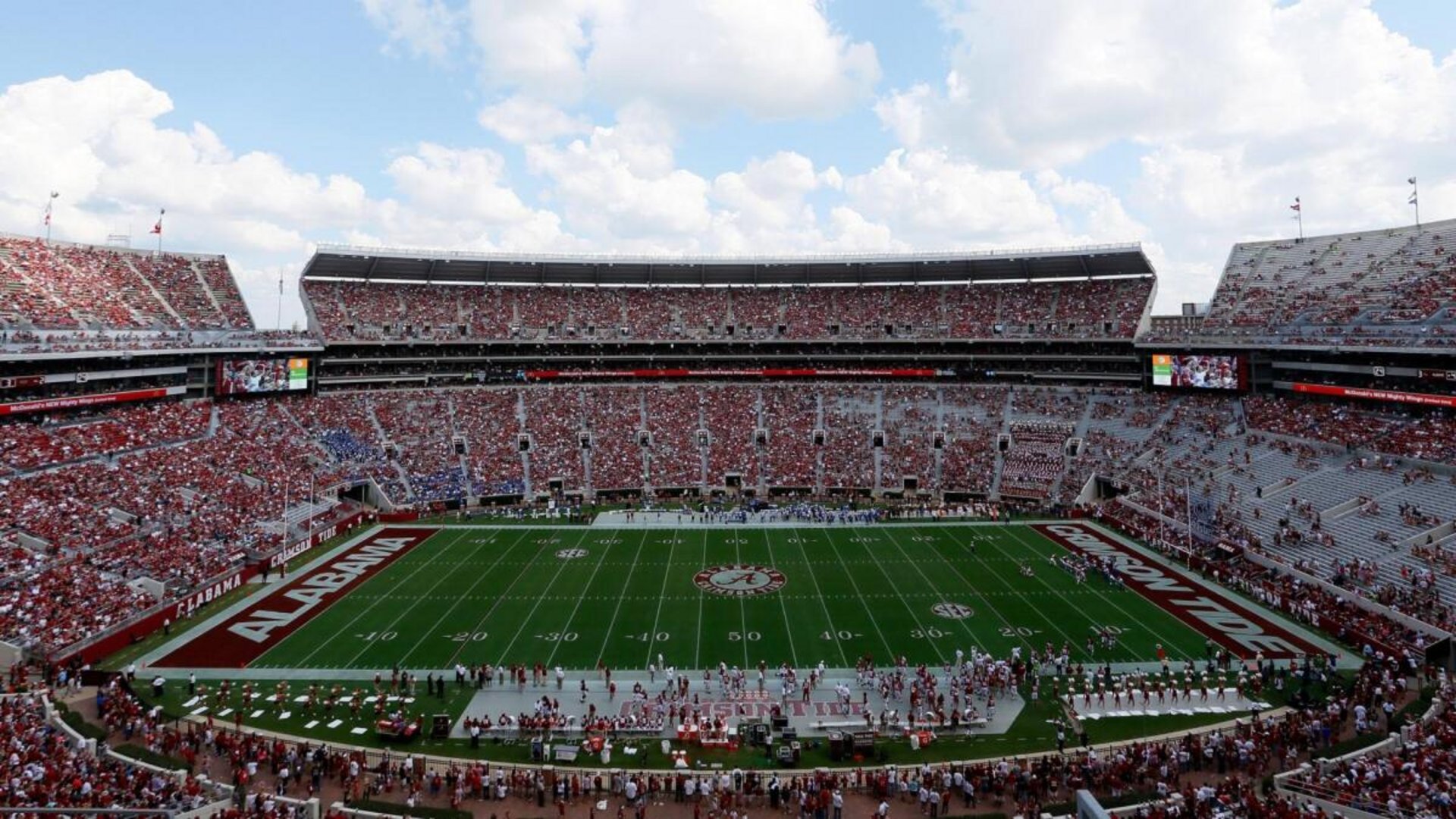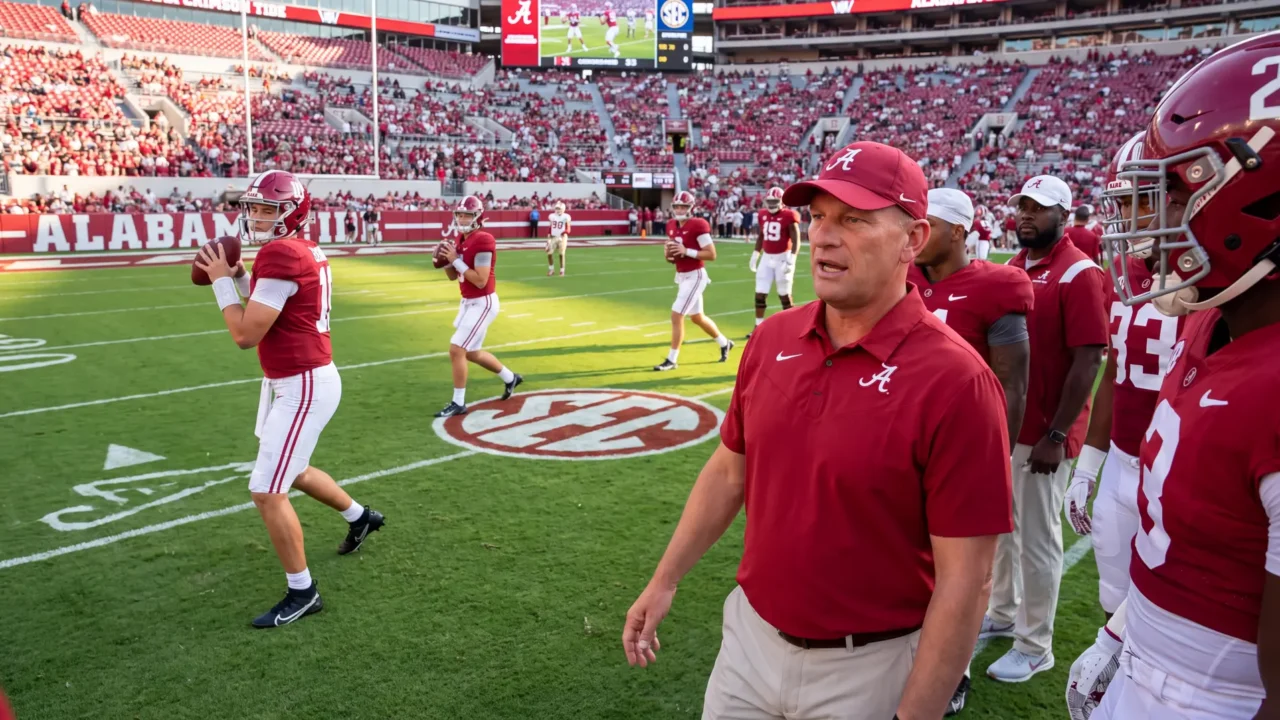
DeBoer’s stated expectations for the position set the evaluation framework for Alabama’s open starter job and matter because the quarterback defines the offense’s ceiling.
The touchstone piece prompting this evaluation is a recent report by Touchdown Alabama, and that reporting reframes the quarterback conversation for the program.
Key Takeaways
- DeBoer’s quarterback expectations create a clear checklist that prioritizes processing, consistency, and schematic fit for the starter role.
- The staff’s emphasis on those traits will shape which roster options and recruits receive opportunities based on trait fit rather than pedigree alone.
- Those trait preferences will have downstream effects on recruiting priorities, NIL marketability, and Alabama’s profile in College Football Playoff evaluations.
DeBoer quarterback expectations for Alabama’s starter
At the foundation of the debate are measurable skills and intangibles coaches value when slotting a quarterback into an offense.
From a beat perspective, the evaluation centers on processing speed, accuracy, anticipation, and leadership as primary axes for a pro-style, adaptable attack.
Processing and anticipation shorten reads and reduce negative plays against top SEC defenses, making them a premium in evaluations that favor quick decision-making over one-off flash plays.
Accuracy remains non-negotiable because consistent placement allows route concepts and yards-after-catch to function reliably in camp and in-season schematics.
Mobility is evaluated contextually and serves as a complementary skill when it creates throw-on-the-run stability or helps escape pressure without design-heavy improvisation.
Leadership and routine — how a prospect prepares, communicates, and commands the huddle — are weighted heavily because the starter role sets the program’s daily tone.
How DeBoer expectations shape evaluation and competition
Those priorities change the evaluation rubric in camp and on the recruiting trail by focusing coaches on a clearer short list of playable traits rather than an open-ended search for the most physically gifted athlete.
Internally, staff will identify who demonstrates rapid processing in scripted periods, who can place the ball under pressure, and who naturally rallies teammates during practice routines.
This approach favors repeatable mechanics and cognitive processing over sporadic highlight plays and affects how reps are allocated during camp and practices.
For on-field decision-making, an emphasis on quick reads shortens the leash for slow-developing pocket play and nudges coaching toward simpler, high-efficiency progressions early in a starter’s tenure.
Quarterback traits vs recent Alabama starters
| Trait | DeBoer priority | Recent Alabama starters general comparison |
|---|---|---|
| Processing and anticipation | High priority for quick reads and timing | Profiles have varied; earlier starters showed strong timing in concept-heavy schemes |
| Accuracy | Essential for schematic efficiency | Recent starters presented a range of accuracy levels that influenced play-calling balance |
| Mobility | Valued as a complementary skill | Some starters were more pocket-centric while others offered greater movement |
| Leadership and consistency | Core expectation for the starter role | Leadership traits were commonly emphasized in the program’s selection process |
SEC implications for Alabama quarterback recruitment and CFP prospects
On the recruiting front, a clear public rubric helps staff target quarterbacks whose film and camp tape align with those expectations and gives prospects transparent benchmarks to meet.
That clarity informs message points to high-school coaches and camps, shaping which quarterback profiles receive priority scholarship conversations and affecting predictable on-field value.
The starter’s ability to make clean, decisive plays against elite defenses will directly affect Alabama’s ability to sustain drives, protect leads, and match up in College Football Playoff games.