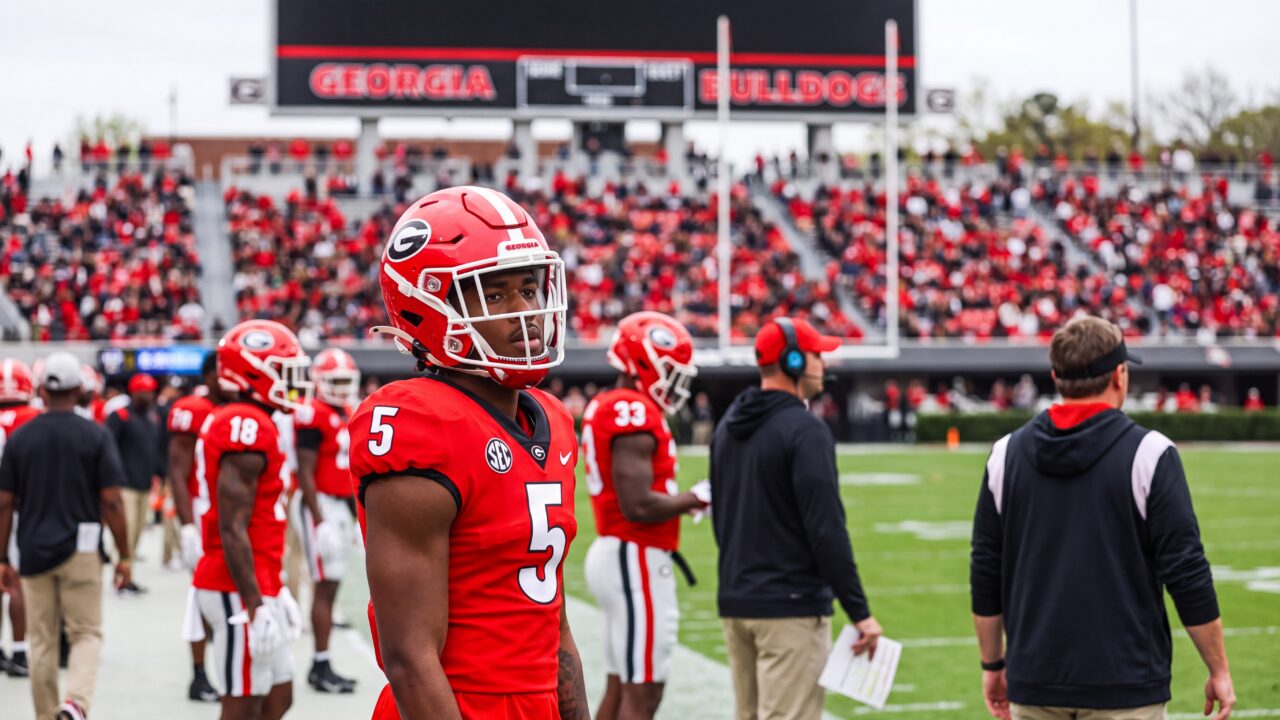
The Georgia receiving corps enters 2026 as the clearest offseason question on a roster otherwise loaded with proven talent. How the Dawgs replace downfield juice and established production will shape play-calling, target distribution and postseason expectations.
ESPN analyst David Hale named the receiving corps Georgia’s top lingering question, a perspective summarized in reporting by UGA Wire (Georgia) and tied to the departures of several veteran pass-catchers. That early-season framing matters because the group projected to take the field lacks the established downfield threats that powered past Bulldogs passing attacks.
Key Takeaways
- Zachariah Branch departed and key veterans Colbie Young, Dillon Bell, Noah Thomas and Oscar Delp are no longer on the roster.
- Georgia added transfer Isiah Canion from Georgia Tech as a top option to lead the receiving room.
- Talyn Taylor and CJ Wiley are unproven ascending options expected to see larger roles in 2026.
- The corps beyond Canion and incoming freshmen remains largely unproven entering the season.
Can Isiah Canion replace downfield production
Isiah Canion arrives from Georgia Tech with the expectation that he will be the most proven downfield option on the roster. His addition changes the starter equation because he projects to draw target volume and contested-ball opportunities that departed veterans created.
David Hale noted the Bulldogs have lacked elite receiving talent since the departures of Brock Bowers and Ladd McConkey, and he pointed to Canion as a clear injection of experience into a relatively young room. Canion’s route tree and contested-catch ability should change how staff conceptualizes vertical and intermediate concepts in 2026.
Even with Canion in the fold, comparisons to Zachariah Branch are instructive. Branch’s production last season featured significant yards-after-catch value, while Canion projects to offer a more balanced downfield skill set that can convert contested throws and stretch defenders vertically.
Young, Wiley and the freshmen battle for snaps
With Colbie Young, Dillon Bell, Noah Thomas and tight end Oscar Delp no longer in the picture, the internal competition for snaps becomes the central storyline in Athens. Talyn Taylor and CJ Wiley are the most visible returning options and will be counted on to grow into primary roles quickly.
Neither Taylor nor Wiley enters 2026 with an established track record of carrying the offense as a downfield threat, so development timelines and offseason progress will factor into early-season snap splits. Coaches will have to balance target allocation between Canion, the returning youngsters and a promising group of true freshmen.
The signing class provides depth and athletic upside, but those players are, by definition, unproven at the Power Five level. Expect early-season packages that prioritize the most reliable hands while scheming to create space for younger receivers to develop during game action.
Georgia receiving corps departures versus returners
| Category | Players | Context and notes |
|---|---|---|
| Departed veterans | Zachariah Branch; Colbie Young; Dillon Bell; Noah Thomas; Oscar Delp | Left significant roles open after Branch and several experienced targets departed; creates immediate production gap. |
| Transfers in | Isiah Canion | Projected primary downfield option and experienced presence to lead route concepts and contested-catch situations. |
| Returning and incoming | Talyn Taylor; CJ Wiley; true freshmen | Unproven at the top-line role; expected to compete for targets and responsibility while freshmen add depth. |
How receiving depth shapes Georgia’s CFP path
Receiving depth is a practical roster construction issue with direct College Football Playoff implications for a program that routinely reaches the postseason. A thin or uneven receiver room shifts pressure to the running game and tight ends to sustain explosive plays, which can narrow offensive unpredictability against elite SEC defenses.
From a recruiting and roster management perspective, the current configuration elevates the importance of player development and midseason adjustments. If the Bulldogs develop a reliable top-three receiver group quickly, they preserve the kind of complementary balance that helped them contend for conference and national titles in recent seasons.
This analysis draws on ESPN analyst David Hale’s preseason assessment as summarized by local reporting and highlights the specific personnel questions Georgia must answer before league play intensifies.