Georgia vs Oklahoma matters for bettors and College Football Playoff positioning because the projection pairs a clear Georgia win with a counterintuitive spread edge for Oklahoma
The SportsLine model simulates every FBS game 10,000 times, projects Georgia to beat Oklahoma 29-18, and the full report is available from CBS Sports
Key Takeaways
- The SportsLine model projects a 29-18 Georgia win in its 10,000-simulation output.
- The model shows Oklahoma covering the spread at +14 in 56 percent of simulations.
- Simulated scoring distributions lean toward the Over versus a 43.5 total in many outcomes.
- The model is reported as 22-19 on top-rated college football picks this season after a 2026 upgrade.
Georgia vs Oklahoma prediction model takeaways
SportsLine’s projection process produces both the headline score and the unexpected cover lean in the same output. The methodology runs each FBS game 10,000 times and aggregates distributions for score, spread cover probability, and total outcomes.
The 29-18 projection for Georgia balances a team-level edge with limits set by Oklahoma’s defensive performance this season. The simulation engine received an upgrade for 2026 to better weight transfer portal movement and how arrivals shift depth charts.
Those model updates and the reported 22-19 mark on top-rated picks explain why handicappers track the output while weighing it against public lines. The result is a projection that still sees a Georgia win while finding numeric value in Oklahoma at plus points.
Matchup keys and on-field edges
Oklahoma’s defensive identity is a clear input that the model cites as limiting Georgia’s scoring ceiling. The Sooners have not surrendered more than 17 points thus far, and that trend factors into the projected total.
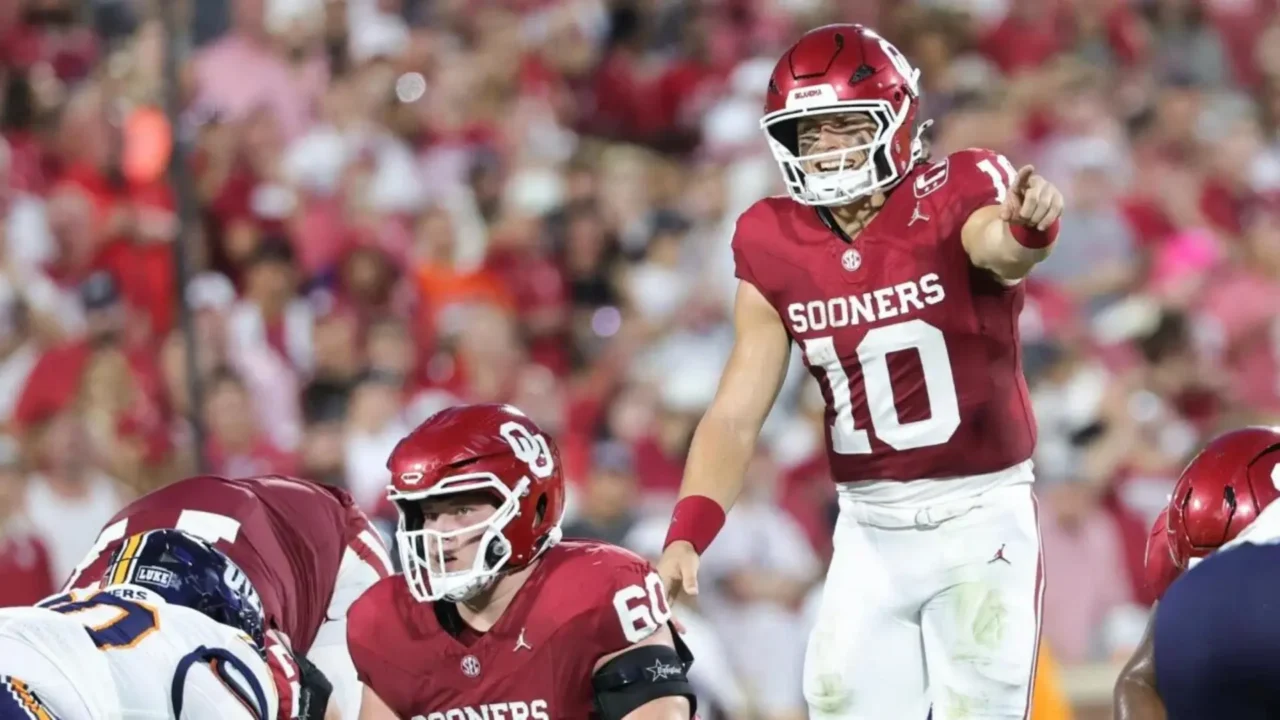
Oklahoma’s path to staying within the spread depends on complementary production from quarterback John Mateer and receiver Isaiah Sategna to sustain drives. Recent results, including a loss at Michigan and a 14-6 win over New Mexico State, are reflected in the model’s recent-form adjustments.
On Georgia’s side, the projection implies an offense consistent enough to win by multiple possessions even if Oklahoma forces fewer big-yardage plays. That combination explains the split between a Georgia victory and Oklahoma’s higher cover probability at plus points.
Projection and matchup context
| Metric | Georgia | Oklahoma |
|---|---|---|
| Projected score | 29 | 18 |
| Cover probability (line: Oklahoma +14) | Model projects a Georgia win while acknowledging cover risk | 56 percent chance to cover at +14 in simulations |
| Betting line and total | Listed as Georgia -14 with a 43.5 game total | Listed as Oklahoma +14 with a 43.5 game total |
| Recent results and defensive context | Projected winner by the model and expected to score under 30 | Lost at Michigan and beat New Mexico State 14-6; defense has held opponents under 18 points thus far |
College Football Playoff and SEC implications for Georgia
A Week 4 win over a Power Five opponent like Oklahoma would protect Georgia’s position in committee and computer metrics that matter for College Football Playoff consideration. Nonconference marquee wins help preserve strength-of-schedule signals used by voters and analytics.
Beyond rankings, early high-profile results influence roster construction and rotation decisions as conference play approaches. Coaches commonly use these outcomes to validate depth charts and adjust personnel timelines for league competition.