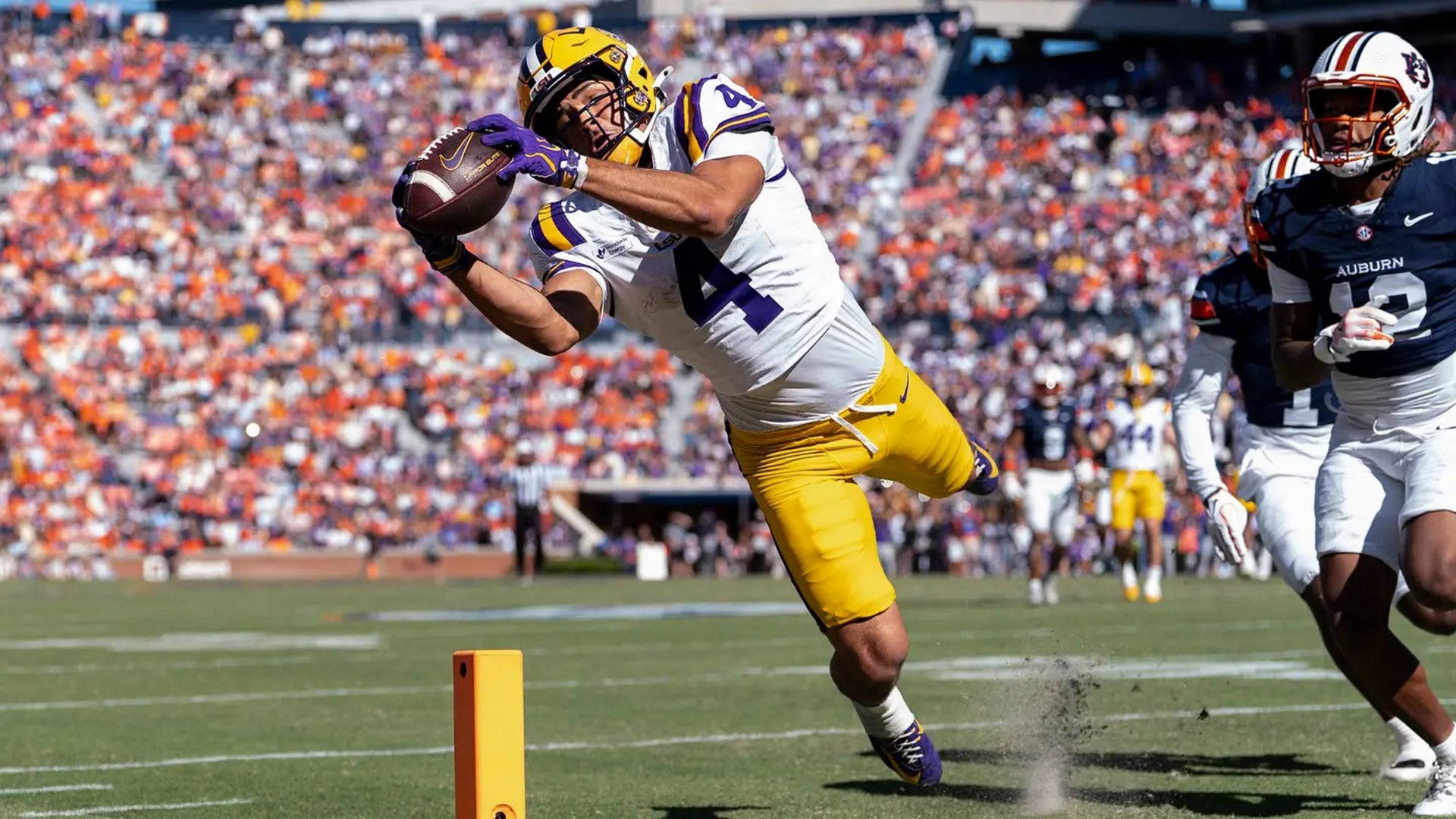
Jordan Seaton stepped into LSU’s left tackle spot and delivered a performance that changed the tone of the line in Week 1. The junior transfer from Colorado did not allow a sack and avoided penalties in a 51-10 victory over Clemson, a result that matters for LSU’s protection and run-game outlook.
As reported by Sports Illustrated, Seaton earned SEC Offensive Lineman of the Week after a debut that helped LSU average 5.3 yards on 58 rushing attempts and keep all three quarterbacks clean. That statistical swing from a year ago provides immediate evidence of why LSU prioritized a high-end tackle from the transfer portal.
Key Takeaways
- Jordan Seaton did not allow a sack and did not commit a penalty in LSU’s 51-10 win over Clemson.
- LSU averaged 5.3 rushing yards on 58 carries in the game that Seaton started at left tackle.
- LSU allowed 29 sacks last season, a major deficiency the coaching staff addressed in the transfer window.
- Seaton earned SEC Offensive Lineman of the Week for his performance against Clemson.
Jordan Seaton stabilizes LSU pass protection
Seaton’s debut offered a clear upgrade on the blind side from last season’s protection woes. He stayed square in sets, reached defenders on twist stunts, and avoided the holding and false-start penalties that cost LSU rhythm in 2023.
Those technique-focused details translated into no sacks allowed for LSU in the game and no individual blemishes for Seaton. While one outing doesn’t erase a season’s worth of issues, a clean performance at left tackle against a Power Five opponent changes immediate planning for the offensive staff.
Seaton’s role in the run game
LSU’s 5.3 yards per carry on 58 attempts is a team-wide result, but the left tackle’s ability to sustain blocks at the second level helped create lanes for lead backs. The line’s communication on reach blocks and cutback opportunities kept Clemson defenders from stacking the box consistently.
Coaches and teammates credited the line collectively, and Seaton himself emphasized that the unit still has details to clean up. “I feel like Saturday was a good start. We played a very good opponent in Clemson, and although it did look good with the numbers and a lot of passing yards and a lot of rushing yards, there’s a lot that we gotta work on,” Seaton said.
Seaton’s transfer profile and college background
Seaton arrives at LSU after a productive run at Colorado, where he earned All-Big 12 honors. His reputation in the portal as a top offensive lineman was one of the reasons LSU pursued him to shore up a previously vulnerable tackle spot.
The grading and evaluation that followed Seaton into Baton Rouge came with expectations around pass sets and consistency, traits he showcased in the Clemson opener. That pedigree gives LSU a clearer plan for opponent game-planning as the schedule shifts into conference play.
Pass protection and rushing context vs 2023 season
| Metric | 2023 season | Clemson game |
|---|---|---|
| Team sacks allowed | 29 | 0 |
| Rushing yards per carry | Identified as the worst rushing team in the SEC last year | 5.3 yards on 58 carries |
How Seaton’s debut affects LSU’s SEC outlook
Seaton’s presence eases pressure on LSU’s quarterback room and gives the Tigers a more reliable edge against Power Five defensive fronts. That stabilizing effect can change play-calling balance and reduce sack-related turnovers as the schedule moves into SEC matchups. Reporting and game details were drawn from original coverage by Zion Trammell.
From a roster-construction standpoint, a high-level transfer start at left tackle signals LSU’s willingness to use the portal to address glaring weaknesses rather than waiting for in-house development. That approach will matter in recruiting conversations and in how opponents game-plan for LSU’s offense.