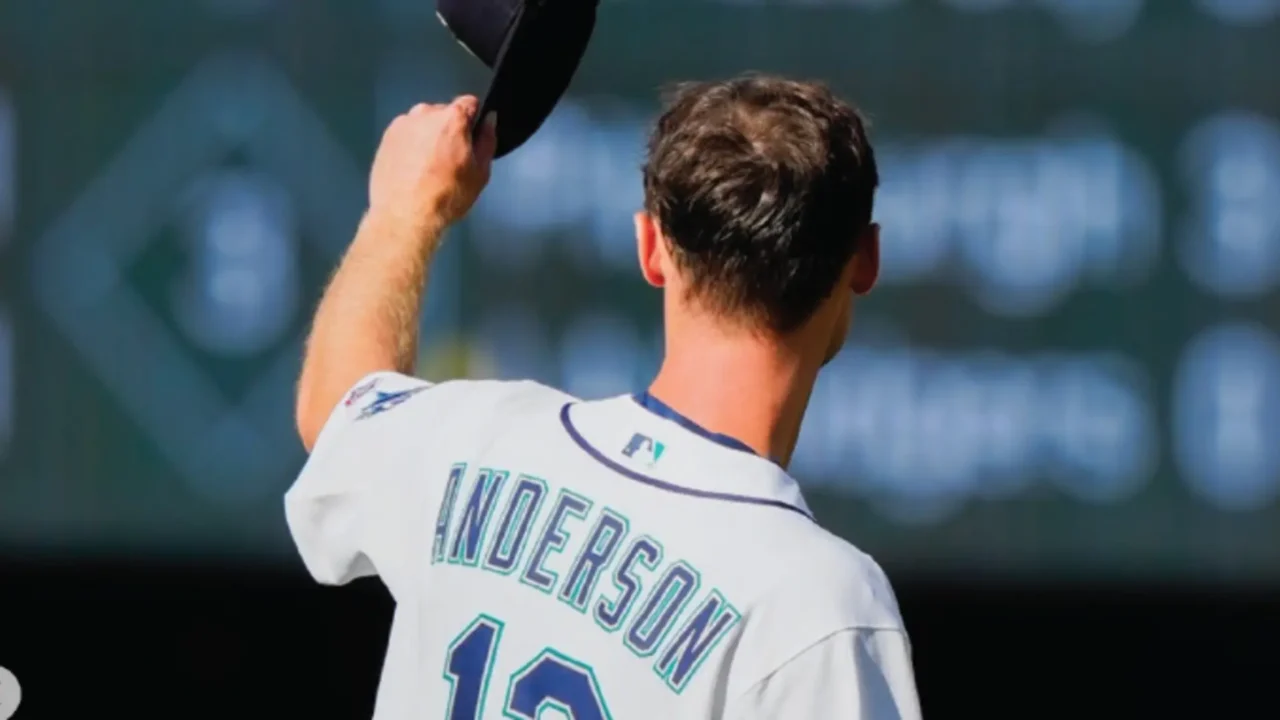
- Kade Anderson struck out five and allowed three runs on five hits in 5 2/3 innings in his Major League debut, taking a no-decision.
- Alex Bregman homered to tie the game and Michael Busch followed with a go-ahead homer; Seattle later won on Randy Arozarena's two-run walk-off in the ninth.
- Anderson reached the majors after going 10-1 with a 1.06 ERA in 18 starts at Double-A Arkansas, striking out 135 in 93 1/3 innings.
Kade Anderson made a statement in his Major League debut, striking out five and scattering five hits while working 5 2/3 innings for the Seattle Mariners. He carried a 2-1 lead into the sixth inning and was one out from qualifying for a quality start before late damage changed the game’s trajectory.
The LSU product and third overall pick in the 2023 MLB Draft had climbed to the majors after a dominant run at Double-A Arkansas, and the original coverage of his debut is available at TigerRag.com | which supplied the game and minor-league details used here.
Key Takeaways
- Kade Anderson struck out five and allowed three runs on five hits in 5 2/3 innings during his Major League debut, taking a no-decision.
- Alex Bregman homered to tie the game and Michael Busch followed with a go-ahead homer, but Seattle later won on a ninth-inning walk-off.
- Anderson reached the majors after going 10-1 with a 1.06 ERA in 18 starts at Double-A Arkansas, striking out 135 in 93 1/3 innings.
- He became the first member of his draft class to reach the big leagues and is the 94th former LSU player to appear in a Major League game.
Kade Anderson MLB debut breakdown
Anderson carried the Mariners through five innings with a mix of fastballs and breaking pitches that generated five strikeouts and limited the Cubs to five hits. He left in the sixth with a 2-1 lead, one out shy of a quality start by the strict definition.
The sequence unraveled when Alex Bregman hammered a pitch to tie the game and Michael Busch followed with a homer that gave Chicago the lead. Anderson finished with two walks alongside five hits and five strikeouts, a debut that showed swing-and-miss ability while identifying areas to tighten against MLB power.
The Mariners ultimately rallied and Randy Arozarena hit a two-run walk-off homer in the ninth to give Seattle the win. For Anderson, the outing was a valuable first-turn audition that reinforced his Double-A swing-and-miss profile while flagging adjustments against established lineups.
Key moments and takeaway pitches
The critical turning point was Bregman’s sixth-inning homer, which erased a narrow lead and shifted the matchup. Before that at-bat Anderson had navigated opposing hitters effectively, but the back-to-back homers changed the scoreboard dynamics and forced a bullpen-dependent finish.
From a scout’s-eye view, the five strikeouts mirror the high K totals Anderson posted in Little Rock, while the two walks and the homers point to the small margin for error against Major League power. The outing gives the Mariners a baseline to evaluate his second start at the highest level.
LSU draft pipeline and roster implications
Anderson’s quick arrival to the majors—reported as the first among his draft class to reach the big leagues—strengthens LSU’s recent track record in pitching development and the program’s recruiting narrative. His path from College World Series MVP-level performance to a big-league debut underscores the program’s capacity to produce pro-ready arms.
For LSU’s current and future pitching prospects, the example is tangible: a high-profile college season and polish at Double-A produced a rapid promotion. Coaches and recruiters can point to Anderson’s timeline when discussing development windows and exposure to pro scouts.
The Mariners’ call-up also illustrates organizational roster mechanics: teams in late-season positioning often prioritize giving top control prospects MLB exposure, which accelerates evaluation timelines for draftees from power programs like LSU.
Minor league performance versus major league debut
| Level | Notable metrics |
|---|---|
| Double-A Arkansas | 10-1 record, 1.06 ERA in 18 starts; 135 strikeouts, 13 walks in 93 1/3 innings; allowed 47 hits and 11 runs |
| MLB debut for Seattle | No-decision; 5 2/3 innings, 5 strikeouts, 5 hits, 3 runs, 2 walks |
The table highlights the stark statistical contrast between extended Double-A dominance and a single Major League outing. Anderson’s Double-A run was exceptional, and his first big-league start reinforced his strikeout arsenal while reminding that sustained quality is required against MLB hitters.
SEC implications for recruiting, NIL, and roster construction
Anderson’s rapid promotion bolsters LSU’s pitch to recruits by showing a clear, documented pathway from the program to professional opportunities, which impacts roster construction as the Tigers can point to pro advancement when balancing development and departures. That recruitment edge matters across the 16-team SEC where programs compete on player development and pro placement.
The example also feeds NIL conversations: programs that regularly send talent to the pros gain leverage in negotiations and marketing for prospects considering where to build their brand and draft stock. Collectively, repeated pro promotions influence how SEC teams allocate scholarships, target pitchers in the portal, and plan rotations ahead of College Football Playoff-era resource competition.
This dispatch used the contemporary game and minor-league figures drawn from the original report linked above to verify the sequence of events and statistical lines in Anderson’s debut.
| Double-A Arkansas | 10-1 record, 1.06 ERA in 18 starts; 135 strikeouts, 13 walks in 93 1/3 innings; allowed 47 hits and 11 runs |
|---|---|
| MLB debut for Seattle | No-decision; 5 2/3 innings, 5 strikeouts, 5 hits, 3 runs, 2 walks |
Frequently Asked Questions
What were Anderson's Double-A numbers before his call-up?
10-1 record, 1.06 ERA in 18 starts; 135 strikeouts, 13 walks in 93 1/3 innings; allowed 47 hits and 11 runs.
Did Anderson record a quality start or get the decision?
He was one out shy of a quality start and took a no-decision.