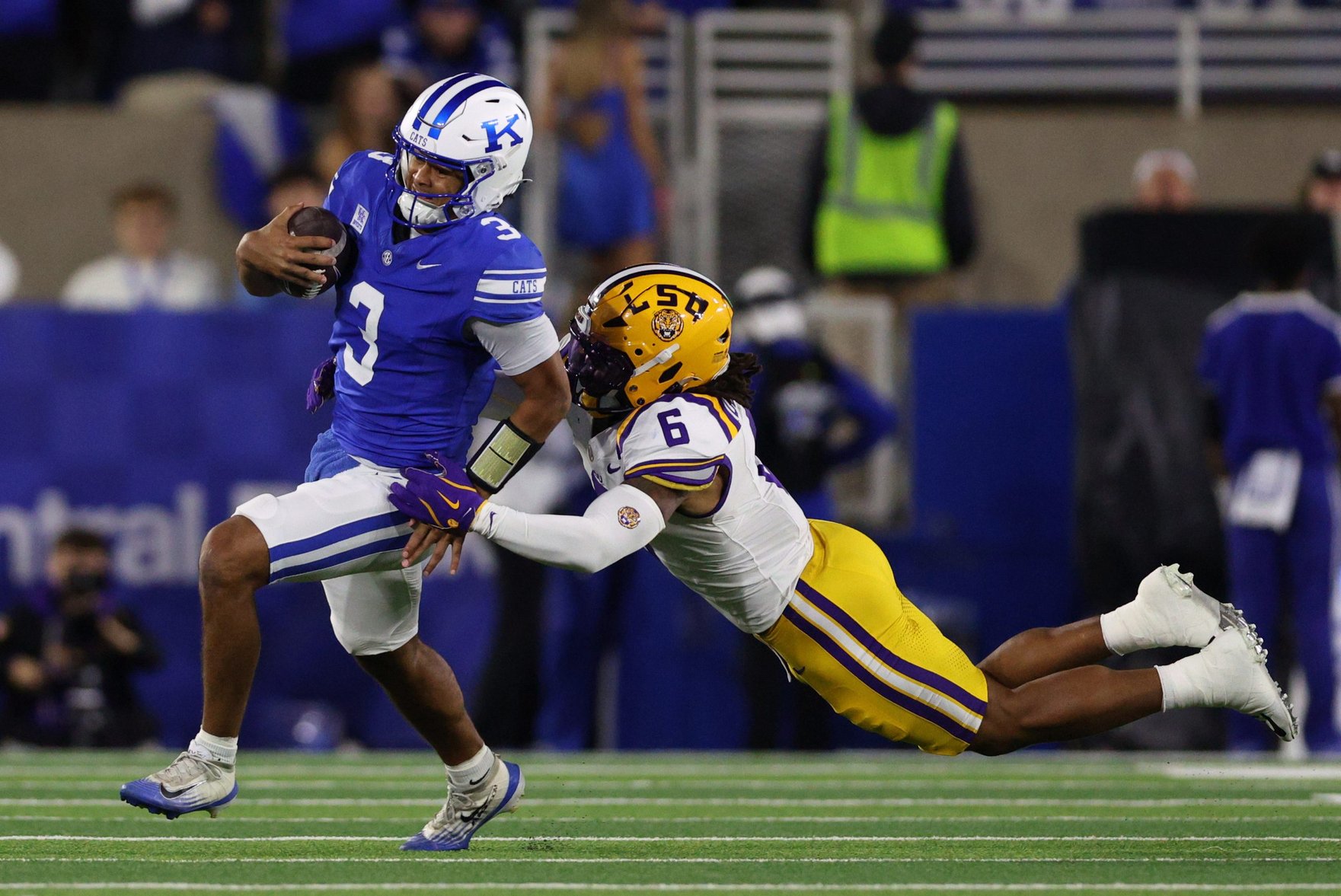
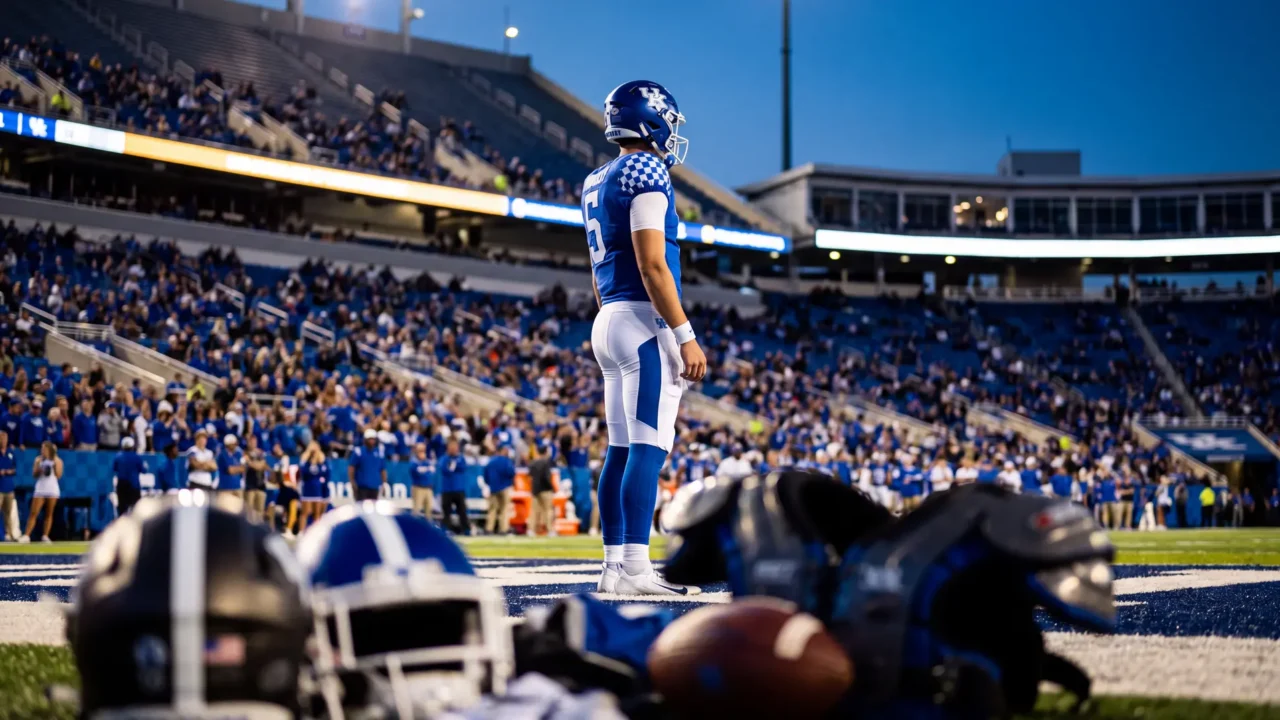
- Opinion-based editorial top-five ranking of Kentucky quarterbacks presented as a program-history retrospective.
- Selection emphasizes program impact, era visibility, and memorable seasons rather than a strict statistical formula.
- Readers should treat the list as a conversation starter and use primary sources and era adjustments for deeper evaluation.
A recent ranking of Kentucky football quarterbacks is available at courier-journal.com. The list gives Wildcats followers a tidy starting point for debate and roster retrospection.
That ranking matters because it frames how fans and local media remember signal-callers across different eras and because such lists influence recruiting narratives and legacy conversations within the program.
Key Takeaways
- The piece presents an opinion-based top-five list that spotlights quarterbacks from different Kentucky Wildcats eras.
- The ranking is useful for debate but should be read as a subjective editorial selection rather than a definitive statistical index.
- The list refocuses attention on how team success, era visibility, and postseason chances shape a quarterback’s program legacy.
- Readers should treat the ranking as a conversation starter that highlights program impact and narrative weight, not an exhaustive evaluation.
Why these Kentucky football quarterbacks made the list
The selection emphasizes program impact, era-defining runs, and the quarterbacks’ roles in the Wildcats’ most memorable seasons.
That approach privileges visibility and team influence as much as raw numbers and explains editorial choices on legacy placement.
As a beat reporter, I weigh historical context inside the program and how past performances are used in contemporary recruiting and roster narratives.
How this list was compiled
The ranking is presented as an editorial top-five selection, not a statistical index generated from a fixed formula.
Opinion lists typically blend multiple evaluation vectors: perceived program-changing moments, season-level visibility, postseason influence, and intangible leadership impressions.
Those vectors aim to capture a quarterback’s relative standing within program history rather than produce a narrow data-led ordering.
Because the piece is an editorial retrospective, emphasis falls on how certain campaigns and moments linger in institutional memory and public conversation.
How to read and use all-time quarterback rankings
Start by treating the list as context, not gospel. It clarifies what narratives are currently resonant among local media and fans.
Use the ranking to identify which qualities — such as late-game performances, leadership, or era-defining wins — carry the most weight in public memory.
Consider what the list omits as much as what it includes; author perspective, era bias, and media visibility all shape editorial outcomes.
For constructive debate, separate three areas: on-field production, program impact, and historical visibility. Weigh each area independently before combining them into an overall impression.
On-field production
On-field production covers game performance and consistency during seasons of note. In an editorial retrospective, conversation about production is often contextualized by team results and memorable performances that fans recall most vividly.
When reviewers prioritize production, they are highlighting the seasons where a quarterback’s game-to-game output created sustained optimism and competitive momentum for the program.
Program impact
Program impact measures how a player’s tenure coincided with rises in team profile, recruiting momentum, or shifts in public perception. That can include how a quarterback’s seasons altered fan expectations or influenced staff evaluations of roster construction.
Editorial lists often reward quarterbacks whose presence contributed to a sustained change in how the program was viewed locally and regionally, even when those changes are best understood qualitatively rather than through a single metric.
Historical visibility
Visibility reflects media coverage, national attention, and memorable moments that persist in fan conversation. Players from eras with stronger media reach or postseason exposure often receive greater retrospective recognition because their highlights remain accessible and frequently discussed.
Visibility can amplify otherwise similar careers, making particular games or moments matter more in long-term memory than a raw statistical ledger might indicate.
Ranking context and verified facts table
| Feature | Verified context |
|---|---|
| Origin of ranking | Editorial top-five list published by the primary reporting outlet and presented as a program-history retrospective |
| Article category | The piece is presented under the Kentucky Wildcats section on the source site |
| Nature of claims | Opinion-based selections informed by historical visibility and program impact rather than an applied statistical index |
Notable eras and team results behind the rankings
Quarterbacks who feature prominently in retrospective lists typically benefited from sustained team success or single-season runs that increased national visibility.
Strong individual play in less successful team seasons can attract local admiration but often lacks the same historical weight as wins that shift program momentum.
Evaluators balance personal performance, clutch moments, and the degree to which a player changed the program’s trajectory when forming retrospective lists. That balance is why lists vary: different writers weight those factors differently, resulting in different orderings even when they consider the same careers.
Recruiting and roster implications for Kentucky
Lists like this matter for recruiting because legacy and quarterback lineage are part of the pitch to prospects and program storytelling.
Historical rankings do not change postseason odds but they frame expectations for the program’s ability to develop high-profile playmakers and can influence transfer decisions in broader narratives.
Coaches and staff use program history selectively in recruiting conversations, and a narrative that emphasizes quarterback development may help attract prospects who value a clear path to visibility.
When evaluating how a list might affect roster-building, focus on the narrative value rather than direct causal claims—prospects respond to how a program presents itself, not to retrospective rankings alone.
How fans should approach debates prompted by rankings
Keep debates grounded by agreeing on evaluation criteria before arguing rankings. Are you prioritizing wins, peak seasons, or program-changing influence?
Be explicit about era adjustments. Comparing players across generations requires acknowledging differences in schedule, conference strength, and media coverage.
Use primary sources where possible. Game accounts, contemporaneous reporting, and the archive of season recaps provide better context than memory or headline lists alone.
Suggested checklist for fair comparison
- Define the timeframe and competition level for each player.
- Separate individual performance from team results.
- Note postseason or visibility events that increased a player’s profile.
- Be transparent about weight given to intangibles versus measurable outcomes.
FAQ: common fan questions about all-time lists
Can these rankings change over time?
Yes. Editorial perspectives shift as new seasons, new media narratives, and later reassessments reinterpret earlier careers.
What once seemed definitive can be revisited as the program’s broader history evolves and as new factors shape public memory.
Should I treat this as a final judgment?
No. Consider the ranking a snapshot of opinion at a given time. It’s a jumping-off point for deeper research and discussion.
Final judgments benefit from a mix of statistical review, game film, and contemporaneous reporting—none of which are replaced by a single list.
How do lists like this affect the community?
They create conversation, highlight forgotten moments, and can renew interest in specific eras. That communal effect is part of their value.
At their best, lists encourage fans to revisit games, engage with archives, and add nuance to program history discussions.
Further reading and related coverage
For additional context on Kentucky program topics, see related SECFB coverage: Related SECFB coverage: Kentucky football staff additions.
For a broader look at how stadium projects and facility investments shape regional football narratives, see: Missouri Football Completes Faurot Field Renovations.
Use companion pieces like staff and recruiting coverage to round out how program narratives tie together across personnel, development, and public perception.
Readers who want to contribute to the debate are encouraged to cite specific games, articles, or archived accounts to support their positions.
Rankings spark conversation. Treat them as invitations to revisit the games and seasons that shaped a program’s identity.
Frequently Asked Questions
Can these rankings change over time?
Yes. Editorial perspectives shift as new seasons, new media narratives, and later reassessments reinterpret earlier careers.
Should I treat this as a final judgment?
No. Consider the ranking a snapshot of opinion at a given time. It’s a jumping-off point for deeper research and discussion. Final judgments benefit from a mix of statistical review, game film, and contemporaneous reporting—none of which are replaced by a single list.