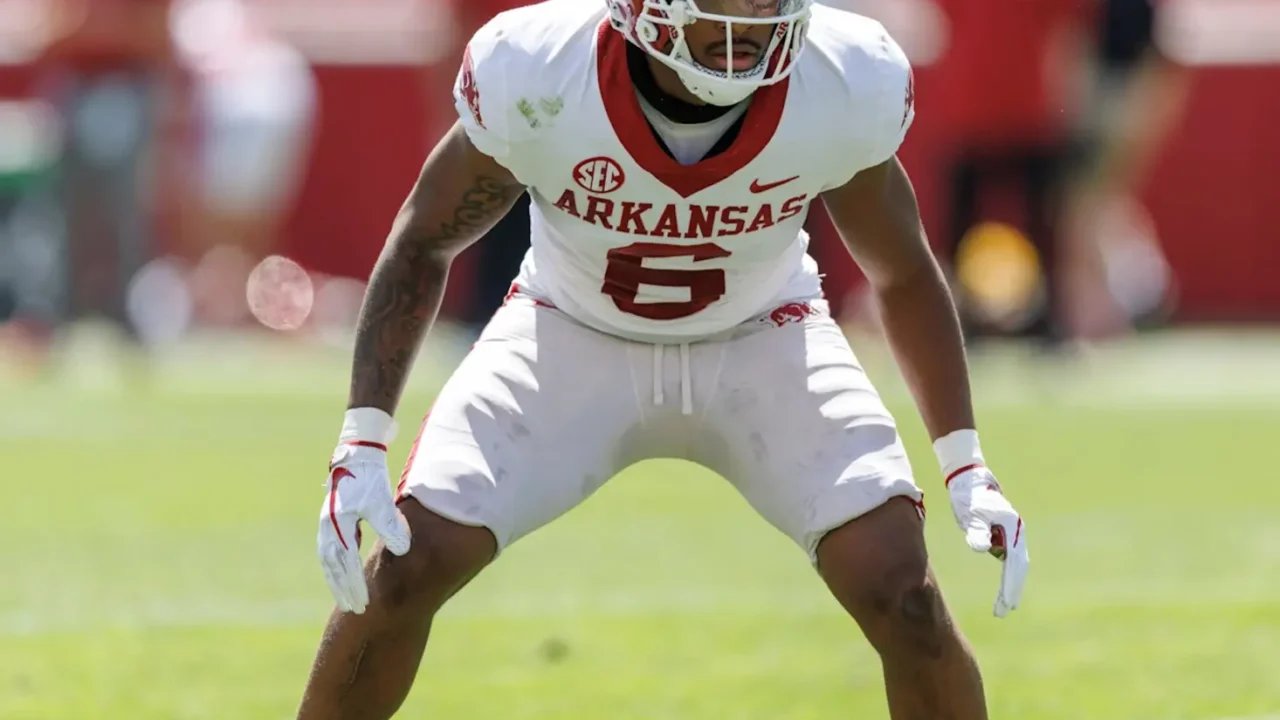
- Khmori House recorded two interceptions during Arkansas' fourth practice.
- Jackson Fuller of the Fort Smith Southwest Times Record reported the interceptions as the session's highlight.
- Standout practice takeaways can affect pecking order and evaluations within the Arkansas secondary.
Khmori House interceptions were the clear headline from Arkansas football’s fourth practice, providing the kind of turnover splash that draws attention in early camp reporting. The plays offered a quick gauge of timing and ball skills in a session that otherwise focused on fundamentals.
Local coverage described the two picks as the session’s highlight, shared in a Jackson Fuller story on Yahoo Sports. The sequence matters because practice turnovers can shift depth conversations and invite closer evaluation by position coaches and evaluators.
Key Takeaways
- Khmori House recorded two interceptions during Arkansas’ fourth practice, and those plays were singled out in local reporting as the session’s highlight.
- The interceptions provided an early measure of House’s ball skills and instincts in team coverage drills and situational work.
- This is practice reporting with limited game implications, but standout plays in camp can affect pecking order and evaluation for the defensive back group.
Why Khmori House interceptions matter for Arkansas secondary
Two interceptions in the same practice suggest repeatable technique rather than a single fluke play. For a defensive back, consistent ball location, route recognition and hand-eye coordination are the traits coaches prize, and multiple takeaways in one session highlight those areas.
House’s sequence is valuable because it offers evidence of playmaking during team periods where route timing and quarterback reads are live. When a defender turns practice reps into turnovers, staff can evaluate whether the performance came from preparation, superior positioning, or a favorable drill alignment.
What the interceptions reveal about technique and role
Interceptions in practice are useful indicators of a defensive back’s anticipation and secure catching under contact or in contested catches. For evaluators, two takeaways in one session point to a player who is comfortable locating the ball in traffic and finishing the play.
Those traits matter in slot and boundary coverage roles where quick reads and transition to the ball determine success. If coaches observed House making the plays while matched against projected starters, it raises his profile for rotational or situational packages.
Coaches will also weigh drill context such as whether the interceptions came during scripted 7-on-7 work, full-team periods, or one-on-one drills. Each environment changes the degree to which a play translates to in-season snaps, and staff will factor that into their next evaluations.
Practice context and turnover comparison
| Aspect | Verified detail |
|---|---|
| Highlighted play | Two interceptions by Khmori House during the fourth practice |
| Session type | Fourth practice of the preseason practice cycle as reported by local beat coverage |
| Source reporting | Account provided by Jackson Fuller of the Fort Smith Southwest Times Record |
SEC recruiting and roster implications
A camp highlight like multiple interceptions can be referenced in recruiting conversations when projecting depth and opportunities at defensive back. Prospects and their entourages pay attention to which underclassmen or transfers are making plays early in camp, and that shapes perceived paths to playing time.
From a roster-construction view, usable playmakers at defensive back help a team manage situational packages and injuries across a long SEC slate. Early standouts can relieve pressure on depth charts and give coaches flexibility when mapping coverage rotations.
Reporting on these plays was provided by Jackson Fuller of the Fort Smith Southwest Times Record, which framed an early snapshot of Arkansas’ defensive back room during camp.
Frequently Asked Questions
What did Khmori House do at Arkansas' fourth practice?
Khmori House recorded two interceptions.
Who reported on the interceptions?
Jackson Fuller of the Fort Smith Southwest Times Record.