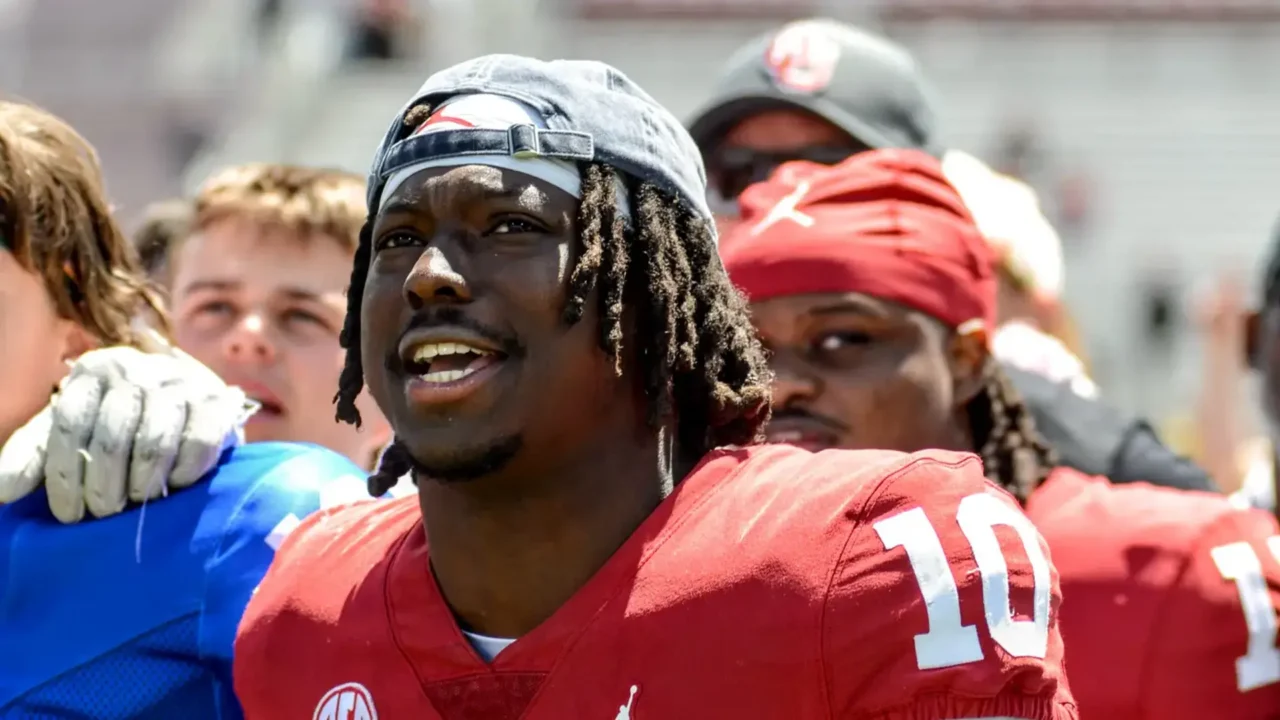
Kip Lewis has been through the full arc of Oklahoma’s defensive rebuild and now enters his final college season as the unit’s veteran leader. He believes the group is already coalescing, and that view matters because the defense’s trajectory will shape Oklahoma’s national hopes for 2026.
“I think we’re starting off pretty strong pretty early,” Lewis said, adding that the mix of returning pieces and newcomers is beginning to mesh, as reported by Sports Illustrated.
Key Takeaways
- Oklahoma’s defense led the conference last year in total defense (272.5 yards allowed per game), scoring defense (15.2 points allowed per game) and sacks (45).
- Kip Lewis finished 2025 with a team-high 76 tackles, 10.5 tackles for loss, four sacks and four pass breakups, giving him the on-field production and continuity to anchor the unit.
- Several contributors from last season moved on to the professional ranks or transferred out, while Oklahoma added reinforcements in transfers Cole Sullivan, Dakoda Fields, Kenny Ozowalu and Bishop Thomas.
Kip Lewis leadership and on-field growth
Lewis’ rise from a true freshman who used a redshirt to a full-time starter is a through-line for this defense. He saw limited action in 2022 but established himself as a staple in 2023 and a major playmaker in subsequent seasons.
Across his OU career he produced reliable, ascending production: 66 tackles in 2023 with 3.5 tackles for loss, 65 tackles and two interceptions in 2024 including a pick-six, and a team-high 76 tackles in 2025 with 10.5 tackles for loss. Those seasons show a steady on-field progression that shapes his role as a leader.
Linebacker depth and roster moves affecting playing time
Oklahoma’s linebacker room will be defined by Lewis’ presence and by fresh competition from incoming transfers. The staff added Cole Sullivan, Dakoda Fields, Kenny Ozowalu and Bishop Thomas to supplement returning pieces.
On the flip side, the Sooners saw contributors depart for the professional ranks including Mason Thomas, Gracen Halton, Kendal Daniels and Robert Spears-Jennings, and a handful of transfers out such as Sammy Omosigho, Jaydan Hardy and Kobie McKinzie. That turnover changes snap distribution and forces younger players and new additions to earn roles quickly.
Lewis’ continuity gives coaches a reliable centerpiece around which to allocate reps and develop situational communication across the linebacker room.
Season-by-season defensive context
| Season | Yards allowed per game | Points allowed per game | Sacks | Roster context |
|---|---|---|---|---|
| 2022 | 461 | 30 | Not specified | Defense in transition; Lewis redshirted and saw limited action during a rebuilding year |
| 2025 | 272.5 | 15.2 | 45 | Unit led the conference in defense; several starters left for the pros and transfers prompted roster reinforcements |
College Football Playoff and SEC positioning
Oklahoma’s defensive profile will be a core variable in any College Football Playoff conversation for 2026. A defense that can repeat near-elite numbers creates margin in close conference games and eases pressure on an offense against top opponents.
Roster turnover makes projection harder, but the combination of Lewis’ leadership, returning contributors and incoming transfers gives Oklahoma a credible path to sustain a high-level defense. How quickly new pieces translate in game speed will be decisive for the Sooners’ standing inside a competitive conference.
Reporting note
This report is based on original season coverage and player interviews that tracked Lewis’ development and the program’s roster moves.