Texas vs Tennessee became a contrast between a dominant pass rush and a parade of penalties and short drives that nearly cost the Longhorns the game. The 20-17 final required a last-second defensive stand and raises immediate questions about whether this version of Texas can sustain a College Football Playoff run.
The box score details and situational notes below are drawn from an on-site report linked here from Burnt Orange Nation and from tape in Knoxville, and they highlight specific strengths and liabilities to watch.
Key Takeaways
- Texas held off a last-second Hail Mary to win 20-17 and leave Knoxville with a hard-fought victory.
- The Longhorns converted just 3 of 12 third downs and sputtered through six three-and-outs that combined for negative six yards.
- Texas generated 10 team sacks with Colin Simmons totaling five, and four of his sacks came on third downs.
- The Horns were flagged 11 times for 115 yards with 70 penalty yards in the first half creating self-inflicted short fields and extended Tennessee drives.
Colin Simmons pass rush game
Colin Simmons emerged as the defensive breakout, recording five sacks and matching a long-standing school mark. The unit finished with 10 sacks, the second-most single-game total in school history, and Simmons accounted for half of that total.
Four of Simmons’ five sacks came on third downs and arrived during critical Tennessee drives, and Texas doubled its sack total in the fourth quarter to preserve the lead late.
The drive chart and offensive missed chances
Texas opened with a scripted seven-play, 75-yard touchdown drive but the offense struggled afterward, producing multiple three-and-outs and short-field situations. The offense finished with six three-and-outs that totaled negative six yards and managed only three successful third-down conversions on 12 attempts.
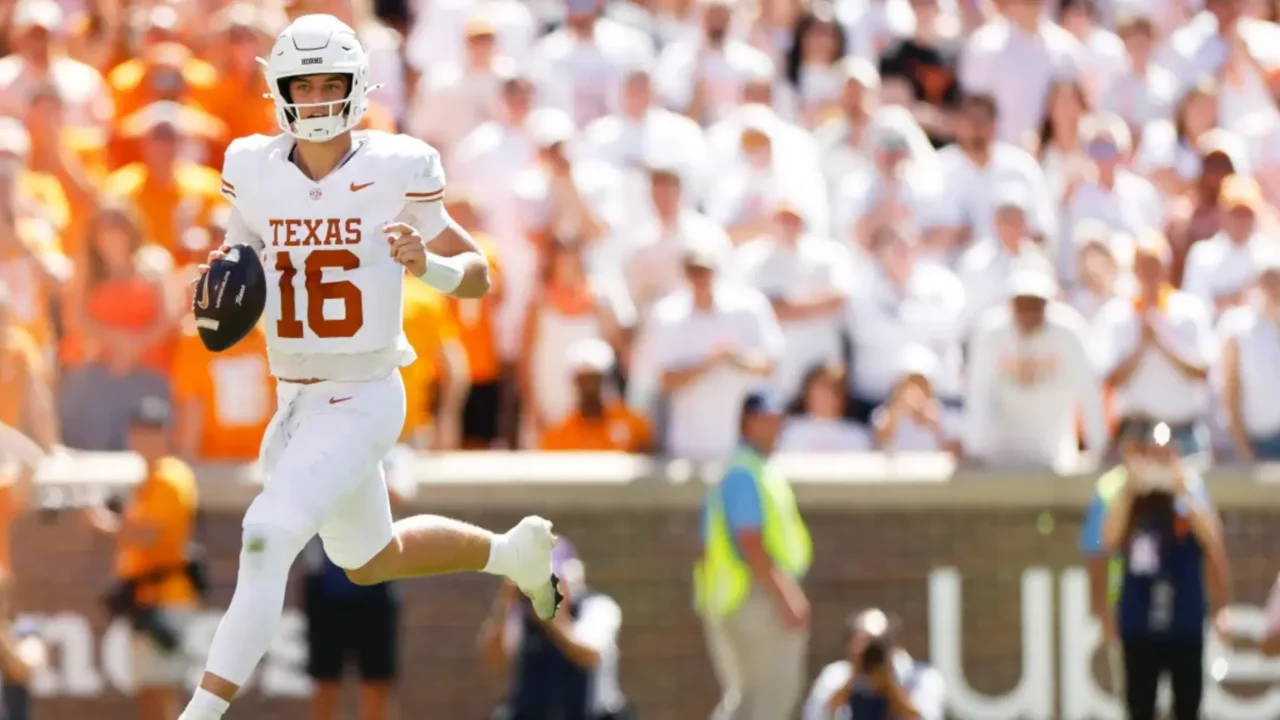
Arch Manning was assessed three accepted penalties and missed a sideline pass to Jermaine Bishop at the two-yard line, a sequence that led to a field goal instead of a touchdown and left points on the board.
How timing and field position shaped key sequences
Penalties often arrived at inopportune moments, converting third-down stops into automatic first downs for Tennessee and turning manageable downs into long-yardage situations. The defense answered with consistent pressure, but relying on sacks to bail out the offense is an unsustainable model for sustained success.
Special teams and red-zone efficiency were marginal factors as well, with a sideline miss at the two-yard line turning a likely touchdown into a chip-shot field goal and compressing the margin for error late in the game.
Game data and historical context
| Metric | Game figure | Context |
|---|---|---|
| Third downs | 3 of 12 | Long average distance to go at nine yards limited sustained drives |
| Three-and-outs | 6 for -6 yards | Six drives produced no positive yardage and halted momentum |
| Penalties | 11 for 115 yards | 70 penalty yards in the first half created adverse field position |
| Sacks | 10 team sacks | Second-most in school history and a key factor in protecting the lead |
SEC and College Football Playoff implications for Texas
The win preserves Texas’ standing and keeps them in the CFP conversation, but the underlying issues complicate how committee members will view resume stability. Inconsistent offensive execution and chronic penalty problems are likely to draw scrutiny in future evaluations.
From a roster and recruiting perspective, the game offers mixed messaging: an elite pass rush to sell to defensive prospects alongside offensive tape that recruiters will flag as teachable but risky, signaling priorities for depth and procedural cleanup moving forward.