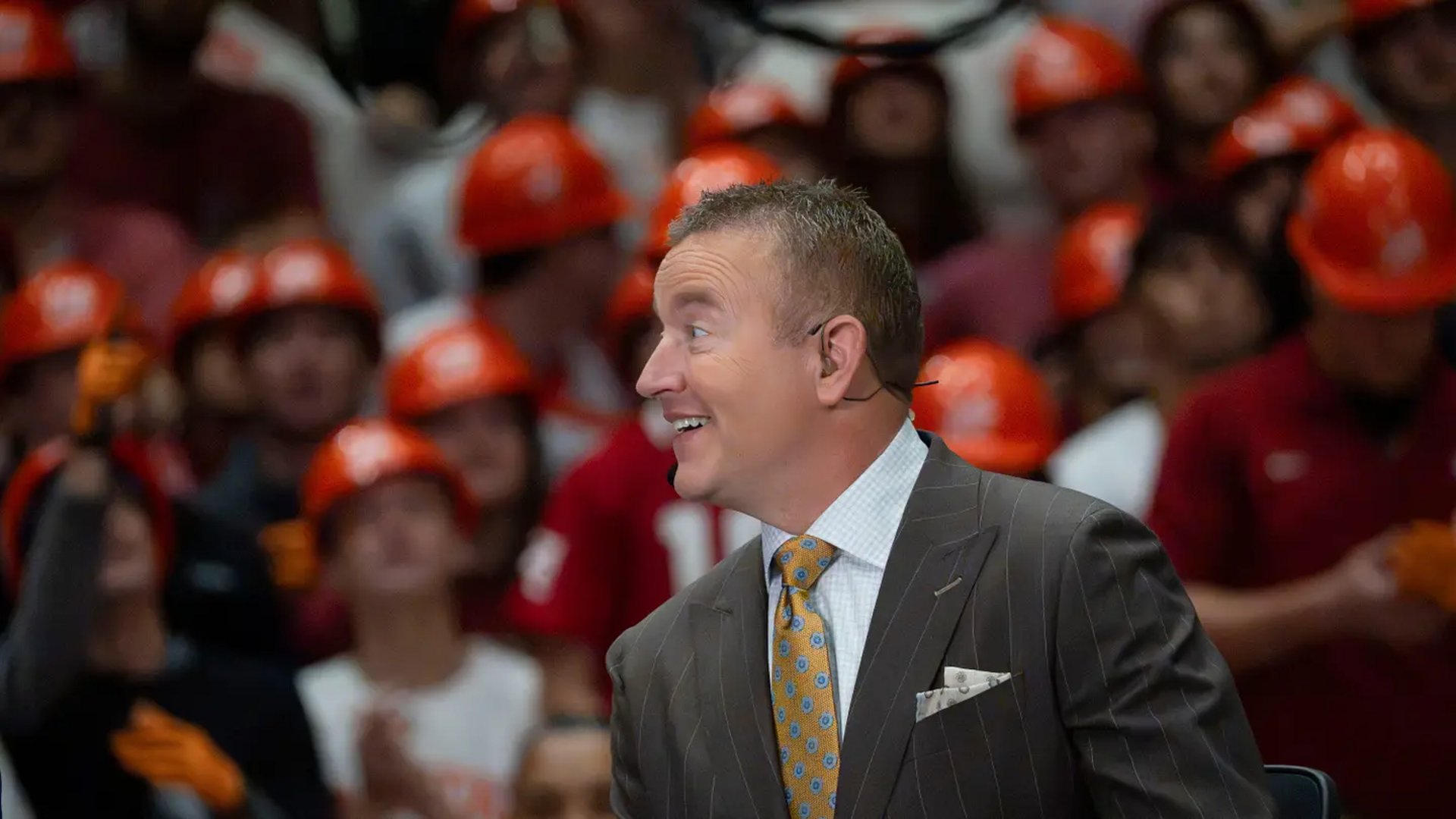
The Texas-Oklahoma Red River Rivalry carries enough history to make conventional logic dangerous. With Texas favored and Oklahoma entering at 2-2, Kirk Herbstreit hesitated before choosing the Longhorns.
As detailed by CFB-HQ On SI, Herbstreit expects Oklahoma to make the game competitive. His hesitation centers on an Oklahoma defense playing at a championship level against an offense that has struggled to sustain production.
Texas remains the pick, but this is not a projection of an easy afternoon. The Sooners have the defensive efficiency to force Arch Manning into difficult third-down situations, while their own offensive limitations explain why Herbstreit stopped short of calling for an upset.
Key Takeaways
- Kirk Herbstreit picked Texas to defeat Oklahoma in the Red River Rivalry despite expecting a close game.
- Oklahoma allows opponents to convert just 23.1 percent of third downs, the best mark in the SEC and third nationally in the supplied statistical snapshot.
- Arch Manning faces a major test against an Oklahoma defense that has made third-down execution difficult for opponents.
- Oklahoma’s offense, averaging 22 points and 321.3 total yards per game, is the central reason Herbstreit does not see the Sooners winning.
The Texas-Oklahoma Red River Rivalry Turns on Third Down
Herbstreit’s prediction begins with respect for the rivalry rather than dismissal of Oklahoma’s record. He described the Sooners as a team capable of making the game competitive because the matchup presents a difficult test for Texas.
That caution matters for the Longhorns. Texas has entered the matchup as the favored team, but its two wins over ranked opponents came by a combined four points, leaving room for Oklahoma to believe a few pivotal stretches could change the game.
The most important stretch may come on third down. Oklahoma has allowed opponents to convert only 23.1 percent of their third-down attempts, a figure that places the Sooners first in the SEC and third nationally in the supplied statistical snapshot.
That strength directly targets the challenge facing Manning. Herbstreit pointed to situations such as third-and-five or third-and-seven, where Oklahoma can make coverage and pressure more difficult and force Texas to execute.
Oklahoma’s Defense Can Make Texas Sweat
Herbstreit characterized Oklahoma’s defense as playing at a championship level. The statistical profile supports that assessment within the supplied snapshot, with the Sooners ranking second in the SEC in total defense while allowing 238 yards per game.
That performance gives Oklahoma a clear path to staying within striking distance. If the Sooners continue limiting conversions, Texas will have to finish drives against a defense that has been especially effective when third down arrives.
For Manning, the assignment is less about producing spectacular plays than avoiding stalled possessions. The source snapshot places him 10th among 16 qualifying SEC quarterbacks in quarterback rating.
That ranking does not decide the matchup by itself. It does explain why Oklahoma’s third-down success represents a meaningful challenge, especially if the Sooners can keep Texas from creating manageable conversion opportunities.
The Offensive Gap Drives Herbstreit’s Pick
Oklahoma is averaging 22 points per game and 321.3 total yards per game. Those figures provide the central concern in the Sooners’ attempt to turn defensive efficiency into a rivalry win.
Quarterback John Mateer has also been credited with four interceptions in the season snapshot. Those turnovers give Texas an avenue to win even if the Longhorns do not consistently move the ball, because a short field can change the balance of a rivalry game.
Herbstreit’s final decision reflects that difference. He acknowledged that Oklahoma’s defense could keep the Sooners close, but concluded that the offense’s current level would prevent them from completing the upset.
That is a narrower argument than simply calling Texas the better team. Oklahoma must turn defensive stops into enough points, while Texas must avoid allowing its own offensive lapses to create opportunities.
The Numbers Behind the Red River Rivalry Matchup
| Matchup factor | Texas | Oklahoma |
|---|---|---|
| Position entering the game | Favored team | Enters at 2-2 |
| Recent ranked-opponent results | Two wins by four combined points | Not specified in the supplied snapshot |
| Quarterback context | Arch Manning ranked 10th of 16 qualifying SEC quarterbacks in quarterback rating | John Mateer had four interceptions in the season snapshot |
| Offensive production | Not specified in the supplied snapshot | 22 points and 321.3 total yards per game |
| Defensive strength | Faces the SEC’s top third-down defense | 23.1 percent third-down conversion rate allowed and 238 total yards allowed per game |
Texas and Oklahoma Carry SEC and CFP Weight
This matchup has significance beyond the rivalry itself because both programs are operating inside a 16-team SEC with little room for an avoidable conference loss. Texas carries the favored position, while Oklahoma needs its defensive identity to translate into a result.
For Texas, a win would support its position in the SEC race and preserve the margin for error tied to College Football Playoff implications. The two close wins over ranked opponents also make execution against Oklahoma especially relevant.
For Oklahoma, the defensive foundation offers a clear path into the matchup. The Sooners need the offense to protect the football and convert enough opportunities to reward a defense that has limited opponents on third down.
Herbstreit’s pick favors Texas because he trusts the Longhorns to solve enough of those problems. If Oklahoma controls third down and avoids giving Texas short fields, the Red River Rivalry can become the low-margin fight he expects.