Lane Kiffin LSU rushing attack is the storyline that matters as the Tigers open a new era offensively. LSU averaged 104 rushing yards per game last season, the fewest in the SEC, and reviving the run game is the clearest path to more consistent offense and better third-down outcomes.
As detailed by LSU Tigers On SI, Kiffin has built his recent offenses around a physical, dependable rushing element that complements his passing attack and creates space for play-action and quarterback mobility.
Key Takeaways
- Lane Kiffin LSU rushing attack will prioritize a heavier, more consistent run game than LSU showed last season.
- Dilin Jones transferred from Wisconsin and impressed the coaching staff during fall camp, positioning him as an early bellcarrying option.
- LSU plans to rotate Dilin Jones, Harlem Berry, and Caden Durham to blend lead carries, change-of-pace snaps, and situational work.
Lane Kiffin LSU rushing attack and roster fit
Lane Kiffin arrives with an SEC track record of producing top rushing units, and that history maps cleanly onto LSU’s current roster issues. Since 2020, Ole Miss ranked inside the SEC’s top six in rushing yards per game, and Kiffin led the conference twice, which gives a baseline for the kind of rush-first competence he aims to replicate.
Kiffin developed running backs such as Kewan Lacy and Quinshon Judkins at Ole Miss, demonstrating an emphasis on creating downhill, consistent rushers inside a wide-open offense. The Tigers have the components to respond to that coaching emphasis: a trio of backfield options and a more dynamic offense that should open lanes.
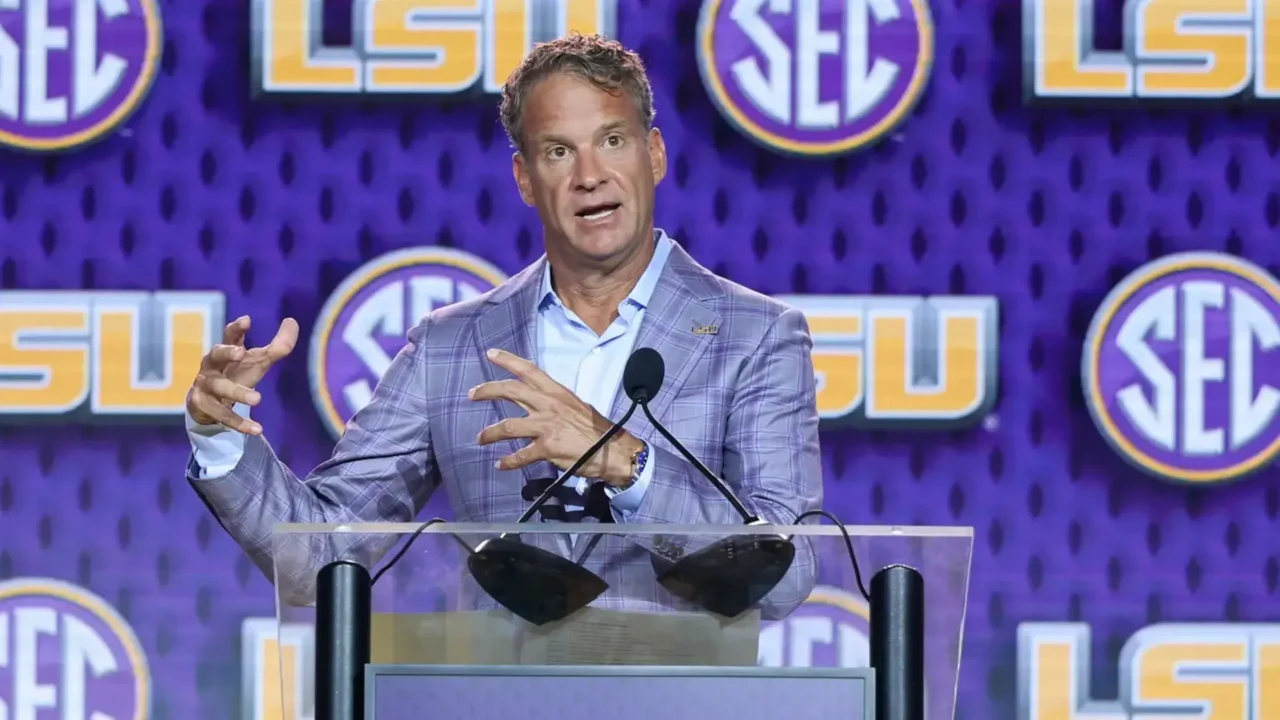
Kiffin’s public remarks at fall camp reinforced his approach. He framed running the ball as a critical element of situational offense, and he tied success to the ability to run effectively in key moments, which signals a philosophical shift from last year’s results.
Backfield roles and carry distribution
LSU’s running room lists Dilin Jones, Harlem Berry, and Caden Durham as the primary rotation, but the staff has not locked in down-to-the-play percentages. Jones arrives from Wisconsin and, per reporting, impressed coaches in fall camp enough to be considered a lead candidate.
Caden Durham and Harlem Berry were LSU’s primary rushers last year, and the coverage suggests their previous production was influenced by situation more than capability. Under Kiffin, both can expect clearer role definitions and schemes designed to maximize their strengths in space and between the tackles.
Expect a practical distribution plan: Jones in early-down, north-south work; Berry and Durham mixing change-of-pace and passing-down snaps; and situational packages that take advantage of Sam Leavitt’s dual-threat skill set to create additional running lanes.
Rushing context versus Ole Miss and SEC
| Team | Recent rushing context | Kiffin-era notes |
|---|---|---|
| LSU | Averaged 104 rushing yards per game last season, the fewest in the SEC. | Now led by Kiffin, who emphasizes situational rushing and back development. |
| Ole Miss | Ranked inside the SEC’s top six in rushing yards per game since 2020. | Kiffin coached and developed backs like Kewan Lacy and Quinshon Judkins and led the conference twice. |
| Backfield development | LSU has a three-man rotation of Jones, Berry, and Durham with an upgrade in coaching emphasis. | Ole Miss under Kiffin turned transfers and high-school recruits into feature-level backs. |
LSU roster construction and SEC race implications
An improved rushing attack alters how LSU builds around its offense and how the Tigers are viewed in the SEC and College Football Playoff conversation. Run-game consistency helps sustain drives, protects leads, and balances game planning against the league’s elite offenses.
For recruiting, a clear commitment to a physical rushing identity and demonstrated development of running backs under Kiffin could sway high-school prospects and portal targets who prioritize downfield blocking schemes and rushing development. That, in turn, matters for roster construction as LSU competes in a 16-team SEC where complementary strengths decide league positioning.
On the CFP front, a reliable ground game removes volatility in close games and provides a more manageable path to signature wins. Kiffin’s history of leading SEC rushing groups twice since 2020 means the ceiling is tangible, but performance must show up on the field to move LSU back toward contention.
Reporting on the immediate running-game outlook was originally produced by Zion Trammell and published in the linked coverage above. This piece uses that reporting as the central source and frames local roster and schematic implications for LSU fans and SEC observers.