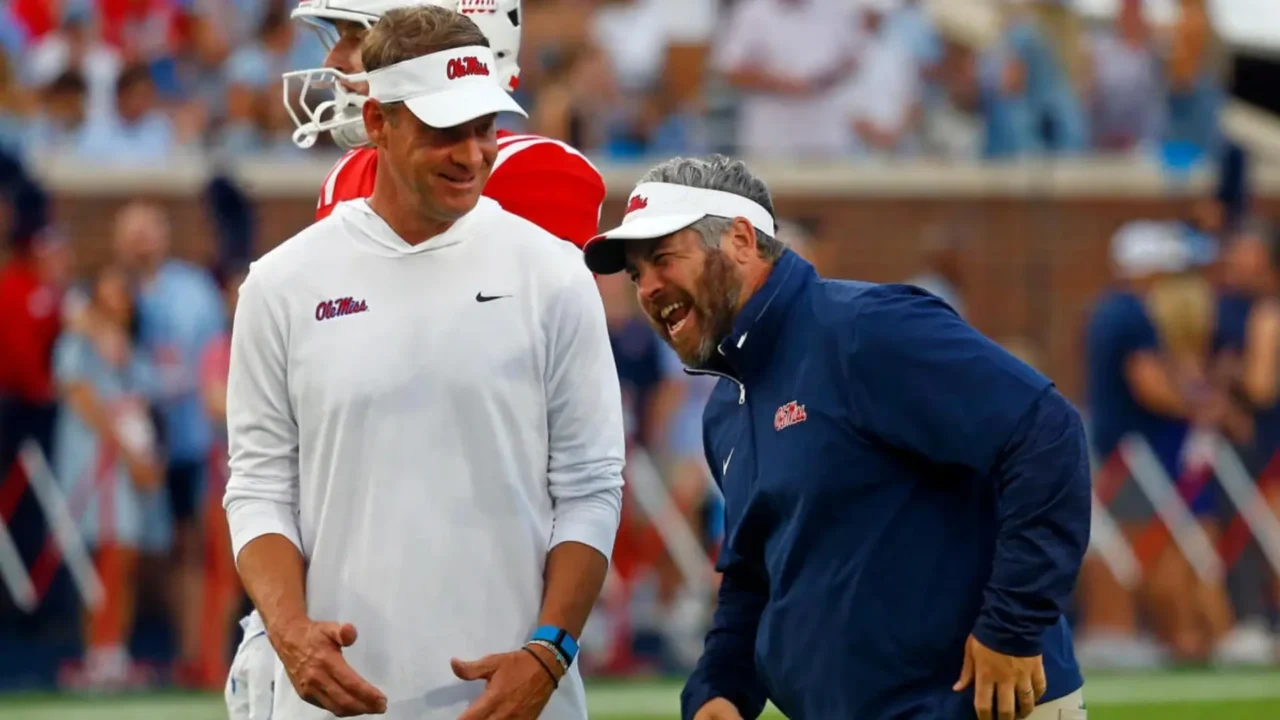
Lane Kiffin’s sideline line to defensive coordinator Pete Golding in Oxford — “Are you ready to go to Gainesville?” — landed like a thunderclap after a 34–26 road win at No. 13 Oklahoma that left Ole Miss squarely on the playoff trail.
The timing mattered: a 7–1 Rebels team facing South Carolina, Citadel, Florida and Mississippi State suddenly looked like a legitimate College Football Playoff candidate, and that success reshaped the choices available to a coach in demand. As reported by CBS Sports, the postgame exchange in Oxford set in motion a three-team pursuit that quickly drew outside pressure and political theater.
Key Takeaways
- Lane Kiffin’s sideline question to Pete Golding followed a 34–26 road win over No. 13 Oklahoma and came while Ole Miss sat at 7–1 on the season.
- Louisiana Governor Jeff Landry publicly pressed LSU’s leadership and staged high-profile gestures that the reporting says intensified LSU’s pursuit of Kiffin.
- The three-team chase involving Ole Miss, Florida and LSU immediately raised recruiting and staff-retention stakes as the early-signing and transfer windows approached.
Kiffin’s on-field moment and stakes
The image of Kiffin asking Pete Golding whether he was “ready to go to Gainesville” arrived at a moment when Ole Miss looked playoff-bound after the Oklahoma victory.
With the Rebels 7–1 and a manageable remaining slate, that success changed the calculus for outside suitors and heightened the urgency around staff continuity during the signing and portal periods.
How Jeff Landry and boosters entered the chase
Less than 24 hours after the Oxford win, the reported pursuit widened when Louisiana Governor Jeff Landry publicly pushed LSU into the mix and used high-profile gestures that kept the story in the headlines.
The account describes Landry arranging a tiger parade and calling critics “woke people,” while board-room maneuvering and leadership changes at LSU shifted the hiring environment and intensified the chase.
Staff, recruiting and roster stakes
A three-team pursuit placed immediate strain on staff retention and recruiting timelines, making continuity through the early-signing period and portal windows especially important.
With Jimmy Sexton identified as Kiffin’s agent in the reporting, rival programs and agents watched for moves that could trigger portal activity or affect recruits’ perceptions of program stability.
Program resources and stadium comparison
| Program element | Ole Miss context | LSU/Florida context |
|---|---|---|
| Stadium capacity | Vaught-Hemingway Stadium lists a capacity of 64,038 as noted in the reporting | Tiger Stadium routinely draws roughly 102,000 fans, a scale often referenced in discussions of program resources |
| Decision drivers | Ole Miss is described as having a smaller booster base and revenue footprint compared with top SEC peers | LSU is portrayed as benefiting from high political and booster involvement, including reported pressure from state leadership and board dynamics that affected hiring |
SEC and College Football Playoff implications for Ole Miss Florida and LSU
The chase highlighted how coaching movement can reshape SEC standings, recruiting classes, and College Football Playoff trajectories in a short period of time.
A move away from Ole Miss for Kiffin or aggressive hiring efforts by LSU or Florida could accelerate staff turnover, create immediate portal activity, and alter which programs enter the playoff conversation with intact rosters and recruiting classes.