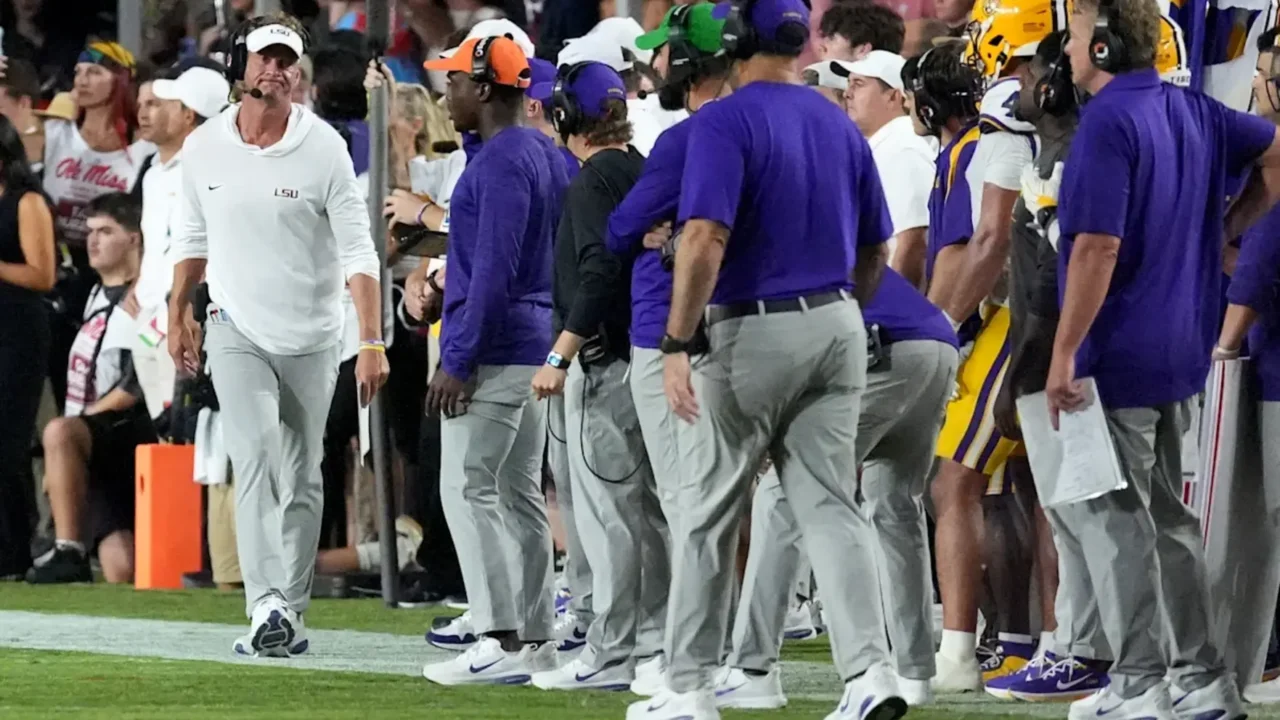
Lane Kiffin’s departure from Ole Miss has become one of college football’s persistent what-ifs that divides fan bases and commentators equally.
Dan Wolken turned that scenario into a measured feature at Yahoo Sports by asking whether Kiffin left the Rebels just before the program reached the pinnacle he had long pursued.
Key Takeaways
- Dan Wolken frames Kiffin’s departure as a high-stakes what-if about timing and program trajectory rather than asserting direct causation.
- The feature emphasizes that a head coach exit can reshape recruiting, staff continuity, and perceived momentum within an SEC program.
- For Ole Miss supporters, the key question remains whether the program continued the upward arc Kiffin helped build or whether the timing interrupted a narrow window of opportunity.
Lane Kiffin tenure and program arc
Wolken’s feature treats Kiffin’s time at Ole Miss as the narrative spine of the what-if, using the coach’s exit as the fulcrum for broader speculation about program trajectory.
The piece focuses on how a departure can alter sequences of momentum and public perception that had been building around the Rebels.
Recruiting and roster context
Wolken’s column signals that recruiting and roster construction are central to judging the what-if, since those areas are the practical conduits from coaching decision to on-field outcome.
The practical concern after a departure is whether signed recruits, incoming transfers, and returning contributors remain aligned with the program’s projected ceiling.
Staff continuity and strategic identity
One element the feature highlights is staff continuity and how quickly an offensive or defensive identity can be altered by a coaching change.
Coordinators and position coaches are often the operational core that translate recruiting into production, so turnover at those levels compounds a head coach exit.
Program trajectory and recruiting context
| Topic | Wolken’s framing | Implication for fans |
|---|---|---|
| Program trajectory | Frames Kiffin’s exit as a potential interruption during an upward run for the Rebels. | Fans must weigh narrative momentum against continuity in roster and recruiting. |
| Recruiting and roster | Identifies commitments and portal activity as the practical arenas where the what-if is resolved. | Retention of signees and transfers becomes the immediate barometer of post-departure stability. |
| Coaching continuity | Notes that staff turnover can reshape identity and short-term production without wholesale roster change. | Stability among assistants and coordinators mitigates disruption from a head coach departure. |
Impact on game-plan and production
Wolken’s piece implies the coaching change has downstream consequences for game planning and positional development even when personnel largely remains intact.
Offensive and defensive schemes are cumulative, and how a staff develops players over seasons matters more than any single recruiting class.
That cumulative work is what makes the timing of a departure feel consequential to supporters who track schematic progress season to season.
SEC and College Football Playoff implications for Ole Miss
At the conference level, the what-if matters because SEC positioning and College Football Playoff opportunities are tied to continuity, recruitment, and in-season adaptation.
A program that sustains recruiting momentum and staff stability after a departure is better positioned to remain in the playoff conversation than one that experiences turnover across multiple cycles.
For Ole Miss, conference standing and CFP relevance hinge on whether subsequent leadership preserved the recruiting pipeline and developed returning talent into consistent production.