The Ole Miss preseason AP ranking matters because it sets external expectations for a program navigating a major internal transition. The Rebels enter the season at No. 9 in the AP preseason Top-25 poll, and that placement signals where national voters believe Oxford’s ceiling sits.
As detailed by A to Z Sports, voters elevated Ole Miss largely because of one standout duo and a handful of transfer additions that change the roster profile going into fall camp.
Key Takeaways
- Ole Miss opens the year at No. 9 in the AP preseason Top-25 poll.
- The Chambliss–Lacy backfield is the central offseason reason cited for that ranking.
- Key transfer portal additions include Johntay Cook II, Darrell Gill Jr. and JT Lindsey.
- Pete Golding is taking the program into his first full year leading the team after Lane Kiffin’s departure.
Why the Ole Miss preseason AP ranking is tied to Chambliss and Lacy
The headline driver behind the Ole Miss preseason AP ranking is the backfield chemistry between Trinidad Chambliss and Kewan Lacy. Chambliss’s rise since transferring in from Division II last season created national attention, and paired with Lacy voters see a tandem capable of consistent explosive plays.
That pairing reshapes how opponents prepare and how voters project offensive upside. When a quarterback and running back complement each other at that level, preseason ballots tend to favor teams projected to control tempo and convert in the red zone.
Chambliss’s background as a Division II transfer who made an immediate impact last year is central to the narrative surrounding the Rebels. The reporting notes his emergence drew bigger attention than most mid-level transfer tales because of production and observable playmaking.
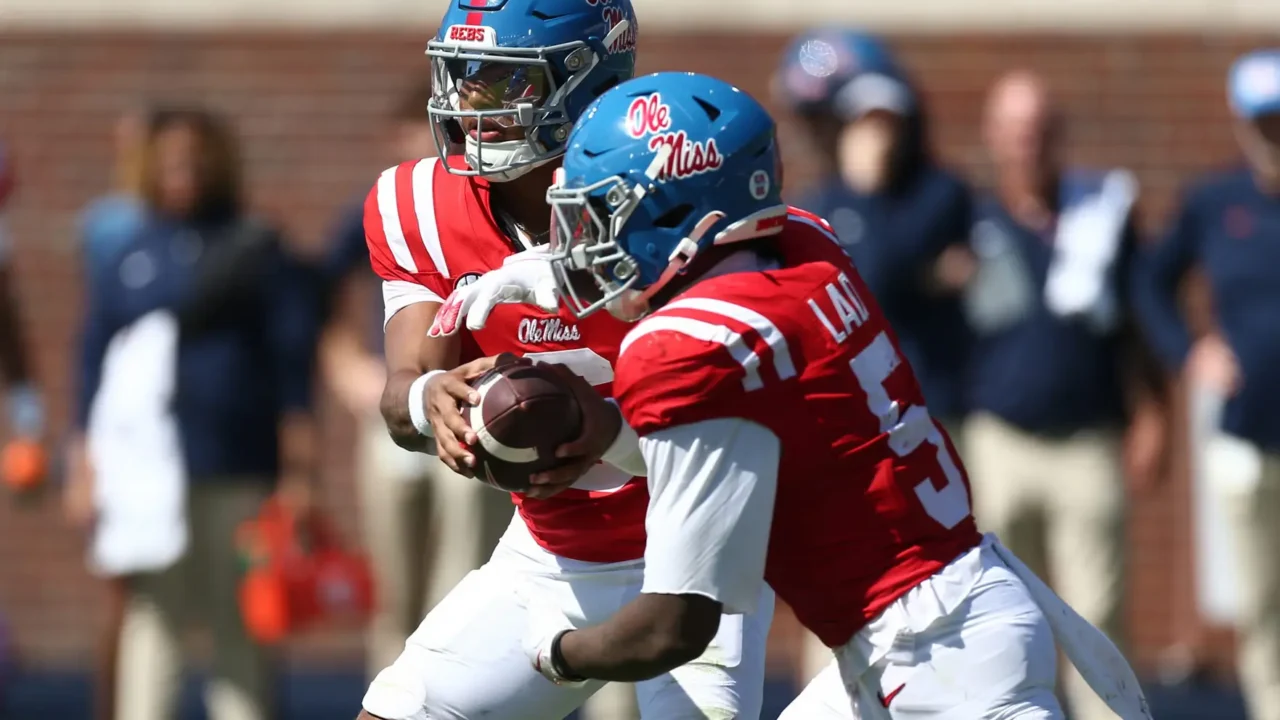
The game photo included in reporting shows Trinidad Chambliss handing the ball to Kewan Lacy during the second quarter against Washington State at Vaught-Hemingway Stadium, and it underscores how that connection has become the signature look for this offense.
Transfer portal additions and roster fit
Beyond the backfield duo, Ole Miss added portal pieces that fill immediate needs and give depth for a physically demanding SEC slate. The reported additions include Johntay Cook II and Darrell Gill Jr. both receivers, and JT Lindsey, a running back.
Cook II and Gill Jr. provide outside options and slot flexibility that project to pair with existing targets, while Lindsey offers insurance in the backfield behind Lacy. Those moves change the depth chart construction and make the offense less dependent on a single set of playmakers.
From a roster-building stance, these arrivals read as pragmatic additions designed to sustain pace, mitigate injury risk, and give Pete Golding more schematic choices on early downs and third-down situations.
How voters balanced upside and uncertainty
AP voters appear to have traded conservative skepticism for upside when filling ballots early this summer. The Chambliss–Lacy pairing supplies an identifiable high-ceiling storyline that outweighs some coaching uncertainty in preseason evaluation.
The coaching question centers on whether Pete Golding can translate coordinator success into program management in a full-time head coach role. The reporting emphasizes Golding’s track record coming into this job but also notes genuine questions about his long-term stewardship.
Preseason ballots routinely award teams with clear top-end talent while simultaneously discounting organizational risk. Ole Miss’s placement at No. 9 reads like a compromise ballot, recognition of talent tempered by reasonable concern about unanswered managerial questions.
Preseason positioning and roster context
| Aspect | Preseason context |
|---|---|
| AP preseason rank | No. 9 in the AP preseason Top-25 poll |
| Coaching status | Pete Golding is stepping into a full-time head coach role while Lane Kiffin is no longer on staff |
| Backfield profile | Trinidad Chambliss, a Division II transfer who joined last year, paired with running back Kewan Lacy |
| Notable transfer additions | Johntay Cook II and Darrell Gill Jr. at receiver, plus JT Lindsey at running back |
SEC and College Football Playoff implications for Ole Miss
The No. 9 preseason slot gives Ole Miss favorable positioning entering SEC play but comes with expectations that shape recruiting conversations and roster messaging. High preseason placement can help on the trail by signaling national respect, especially for players in contested recruiting classes and portal cycles.
From a College Football Playoff angle, preseason rank itself is not determinative, but it places the Rebels within the broader margin of error voters use when building midseason ballots. A strong start would validate the AP optimism and reinforce the message that Golding’s program can compete at the top of the conference.
Conversely, early losses would shift narrative attention back to organizational questions and could complicate the program’s recruiting pitch. For now, the ranking reflects both the top-end talent in the Chambliss–Lacy duo and the roster moves that aim to sustain that production across a long SEC schedule.